



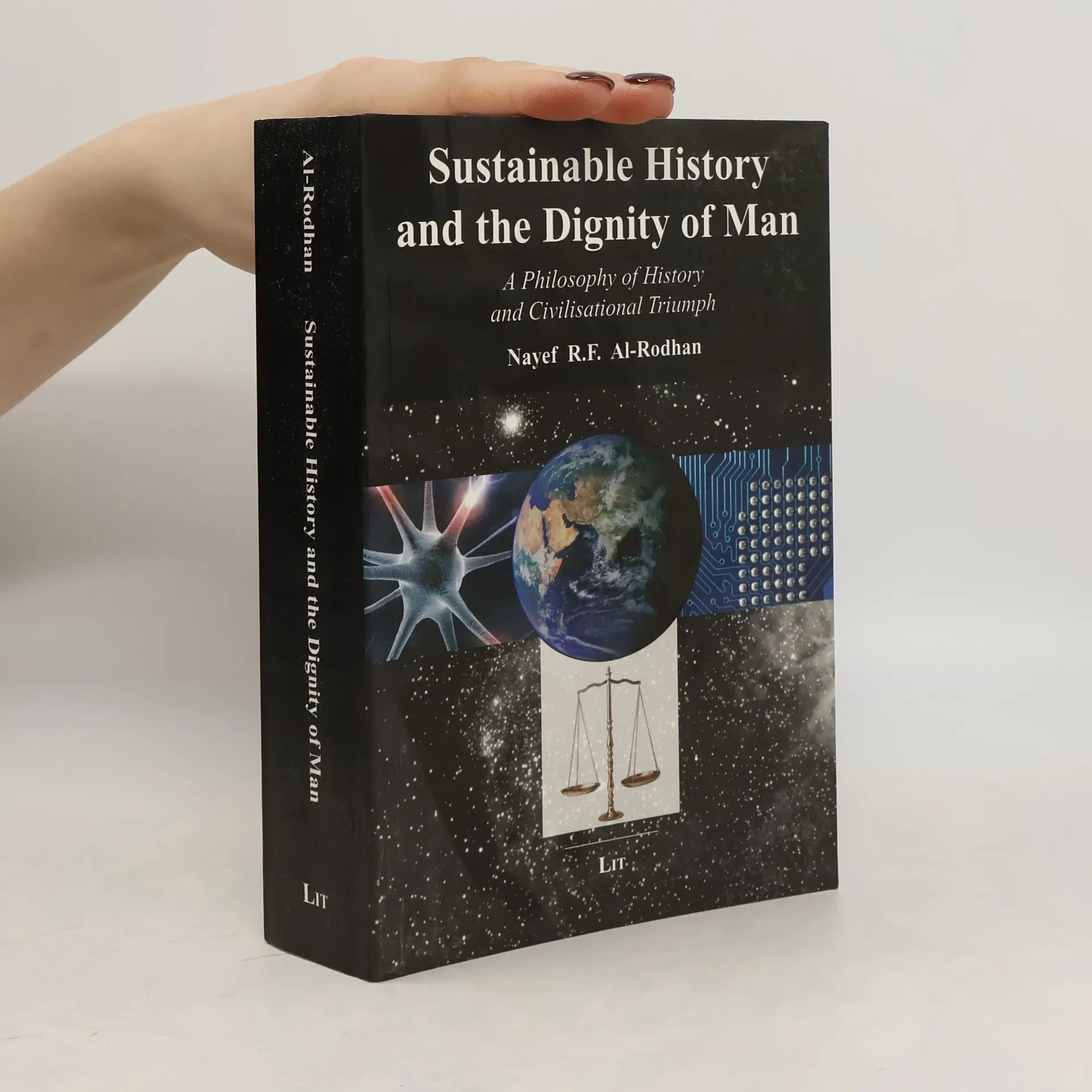
Sustainable history and the dignity of man
- 474pages
- 17 heures de lecture
SUSTAINABLE HISTORY AND THE DIGNITY OF MAN presents a new philosophy of history, emphasizing that sustainable history is driven by good governance. This governance must balance human nature's emotionality, amorality, and egoism with the dignity needs of reason, security, human rights, accountability, transparency, justice, opportunity, innovation, and inclusiveness. The author establishes minimum criteria for governance that respect local cultures while aligning with common global values to foster moral and political cooperation. Using an ocean model to illustrate a unified human civilization, the text advocates for a shared human narrative encompassing diverse geo-cultural domains and sub-cultures, highlighting their historical interconnections. The author contends that the success of all geo-cultural domains is essential for humanity's overall triumph, which relies on reason and an understanding of knowledge's indeterminate nature, as explored in the new theory of knowledge: "Neuro-rational Physicalism." This work thoroughly examines historical and contemporary methods for achieving a qualitatively adequate social life globally. It stresses the urgent need for intercultural dialogue, supported by substantial empirical evidence. The book serves as a compelling humanist statement on the importance of human interaction, promoting a vision of mutual respect grounded in scientific reasoning and normative aspirations.