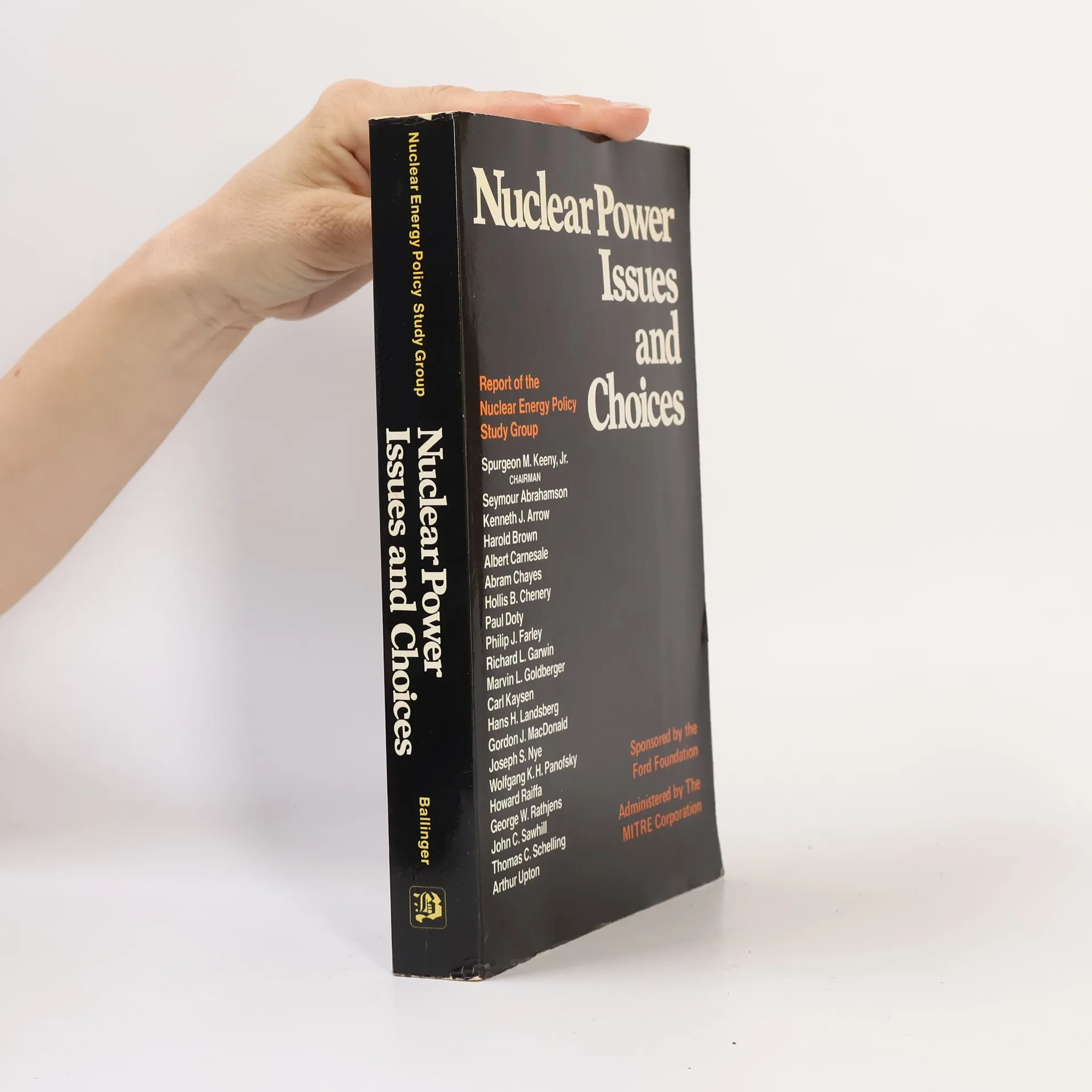
Nuclear Power Issues and Choices
Report of the Nuclear Energy Policy Study Group
- 438pages
- 16 heures de lecture
Book by Keeny


Thomas Schelling était un économiste visionnaire dont le travail a exploré en profondeur la dynamique du conflit et de la coopération. En utilisant l'analyse de la théorie des jeux, il a mis en lumière les stratégies complexes qui régissent les interactions humaines, offrant des perspectives uniques sur la manière dont la paix et la stabilité peuvent être atteintes. Ses analyses de la pensée stratégique et de la prise de décision dans des situations d'intérêts opposés continuent de résonner dans diverses disciplines.

Report of the Nuclear Energy Policy Study Group
Book by Keeny
In Choice and Consequence, Thomas Schelling ventures where rationality is ambiguous, exploring topics as awesome as nuclear terrorism, as sordid as blackmail, as ineffable as daydreaming, as intimidating as euthanasia. He examines ethical issues wrapped up in economics, and discloses ethical issues that are misplaced or misidentified.
Analyzes the nature of international disagreements and conflict resolution in terms of game theory and non-zero-sum games.
"In this landmark book, Nobel laureate Thomas C. Schelling considers the ways in which military capabilities - real or imagined - are used as bargaining power. This edition contains a new preface by the author where he considers the book's relevance over forty years after its first publication. Included as an afterword is the text of Professor Schelling's Nobel acceptance speech, in which he reflects upon the global taboo that has emerged against nuclear weapons since Hiroshima"--Unedited summary from book cover
Develops models to analyze the collective consequences of individual behaviors and the ways in which one person's reactions and responses to a particular situation can combine with the actions of others to create unanticipated results