

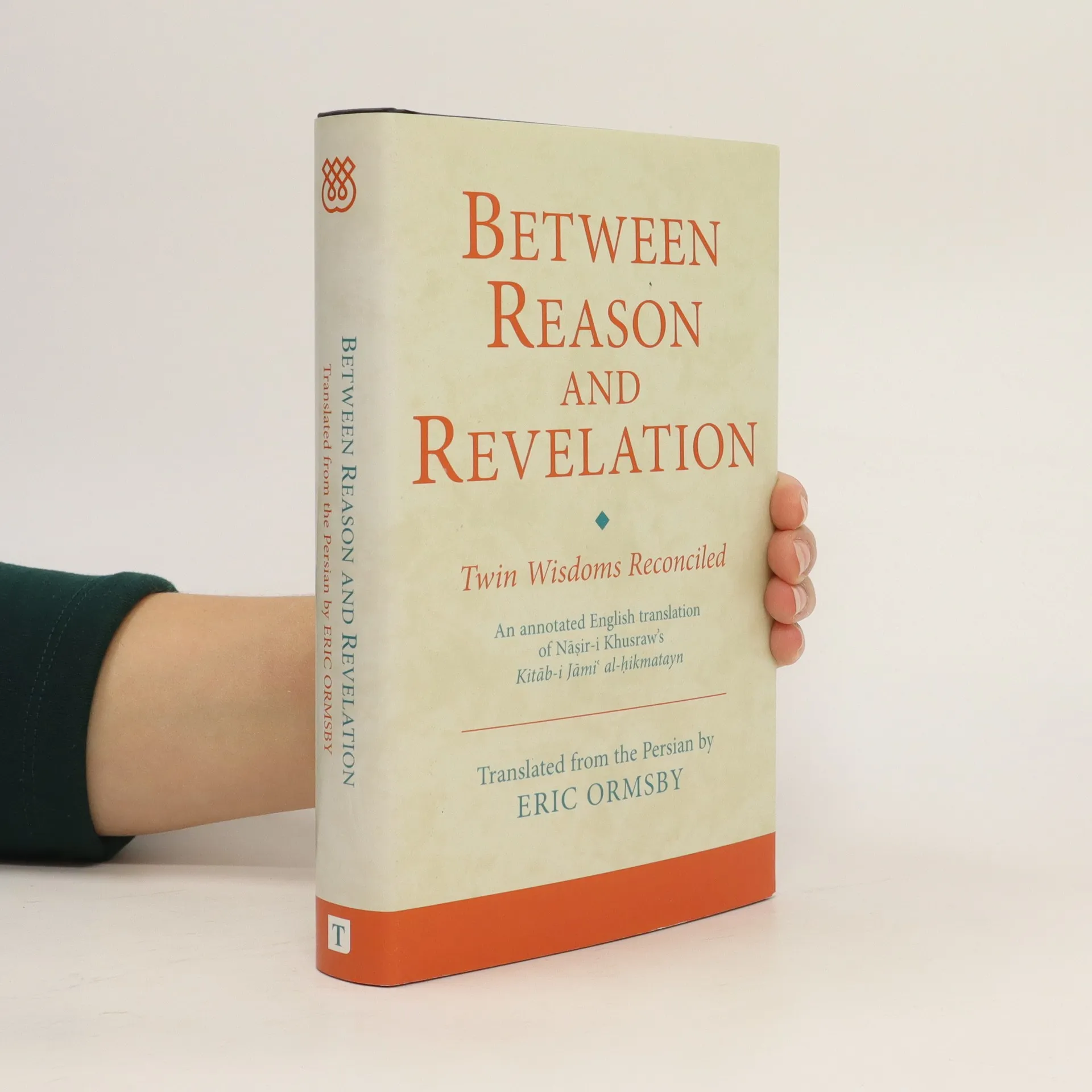
Between Reason and Revelation
- 292pages
- 11 heures de lecture
This is the first complete English translation of the Jami al-hikmatayn, a significant work by the poet, philosopher, and Ismaili missionary Nasir-i Khusraw (1004-1077). Commissioned by the emir of Badakhshan, 'Abu al-Ma'ali 'Ali ibn Asad,' the text addresses perplexing questions from a philosophical ode by Abu al-Haytham Jurjani, which poses around 90 inquiries spanning logic, metaphysics, medicine, cosmology, physics, and esoteric Ismaili doctrine. Nasir-i Khusraw's commentary on selected lines exemplifies his effort to refine Persian philosophical prose into a sophisticated means of expression. Despite its importance, this work has not received as much scholarly attention as his other major writings, partly due to its textual complexities. It survives in a single manuscript of uncertain accuracy located in the Aya Sofya collection, Suleymaniyye Library, Istanbul. The translation is based on the 1953 critical edition by Henry Corbin and Mohammed Mo'in, while also referencing the original manuscript. The text seeks to reconcile knowledge derived from revelation and exegesis with that gained through reason. Recognizing the disconnect between traditional theologians and Aristotelian philosophers, Nasir-i Khusraw aimed to revitalize the "bazaar of wisdom." Written in 1070, this work reflects his mature thought and serves as a testament to his philosophical journey.