
Adapted from the landmark essay Enforcing Order, this striking graphic novel offers an accessible inside look at policing and how it leads to discrimination and violence. What we know about the forces of law and order often comes from tragic episodes that make the headlines, or from sensationalized versions for film and television. These gripping accounts obscure two crucial aspects of police work: the tedium of everyday patrols under constant pressure to meet quotas, and the banality of racial discrimination and ordinary violence. Around the time of the 2005 French riots, anthropologist and sociologist Didier Fassin spent fifteen months observing up close the daily life of an anticrime squad in one of the largest precincts in the Paris region. His unprecedented study, which sparked intense discussion about policing in the largely working-class, immigrant suburbs, remains acutely relevant in light of all-too-common incidents of police brutality against minorities. This new, powerfully illustrated adaptation clearly presents the insights of Fassin’s investigation, and draws connections to the challenges we face today in the United States as in France.
Didier Fassin Livres
Didier Fassin est un anthropologue et sociologue français dont le travail s'engage profondément dans les dimensions sociales et politiques de l'existence humaine. Ses recherches explorent les dimensions morales des conditions sociales et les manières dont les individus sont catégorisés et jugés. L'approche de Fassin mêle les sciences sociales à l'enquête philosophique, offrant un regard pénétrant sur les enjeux contemporains.




Life
- 150pages
- 6 heures de lecture
How can we think of life in its dual expression, matter and experience, the living and the lived? Philosophers and, more recently, social scientists have offered multiple answers to this question, often privileging one expression or the other the biological or the biographical.
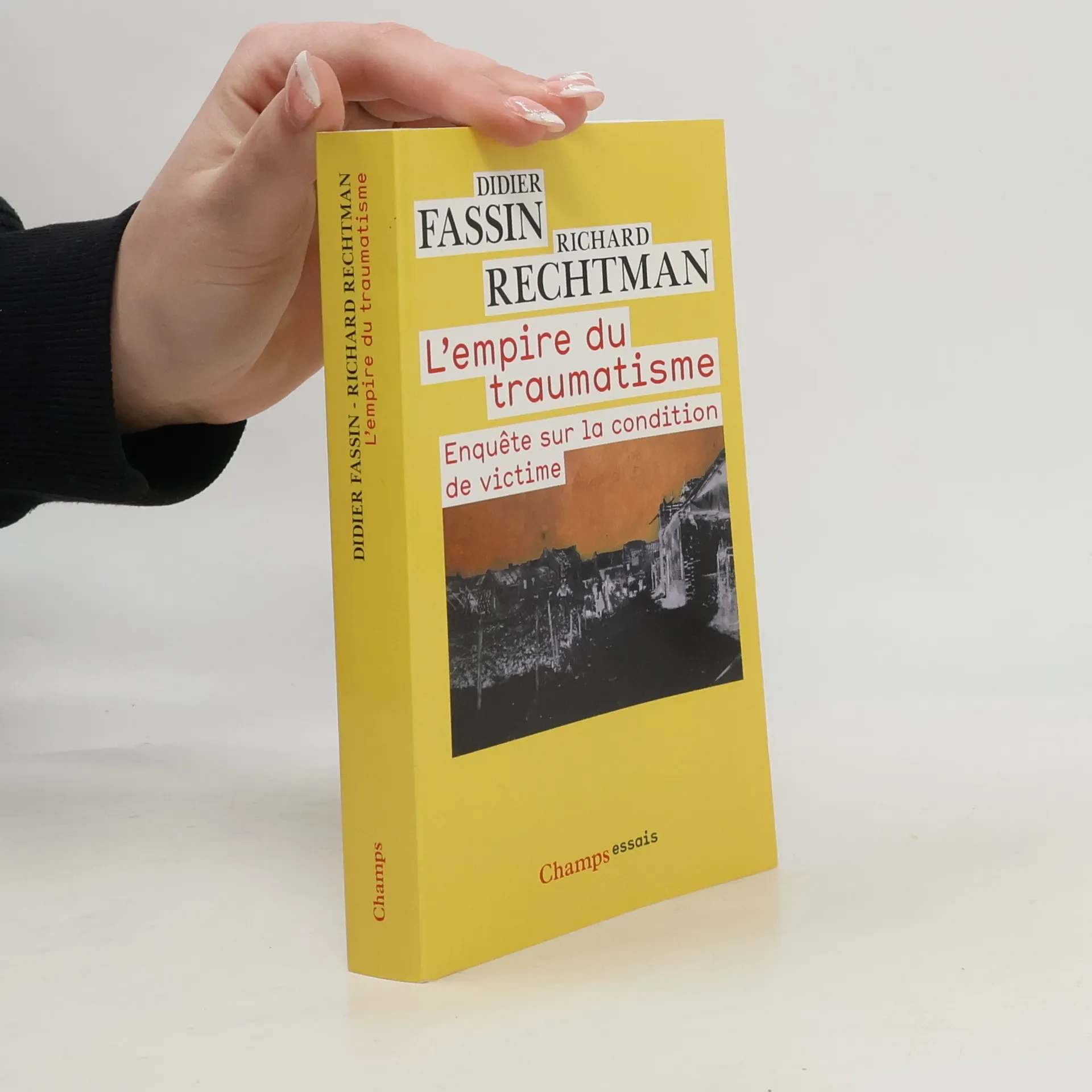
Exploring the anthropology of trauma, this book delves into the evolution of values and value systems in a globalized context. It presents a comprehensive analysis that enhances understanding of trauma's impact on societies. The author’s insights contribute significantly to the discourse on trauma, making it a standout work that resonates deeply with contemporary issues.
It is a simple story. A 37-year-old man belonging to the Traveller community is shot dead by a special unit of the French police on the family farm where he was hiding since he failed to return to prison after temporary release. The officers claim self-defence. The relatives, present at the scene, contest that claim. A case is opened, and it concludes with a dismissal that is upheld on appeal. Dismayed by these decisions, the family continues the struggle for truth and justice. Giving each account of the event the same credit, Didier Fassin conducts a counter-investigation, based on the re-examination of all the available details and on the interviews of its protagonists. A critical reflection on the work of police forces, the functioning of the justice system, and the conditions that make such tragedies possible and seldom punished, Death of a Traveller is also an attempt to restore to these marginalized communities what they are usually denied: respectability.
Public health erupted into the world’s consciousness in early 2020 with the Covid pandemic and its multiple social and economic consequences. What had been until then, for most people, a remote and specialized field of expertise suddenly became the very basis for the government of lives.The Worlds of Public Health analyzes the moral and political issues at stake in the practice of public health today, including the influence of positivism, the boundaries of disease, conspiracy theories, morality tests, and the challenges posed by the health of migrants and prisoners. This exploration transports readers from South Africa, the country most impacted by the AIDS epidemic, to Ecuador, with the supposedly highest maternal mortality rate in Latin America; from the scientific controversies concerning the so-called worm wars in Kenya to conflicts between doctors and patients around Gulf War syndrome in the United States; from lead poisoning and public housing in France to the Covid-19 pandemic worldwide. Through these case studies, Didier Fassin argues that, ultimately, public health is a politics of life, revealing the different and unequal ways in which life is valued – and either protected or not – in contemporary societies.
Pandemic Exposures - Economy and Society in the Time of Coronavirus
- 350pages
- 13 heures de lecture
For people and governments around the world, the onset of the COVID-19 pandemic seemed to place the preservation of human life at odds with the pursuit of economic and social life. Yet this simple alternative belies the complexity of the entanglements the crisis has created and revealed, not just between health and wealth but also around morality, knowledge, governance, culture, and everyday subsistence. Didier Fassin and Marion Fourcade have assembled an eminent team of scholars from across the social sciences, conducting research on six continents, to reflect on the multiple ways the coronavirus has entered, reshaped, or exacerbated existing trends and structures in every part of the globe. The contributors show how the disruptions caused by the pandemic have both hastened the rise of new social divisions and hardened old inequalities and dilemmas. An indispensable volume, Pandemic Exposures provides an illuminating analysis of this watershed moment and its possible aftermath.
Das Leben
Eine kritische Gebrauchsanweisung
Das Leben gilt, in Adornos Worten, seit der Antike als der eigentliche Bereich der Philosophie, die nach dem richtigen und guten Leben fragt. Seit etwas mehr als einem Jahrhundert ist das Leben aber auch zu einem Gegenstand der Sozialwissenschaften geworden. Der renommierte französische Mediziner, Anthropologe und Soziologe Didier Fassin regt in seinem faszinierenden Buch nun zu einem kritischen Dialog zwischen Philosophie und Sozialforschung an. Zur Debatte stehen dabei drei Konzepte: Die »Formen des Lebens« untersucht Fassin angesichts der widersprüchlichen Interpretationen von Ludwig Wittgensteins Begriff der Lebensform. Mit der »Ethik des Lebens« beschäftigt er sich unter Bezug auf Walter Benjamins Idee der Heiligkeit des Lebens als höchstem Gut. Und die »Politik des Lebens« erkundet Didier Fassin im Anschluss an Michel Foucaults Konzept der Biopolitik. Gestützt auf zahlreiche ethnografische Fallstudien, die zeigen, wie Leben in verschiedenen kulturellen und historischen Kontexten betrachtet und erfahren wird, entwickelt Fassin eine kritische Ethnologie gegenwärtiger Gesellschaften.