In these poems, living with disability or being trans are not tragedies to overcome but ways of being, with their own humour, romance, stories and mundanity. Embracing the ordinary ('We're middle-aged, of course. Life rolls on') and the remarkable, Cath Nichols revisits her childhood in New Zealand and her teenage years in Kent, before crossing several decades (and haircuts) on the gay scene in Manchester. At the heart of the collection is a sequence, 'Bo(d)y-in-waiting', a forthright and intimately observed narrative of Nichols's partner as a trans teenager in an unwitting decade, thwarted and misunderstood at every turn by vacuous doctors and oblivious teachers. Readers will discover why 'each body is an act of becoming', and be left with a new appreciation of what makes us human.
Cathrine Nichols Livres


Capital
- 244pages
- 9 heures de lecture
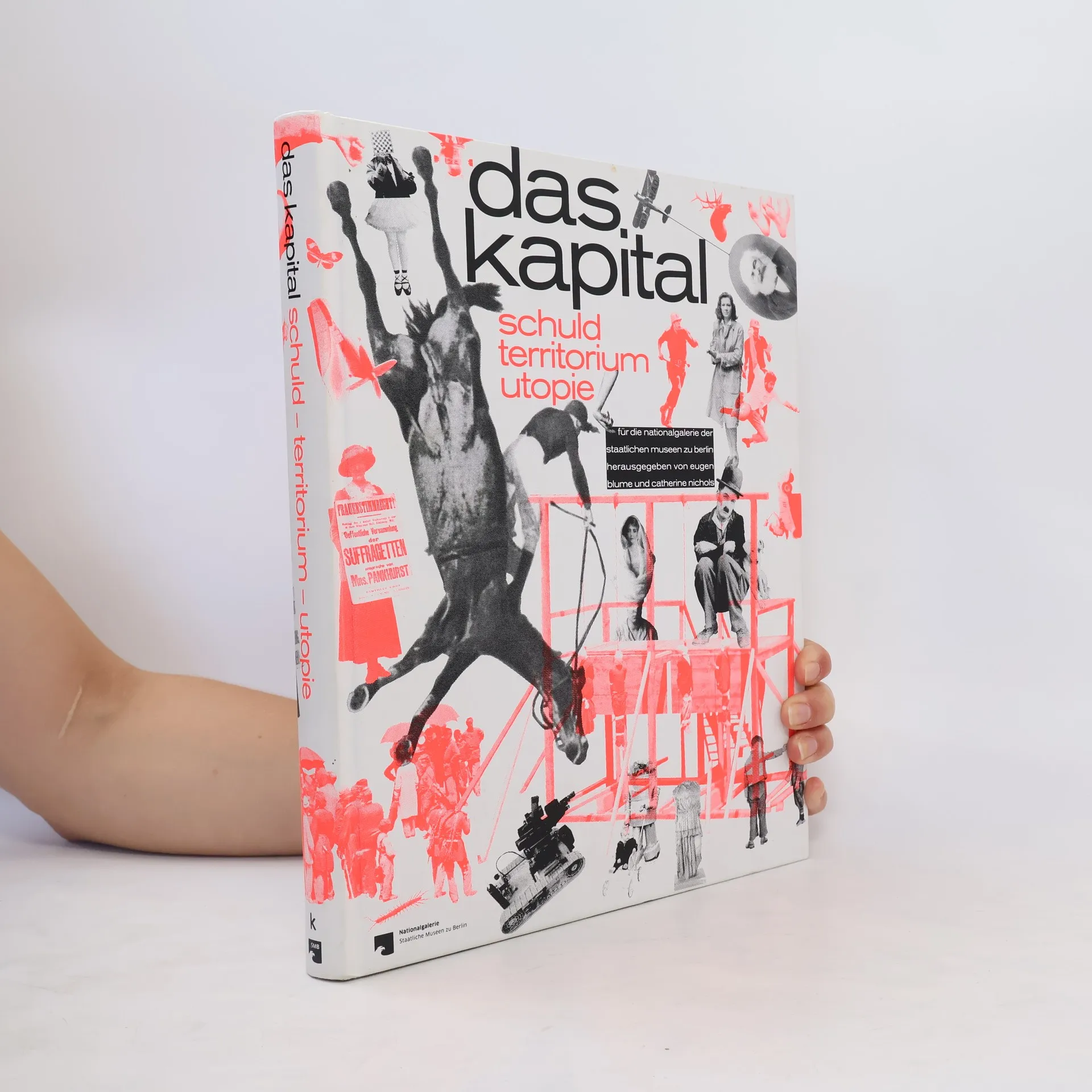
The recent banking, financial, and euro crises have highlighted the urgent need to examine the relationship between humans and capital. A special exhibition at the Nationalgalerie im Hamburger Bahnhof in Berlin, titled "Capital. Debt -- Territory -- Utopia," showcases this theme through a comprehensive catalogue. Featuring works by around 40 contemporary international artists alongside selected artworks and artifacts from various eras, the exhibition delves into evolving concepts of value. Central to the display is Joseph Beuys' significant work, Das Kapital Raum 1970--1977, created for the Venice Biennale in 1980. This piece embodies Beuys' redefinition of capital, emphasizing that true value lies in the creative potential of individuals rather than in money, encapsulated in his assertion that "art = capital." The book accompanying the exhibition investigates the shifting definitions of capital across three chapters. The first chapter, "Debt," posits that debt, particularly the concept of inherited sin, predates and is more fundamental than money. The second chapter, "Territory," examines the links between capital and the exploration and conquest of global spaces from the early modern period onward. The final chapter, "Utopia," challenges Beuys' optimistic view of capital as rooted in creativity.
Das Kapital
Schuld - Territorium - Utopie
Angesichts der Banken-, Finanz- und Eurokrise ist die Frage nach dem Verhältnis des Menschen zum Kapital drängender denn je. Die Nationalgalerie im Hamburger Bahnhof – Museum für Gegenwart – Berlin präsentiert eine umfassende Sonderausstellung, die das Thema unter dem Titel »Das Kapital. Schuld – Territorium – Utopie« behandelt. Begleitet wird die Ausstellung von einem Katalog, der Arbeiten von rund 40 zeitgenössischen internationalen Künstlerinnen und Künstlern sowie ausgewählten Kunstwerken und Artefakten von der Antike bis zur Gegenwart umfasst. Dabei wird beleuchtet, was der Mensch durch die Epochen hindurch als wertvoll erachtet hat. Ausgangspunkt ist das Schlüsselwerk Das Kapital Raum 1970–1977 von Joseph Beuys, das 1980 für die Biennale in Venedig entstand. Beuys’ radikale Neudefinition von Kapital stellt das schöpferische Potenzial des Menschen in den Mittelpunkt: »Kunst = Kapital«. Die Publikation gliedert sich in drei Kapitel. Das erste Kapitel – Schuld – thematisiert die These, dass Schulden älter und grundlegender sind als Geld. Der zweite Teil – Territorium – untersucht die Verflechtung von Kapital mit der Entdeckung und Eroberung des globalen Raumes in der frühen Neuzeit. Das dritte Kapitel – Utopie – hinterfragt den positiven Kapitalbegriff von Beuys, der in der Kreativität wurzelt.