

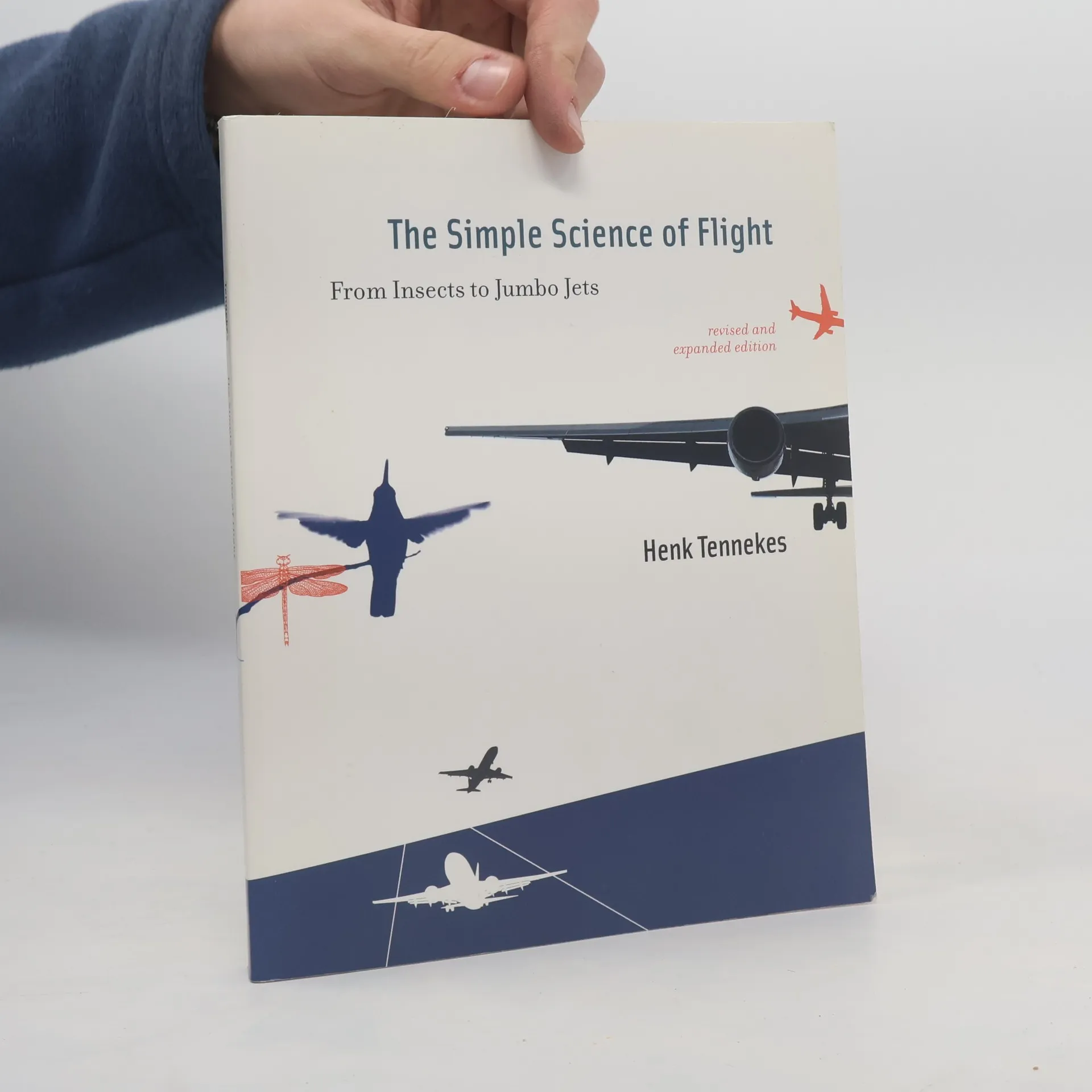
The Simple Science of Flight
From Insects to Jumbo Jets - Revised and Expanded Edition
- 201pages
- 8 heures de lecture
This investigation explores how both machines and living creatures achieve flight, highlighting the similarities between butterflies and airplanes, as well as paper airplanes and plovers. All flying entities, from tiny gnats to massive aircraft, adhere to the same aerodynamic principles. The author delves into the mechanics of flight, examining wing size, energy requirements, and the methods of crossing vast distances. By drawing parallels between nature and technology, the text serves as an engaging introduction to flight. While swans and Boeing jets differ significantly, they operate under the same aerodynamic rules, revealing fascinating connections between biological evolution and engineering advancements. The author raises questions about the success of certain airplanes, such as the enduring Boeing 747 compared to the now-obsolete Concorde. Through comparisons, examples, and anecdotes, the science of flight is made accessible. This revised edition includes new material on remarkable avian feats, the evolution of modern jetliners, energy metabolization, and a fresh perspective on drag and vortices. It emphasizes evolution in both nature and engineering, incorporating recent findings on bird migration, wind-tunnel studies, and the efficiency of various modes of transportation, noting that a 747 can be more cost-effective than a passenger car on a per-seat basis.