

New Ideas from Dead CEOs unveils the secrets of successful CEOs through an intimate exploration of their professional and personal lives. It examines why Ray Kroc's McDonald's plan succeeded while many burger joints failed, and how Krispy Kreme overlooked Kroc's hard-earned lessons. The book highlights Walt Disney's pivotal moment as a young cartoonist that transformed his career and Estée Lauder's vision in a time when the average American spent just $8 annually on toiletries. It delves into Thomas Watson Jr.'s bold decision to invest IBM's future in computing against his father's skepticism. Readers gain insight into these leaders' greatest challenges and failures, showcasing how they navigated demographic and technological shifts. The narrative extends beyond these historical figures, illustrating how their ideas can be applied to contemporary companies like Sony, Dell, and Costco as they strive to maintain or regain their market positions. The featured CEOs were not saints; they were deeply committed to their businesses rather than their personal fortunes. Todd G. Buchholz's work is a fresh, thoughtful, and engaging examination of the lessons we can still learn from these influential figures.
Todd G. Buchholz Livres
Éminent économiste américain, Buchholz explore les complexités des enjeux économiques mondiaux et leur impact sociétal. Son travail examine constamment des mécanismes financiers complexes et leur profonde influence sur les communautés du monde entier. Buchholz est loué pour sa capacité exceptionnelle à distiller des théories économiques sophistiquées en récits accessibles et captivants, ce qui en fait un commentateur et un auteur très recherché.

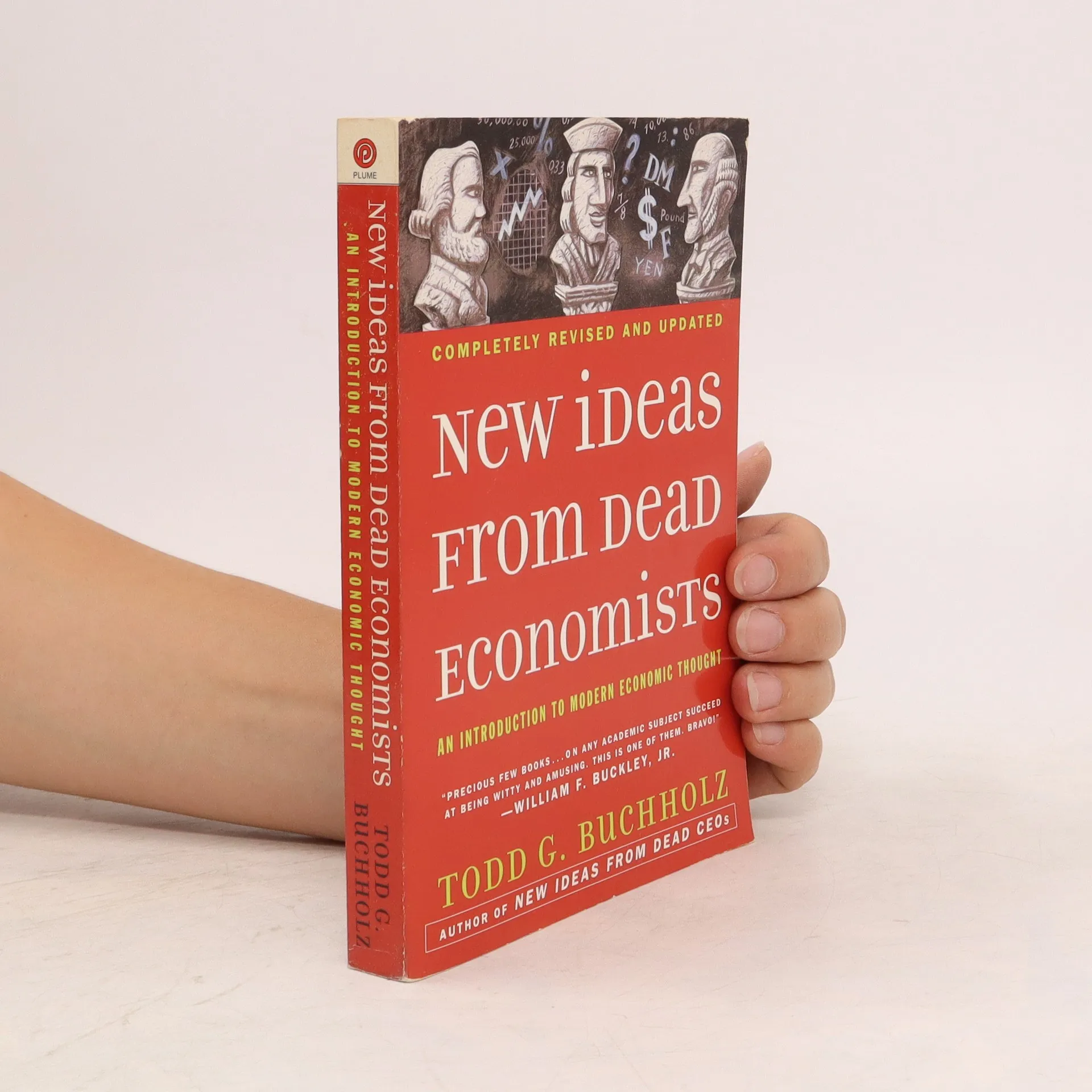
New Ideas from Dead Economists
- 368pages
- 13 heures de lecture
A reexamination of the major economic theories of the past two hundred years discusses how long-dead, famous economists such as Adam Smith and others would handle today's economic problems.