

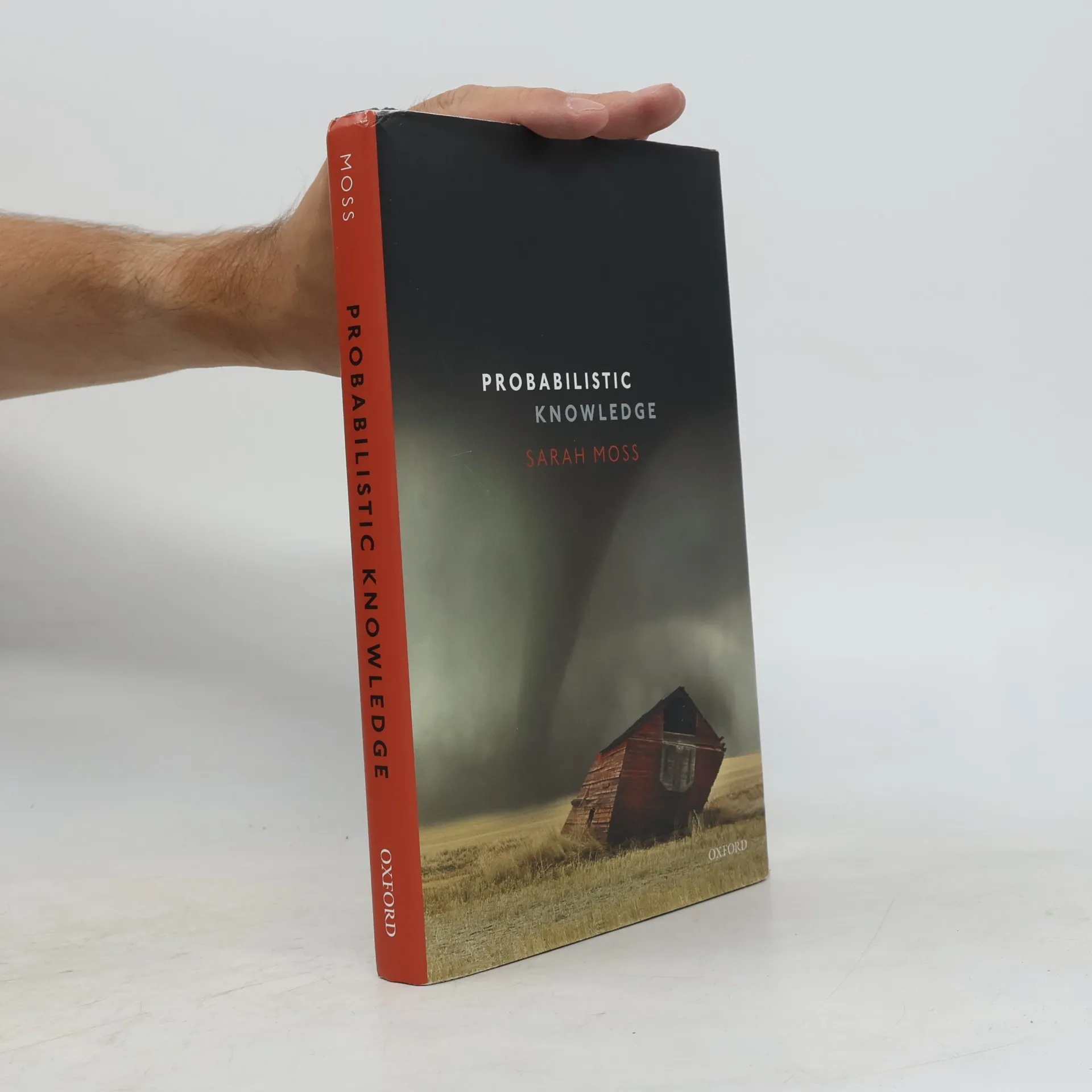


En savoir plus sur le livre
Traditional philosophical discussions of knowledge have primarily centered on the epistemic status of full beliefs. Sarah Moss argues that credences, in addition to full beliefs, can also constitute knowledge. For example, a 0.4 credence that it is raining can be considered knowledge similarly to full beliefs. Furthermore, one can know that it might be raining or that if it is raining, it is probably cloudy, which involves knowledge of probabilistic contents rather than propositions. This notion of probabilistic content is crucial not only in epistemology but also in philosophy of mind and language. Just as we believe and assert propositions, we can also believe and assert probabilistic contents. Recognizing this has significant implications for various philosophical debates, including those concerning the relationship between full belief and credence, the semantics of epistemic modals and conditionals, and perceptual experience. Additionally, acknowledging probabilistic knowledge can challenge negative evaluations of female speech, clarify the insufficiency of mere statistical evidence for legal proof, and highlight epistemic norms breached by racial profiling. Thus, the central theses presented enhance our understanding of mental states and our responsibilities to one another.
Achat du livre
Probabilistic Knowledge, Sarah Moss
- Langue

- Année de publication
- 2018
- Reliure
- (rigide),
- État du livre
- Bon
- Prix
- 17,99 €
Modes de paiement
Personne n'a encore évalué .
- Titre
- Probabilistic Knowledge
- Langue
- Anglais
- Auteurs
- Sarah Moss
- Éditeur
- Oxford University Press
- Publié
- 2018
- Format
- rigide
- Pages
- 224
- ISBN10
- 0198792158
- ISBN13
- 9780198792154
- Séries
- Catégories
- Mots clés
- Description
- Traditional philosophical discussions of knowledge have primarily centered on the epistemic status of full beliefs. Sarah Moss argues that credences, in addition to full beliefs, can also constitute knowledge. For example, a 0.4 credence that it is raining can be considered knowledge similarly to full beliefs. Furthermore, one can know that it might be raining or that if it is raining, it is probably cloudy, which involves knowledge of probabilistic contents rather than propositions. This notion of probabilistic content is crucial not only in epistemology but also in philosophy of mind and language. Just as we believe and assert propositions, we can also believe and assert probabilistic contents. Recognizing this has significant implications for various philosophical debates, including those concerning the relationship between full belief and credence, the semantics of epistemic modals and conditionals, and perceptual experience. Additionally, acknowledging probabilistic knowledge can challenge negative evaluations of female speech, clarify the insufficiency of mere statistical evidence for legal proof, and highlight epistemic norms breached by racial profiling. Thus, the central theses presented enhance our understanding of mental states and our responsibilities to one another.