

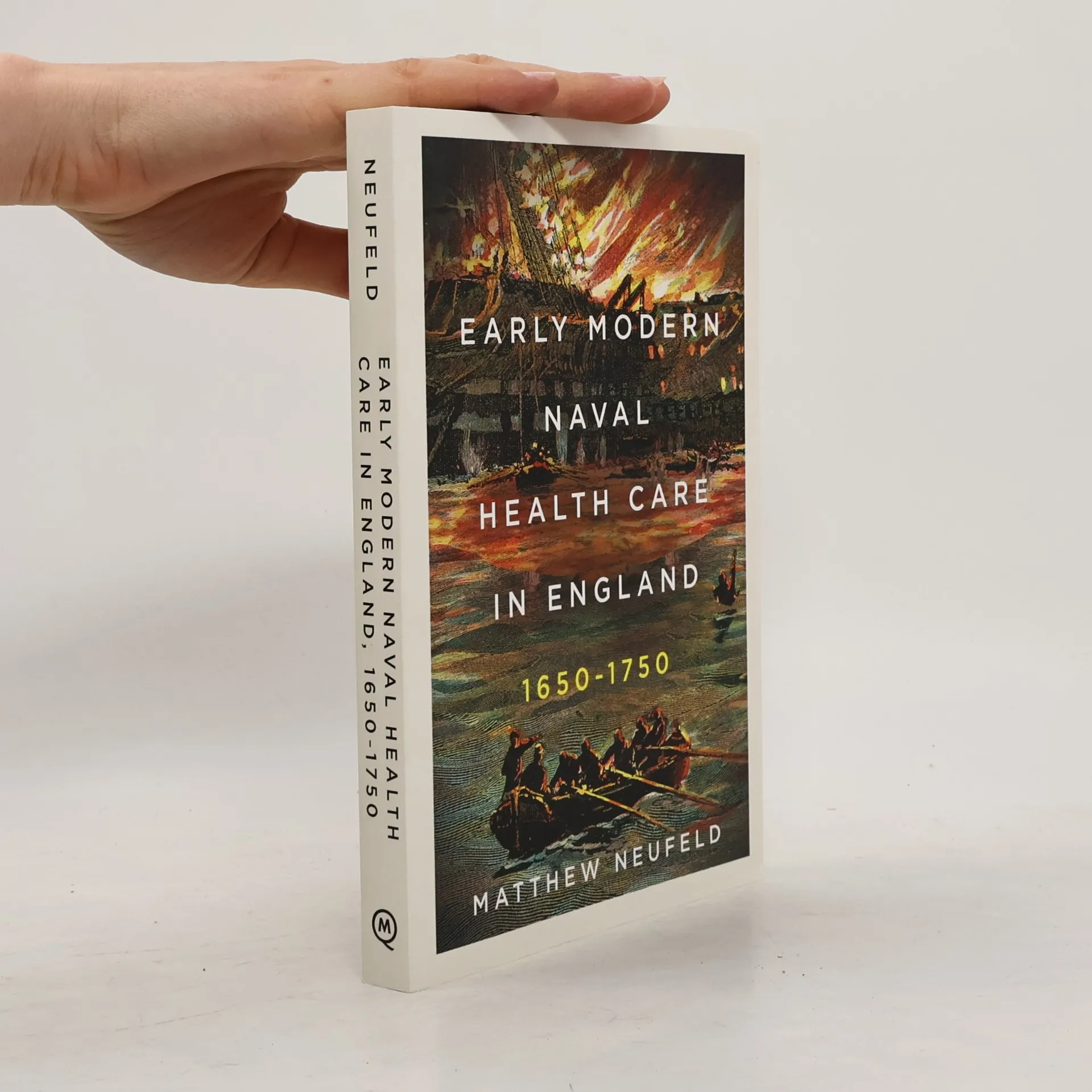


En savoir plus sur le livre
From 1650 to 1750, the provision of medical care for injured seamen in the Royal Navy underwent a major transformation, shifting from care provided by civilians in private homes to care at hospitals run by the navy. Early Modern Naval Health Care in England examines the factors responsible for the emergence of centralized naval health care over the course of a century. In 1650, sick and injured Royal Navy sailors were billeted in homes in coastal communities where civilians were paid to look after them. Care work, which involved making meals and feeding patients, administering medicines, washing clothes and bed linens, and shaving and cutting hair, was essential to the recovery of tens of thousands of seamen - and it was done mostly by women. Beginning at the turn of the eighteenth century, naval health care moved to a more centralized system based in hospitals, where the conduct of sailors and care workers could be overseen. A key factor driving this change was the relationships between naval officials and female civilian caregivers, which were often fraught. Yet even with the shift to naval hospital settings, most care for convalescing sailors continued to be provided by women. Early Modern Naval Health Care in England shines a light on the care work that lay behind England's formidable Royal Navy during the Age of Sail.
Achat du livre
McGill-Queen's Associated Medical Services Studies in the History of Medicine, Health, and Society - 63: Early Modern Naval Health Care in England, 1650–1750, Matthew Neufeld
- Langue

- Année de publication
- 2024
- Reliure
- (souple),
- État du livre
- Bon
- Prix
- 7,39 €
Modes de paiement
Personne n'a encore évalué .
- Titre
- McGill-Queen's Associated Medical Services Studies in the History of Medicine, Health, and Society - 63: Early Modern Naval Health Care in England, 1650–1750
- Langue
- Anglais
- Auteurs
- Matthew Neufeld
- Publié
- 2024
- Format
- souple
- Pages
- 288
- ISBN10
- 022802059X
- ISBN13
- 9780228020592
- Séries
- Catégories
- Mots clés
- Thème historique, Médecine, Europe, Angleterre, Grande-Bretagne, Histoire de l'Europe, Histoire de la médecine
- Description
- From 1650 to 1750, the provision of medical care for injured seamen in the Royal Navy underwent a major transformation, shifting from care provided by civilians in private homes to care at hospitals run by the navy. Early Modern Naval Health Care in England examines the factors responsible for the emergence of centralized naval health care over the course of a century. In 1650, sick and injured Royal Navy sailors were billeted in homes in coastal communities where civilians were paid to look after them. Care work, which involved making meals and feeding patients, administering medicines, washing clothes and bed linens, and shaving and cutting hair, was essential to the recovery of tens of thousands of seamen - and it was done mostly by women. Beginning at the turn of the eighteenth century, naval health care moved to a more centralized system based in hospitals, where the conduct of sailors and care workers could be overseen. A key factor driving this change was the relationships between naval officials and female civilian caregivers, which were often fraught. Yet even with the shift to naval hospital settings, most care for convalescing sailors continued to be provided by women. Early Modern Naval Health Care in England shines a light on the care work that lay behind England's formidable Royal Navy during the Age of Sail.