




Séries
En savoir plus sur le livre
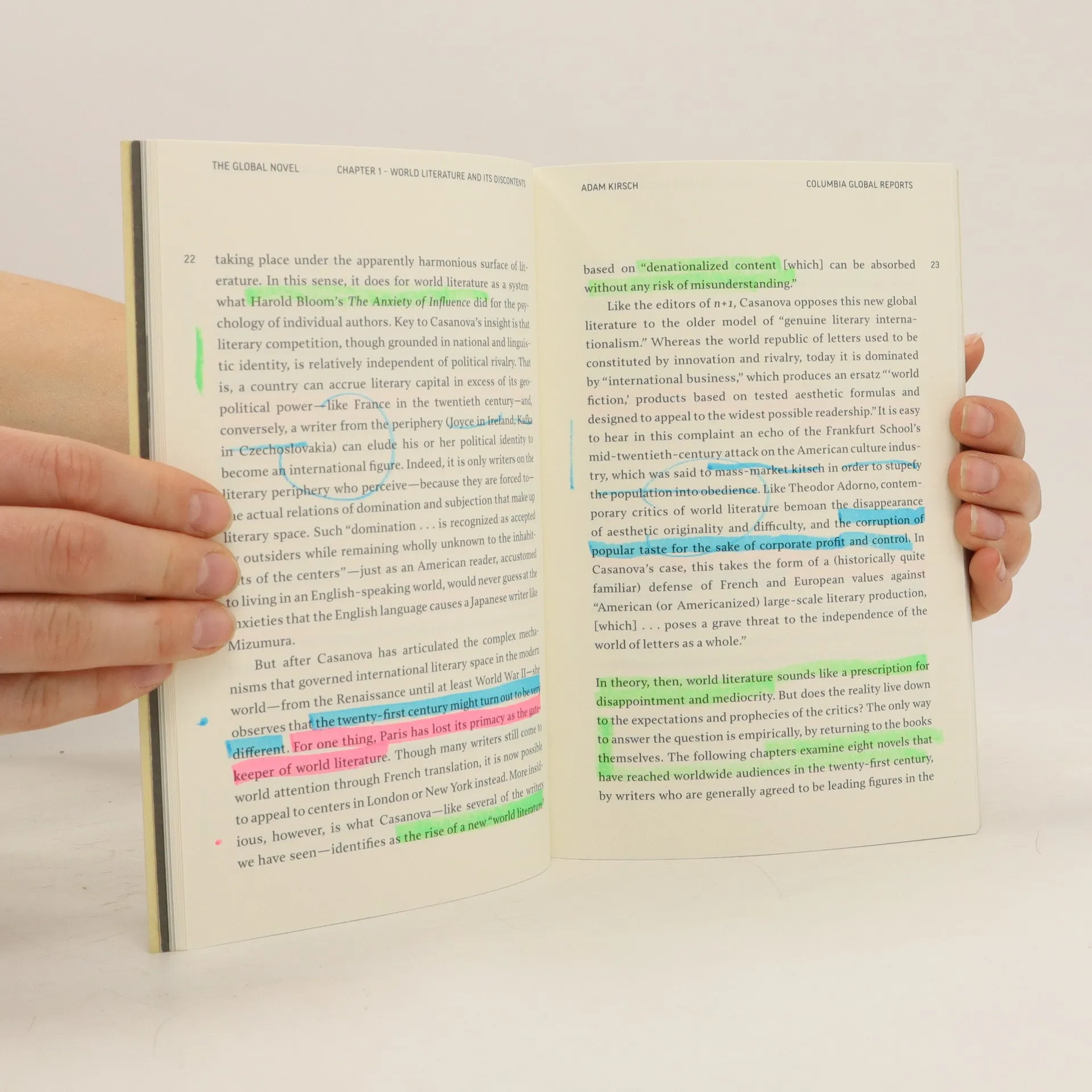
"Illuminating." - The New York Times Book Review Named one of "Ten Books to Read this April" by the BBC What is the future of fiction in an age of globalization? In The Global Novel, acclaimed literary critic Adam Kirsch explores some of the 21st century's best-known writers--including Orhan Pamuk, Chimamanda Ngozi Adichie, Mohsin Hamid, Margaret Atwood, Haruki Murakami, Roberto Bolano, Elena Ferrante, and Michel Houellebecq. They are employing a way of imagining the world that sees different places and peoples as intimately connected. From climate change and sex trafficking to religious fundamentalism and genetic engineering, today's novelists use 21st-century subjects to address the perennial concerns of fiction, like morality, society, and love. The global novel is not the bland, deracinated, commercial product that many critics of world literature have accused it of being, but rather finds a way to renew the writer's ancient privilege of examining what it means to be human.
Achat du livre
The Global Novel, Adam Kirsch
- Langue

- Année de publication
- 2016
- Reliure
- (souple)
Modes de paiement
Il manque plus que ton avis ici.
- Titre
- The Global Novel
- Langue
- Anglais
- Auteurs
- Adam Kirsch
- Éditeur
- Columbia Global Reports
- Publié
- 2016
- Format
- souple
- Pages
- 105
- ISBN10
- 0997722908
- ISBN13
- 9780997722901
- Séries
- Columbia Global Reports
- Catégories
- Évaluation
- 3,75 sur 5
- Description
- "Illuminating." - The New York Times Book Review Named one of "Ten Books to Read this April" by the BBC What is the future of fiction in an age of globalization? In The Global Novel, acclaimed literary critic Adam Kirsch explores some of the 21st century's best-known writers--including Orhan Pamuk, Chimamanda Ngozi Adichie, Mohsin Hamid, Margaret Atwood, Haruki Murakami, Roberto Bolano, Elena Ferrante, and Michel Houellebecq. They are employing a way of imagining the world that sees different places and peoples as intimately connected. From climate change and sex trafficking to religious fundamentalism and genetic engineering, today's novelists use 21st-century subjects to address the perennial concerns of fiction, like morality, society, and love. The global novel is not the bland, deracinated, commercial product that many critics of world literature have accused it of being, but rather finds a way to renew the writer's ancient privilege of examining what it means to be human.