

Exactement cet exemplaire ira dans le panier


En savoir plus sur le livre
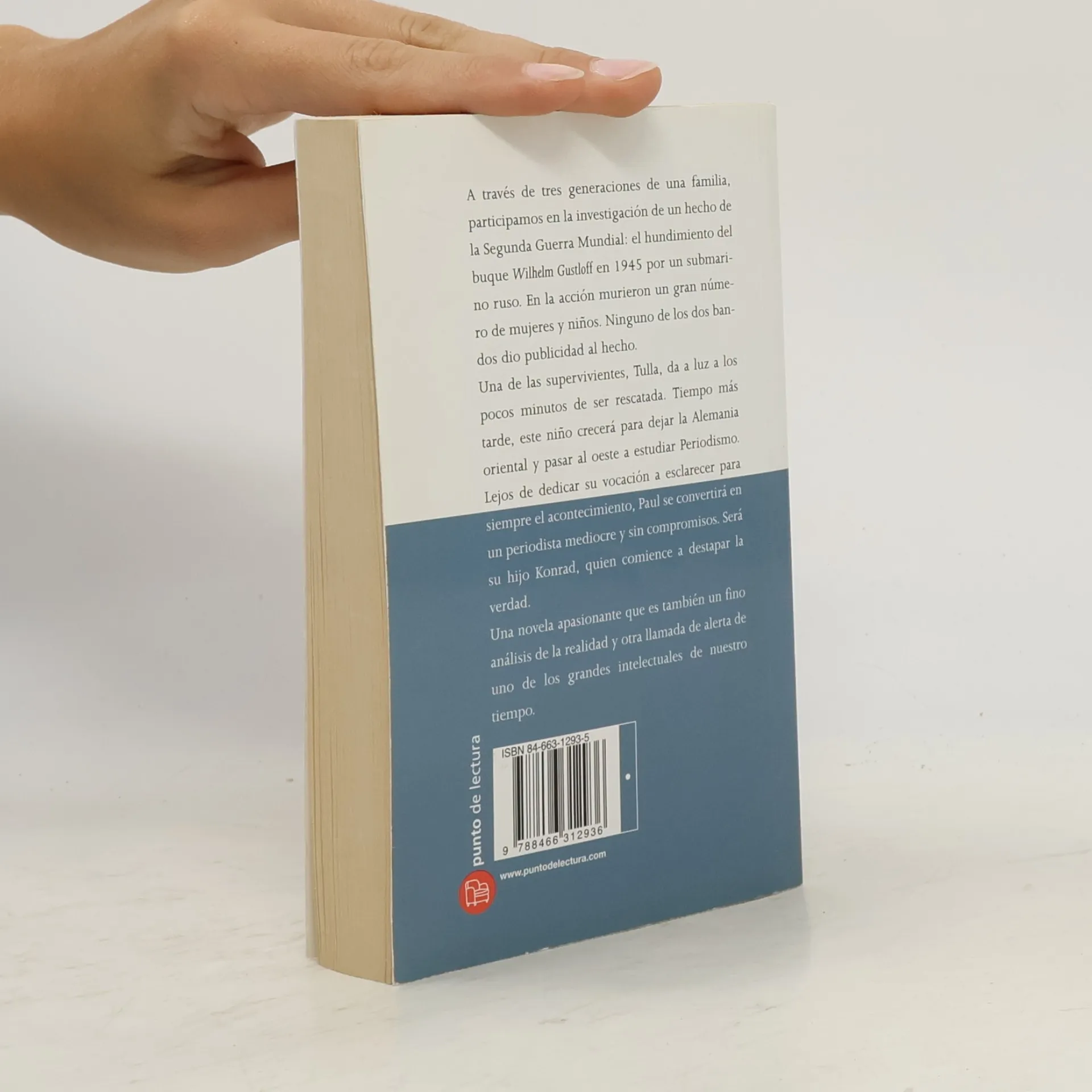
"A German cruise ship turned refugee carrier, it was attacked by a Soviet submarine in January 1945. Some 9,000 people went down in the Baltic Sea, making it the deadliest maritime disaster of all time." Born to an unwed mother on a lifeboat the night of the attack, Paul Pokriefke is a middle-aged journalist trying to piece together the tragic events. While his mother sees her whole existence in terms of that calamitous moment, Paul wishes their life could have been less touched by the past. For his teenage son, who dabbles in the dark, far-right corners of the Internet, the Gustloff embodies the denial of Germany's wartime suffering.




Achat du livre
A paso de cangrejo, Günter Grass
- Langue

- Année de publication
- 2004
- Reliure
- (souple),
- État du livre
- Très bon
- Prix
- 5,99 €
Modes de paiement
Il manque plus que ton avis ici.
- Titre
- A paso de cangrejo
- Langue
- Espagnol
- Auteurs
- Günter Grass
- Éditeur
- Punto de Lectura S.L.
- Publié
- 2004
- Format
- souple
- ISBN10
- 8466312935
- ISBN13
- 9788466312936
- Séries
- Mots clés
- Thème historique, Famille, Littérature allemande, Allemagne, Prose de guerre, Guerres, Seconde Guerre mondiale, L'école, Romans courts, Nazisme, Navires, Troisième Reich (Allemagne nazie), 1933-1945, Prix Nobel, Réfugiés, Année 1945, Naufrages de navires, Wilhelm Gustloff (navire)
- Première publication
- 2002
- Titre original
- Im Krebsgang
- Évaluation
- 3,25 sur 5
- Description
- "A German cruise ship turned refugee carrier, it was attacked by a Soviet submarine in January 1945. Some 9,000 people went down in the Baltic Sea, making it the deadliest maritime disaster of all time." Born to an unwed mother on a lifeboat the night of the attack, Paul Pokriefke is a middle-aged journalist trying to piece together the tragic events. While his mother sees her whole existence in terms of that calamitous moment, Paul wishes their life could have been less touched by the past. For his teenage son, who dabbles in the dark, far-right corners of the Internet, the Gustloff embodies the denial of Germany's wartime suffering.