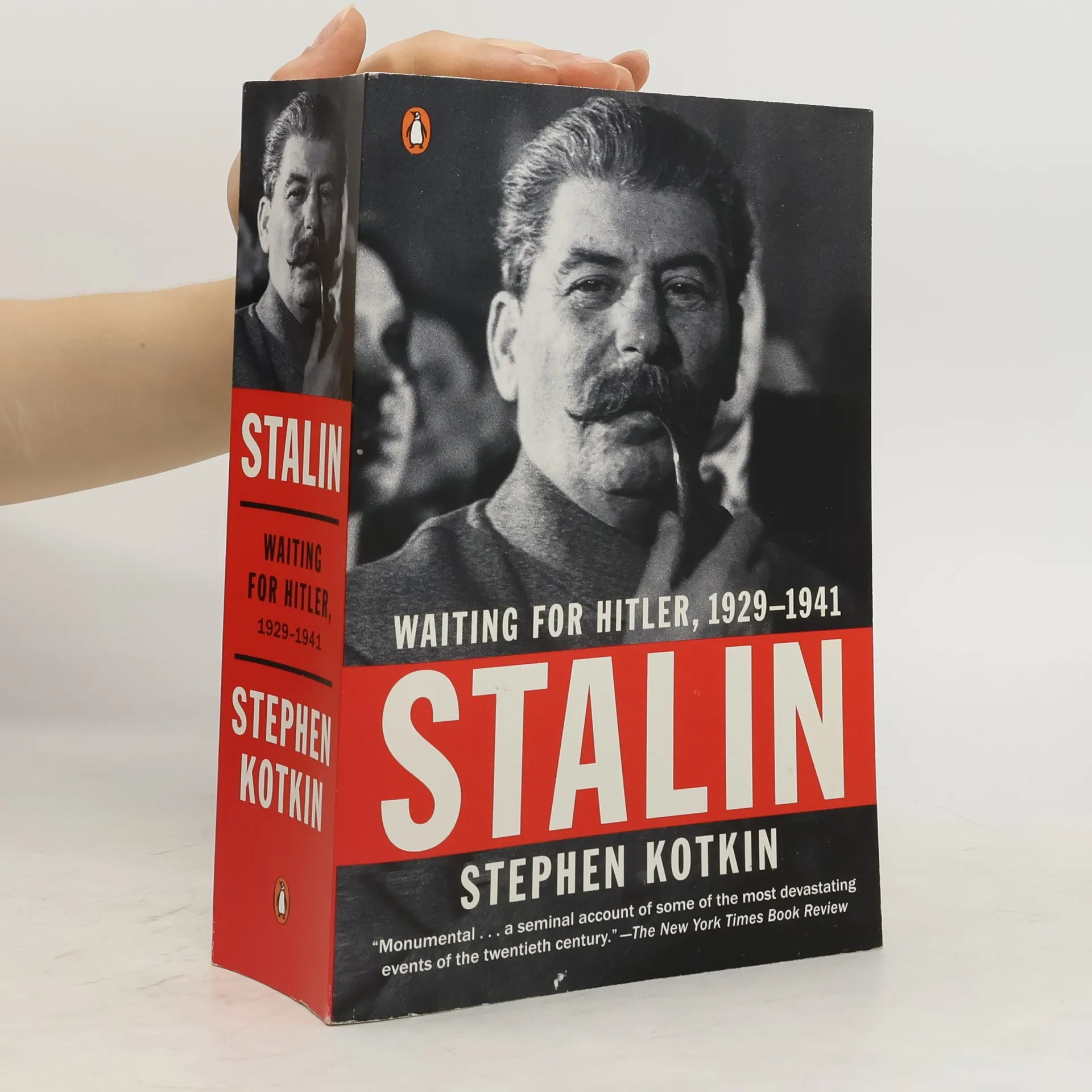
Cette biographie monumentale offre un examen révolutionnaire de l'un des dictateurs les plus redoutables de l'histoire. Elle retrace méticuleusement son ascension de l'obscurité au pouvoir absolu, en explorant les stratégies politiques complexes, les luttes personnelles et les décisions impitoyables qui ont façonné l'Union soviétique. La série explore les complexités de son caractère et l'impact profond de ses actions sur des millions de personnes et sur le cours des événements mondiaux. Plus qu'une simple étude d'un homme, c'est une exploration approfondie de la nation qu'il a commandée et transformée de manière irrévocable.
In his biography of Stalin, Kotkin rejects the inherited wisdom about Stalin's psychological makeup, showing us instead how Stalin's near paranoia was fundamentally political and closely tracks the Bolshevik revolution's structural paranoia, the predicament of a Communist regime in an overwhelmingly capitalist world, surrounded and penetrated by enemies. At the same time, Kotkin posits the impossibility of understanding Stalin's momentous decisions outside of the context of the history of imperial Russia.
Krvavý satrap, bláznivý megaloman, průměrný seminarista, ruský Hitler nebo naopak - velký státník, vůdce revoluce, Otec národů - desetiletí po Stalinově smrti se pokusy o hodnocení jeho nejednoznačné osobnosti nejenže nezmenšují, ale dokonce se rozhořívají s novou silou. Třídílná biografie Josifa Džugašviliho od prof. Stevena Kotkina je možná nejrozsáhlejší a nejhlubší zkoumání tohoto tématu dosud. V prvním díle je sledována cesta Stalina k nejvyššímu postavení v bolševické moci v nejranějších letech před a po revoluci. Archivy KGB odhalují nečekané skutečnosti o jeho vztazích s Leninem a Trockým. Kotkin analyzuje genezi jevu "Stalin" a způsob, jakým diktátor likviduje své protivníky v straně.
In 1929, Joseph Stalin, having secured dictatorial power over the Soviet Empire, initiated the systematic transformation of the world's largest peasant economy into "socialist modernity" through collectivization, regardless of the consequences. This drastic policy profoundly altered both the nation and its leader. Managing a dictatorship with life-and-death authority over millions shaped Stalin into an extraordinary figure. The collectivization of around 120 million peasants required extreme coercion, leading to mass starvation that drew criticism even from loyal Communists. Yet, Stalin remained unwavering. By 1934, as the Soviet Union stabilized and socialism took root in the countryside, he received widespread praise for his anti-capitalist achievements. However, Stalin's unforgiving nature led him to execute nearly a million individuals, including military leaders and cultural icons, as he sought to consolidate power with a new elite. While he succeeded in reviving a formidable industrialized military, the Soviet Union found itself isolated and surrounded by perceived threats. This quest for security culminated in an unexpected pact with Nazi Germany, which would not unfold as planned. The lives of Stalin and Hitler, along with the trajectories of their regimes, drew closer to a catastrophic confrontation, leaving the world in a precarious state.