

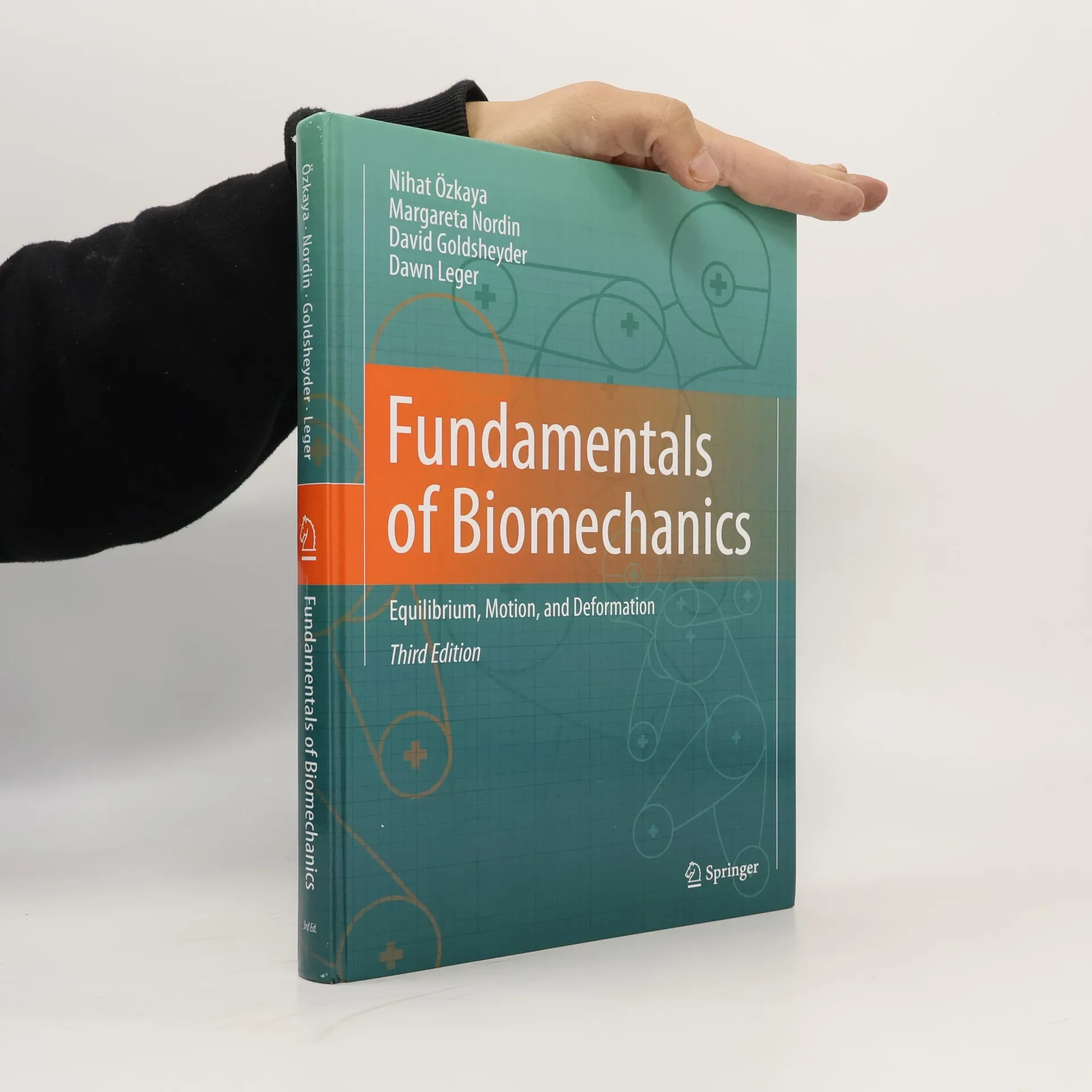



Fundamentals of Biomechanics
Equilibrium, Motion, and Deformation
En savoir plus sur le livre
Biomechanics applies the principles and rigor of engineering to the mechanical properties of living systems. This book integrates the classic fields of mechanics--statics, dynamics, and strength of materials--using examples from biology and medicine. Fundamentals of Biomechanics is excellent for teaching either undergraduates in biomedical engineering programs or health care professionals studying biomechanics at the graduate level. Extensively revised from a successful first edition, the book features a wealth of clear illustrations, numerous worked examples, and many problem sets. The book provides the quantitative perspective missing from more descriptive texts, without requiring an advanced background in mathematics. It will be welcomed for use in courses such as biomechanics and orthopedics, rehabilitation and industrial engineering, and occupational or sports medicine.
Achat du livre
Fundamentals of Biomechanics, Nihat Özkaya, Margareta Nordin, David Goldsheyder, Dawn Leger
- Langue

- Année de publication
- 2011
- Reliure
- (rigide),
- État du livre
- Bon
- Prix
- 6,09 €
Modes de paiement
Personne n'a encore évalué .
- Titre
- Fundamentals of Biomechanics
- Sous-titre
- Equilibrium, Motion, and Deformation
- Langue
- Anglais
- Éditeur
- Springer
- Publié
- 2011
- Format
- rigide
- Pages
- 275
- ISBN10
- 1461411491
- ISBN13
- 9781461411499
- Séries
- Mots clés
- Santé & Médecine, La nature, États-Unis, Médecine, Chirurgie, Physiologie, Orthopédie, Physiologie humaine, Biomechanique
- Description
- Biomechanics applies the principles and rigor of engineering to the mechanical properties of living systems. This book integrates the classic fields of mechanics--statics, dynamics, and strength of materials--using examples from biology and medicine. Fundamentals of Biomechanics is excellent for teaching either undergraduates in biomedical engineering programs or health care professionals studying biomechanics at the graduate level. Extensively revised from a successful first edition, the book features a wealth of clear illustrations, numerous worked examples, and many problem sets. The book provides the quantitative perspective missing from more descriptive texts, without requiring an advanced background in mathematics. It will be welcomed for use in courses such as biomechanics and orthopedics, rehabilitation and industrial engineering, and occupational or sports medicine.