

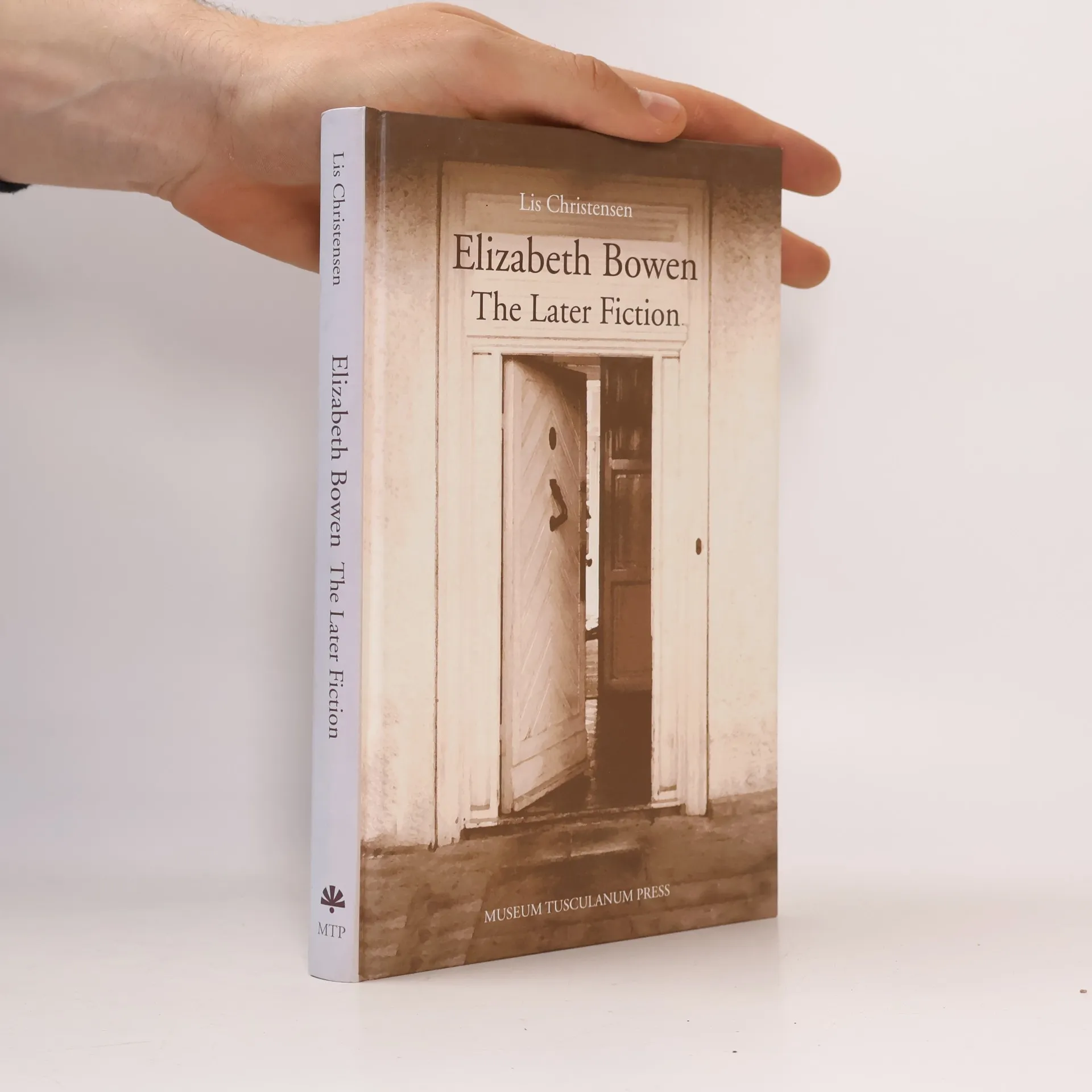
Elizabeth Bowen
The Later Fiction
Auteurs
En savoir plus sur le livre
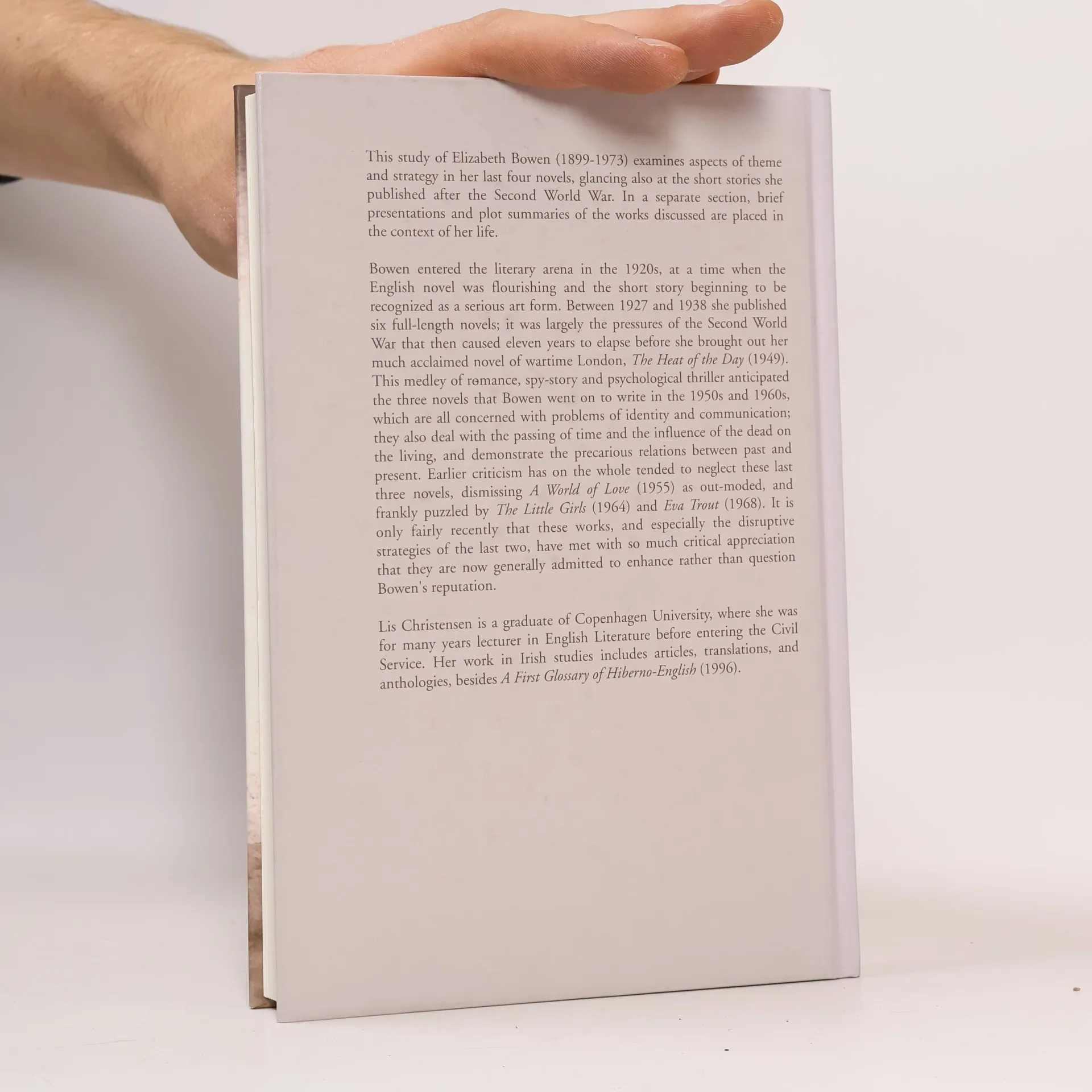
This study of Elizabeth Bowen (1899-1973) examines aspects of theme and strategy in her last four novels, glancing also at the short stories she published after the Second World War. In a separate section, brief presentations and plot summaries of the works discussed are placed in the context of her life. Bowen entered the literary arena in the 1920s, at a time when the English novel was flourishing and the short story beginning to be recognized as a serious art form. Between 1927 and 1938 she published six full-length novels; it was largely the pressures of the Second World War that then caused eleven years to lapse before she brought out her much acclaimed novel of wartime London, The Heat of the Day (1949). This medley of romance, spy-story and psychological thriller anticipated the three novels that Bowen went on to write in the 1950s and 1960s, which are all concerned with problems of identity and communication; they also deal with the passing of time and the influence of the dead on the living, and demonstrate the precarious relations between past and present. Earlier criticism has on the whole tended to neglect these last three novels, dismissing A World of Love (1955) as out-moded, and frankly puzzled by The Little Girls (1964) and Eva Trout (1968). It is only fairly recently that these works, and especially the disruptive strategies of the last two, have met with so much critical appreciation that they are now generally admitted to enhance rather than question Bowen's reputation.
Achat du livre
Elizabeth Bowen, Lis Christensen
- Langue

- Année de publication
- 2001
- Reliure
- (rigide),
- État du livre
- Abîmé
- Prix
- 28,49 €
Modes de paiement
Personne n'a encore évalué .
- Titre
- Elizabeth Bowen
- Sous-titre
- The Later Fiction
- Langue
- Anglais
- Auteurs
- Lis Christensen
- Éditeur
- Museum Tusculanum Press
- Publié
- 2001
- Format
- rigide
- Pages
- 200
- ISBN10
- 8772896248
- ISBN13
- 9788772896243
- Séries
- Mots clés
- Thème historique, 20e siècle, Grande-Bretagne, Critique littéraire
- Description
- This study of Elizabeth Bowen (1899-1973) examines aspects of theme and strategy in her last four novels, glancing also at the short stories she published after the Second World War. In a separate section, brief presentations and plot summaries of the works discussed are placed in the context of her life. Bowen entered the literary arena in the 1920s, at a time when the English novel was flourishing and the short story beginning to be recognized as a serious art form. Between 1927 and 1938 she published six full-length novels; it was largely the pressures of the Second World War that then caused eleven years to lapse before she brought out her much acclaimed novel of wartime London, The Heat of the Day (1949). This medley of romance, spy-story and psychological thriller anticipated the three novels that Bowen went on to write in the 1950s and 1960s, which are all concerned with problems of identity and communication; they also deal with the passing of time and the influence of the dead on the living, and demonstrate the precarious relations between past and present. Earlier criticism has on the whole tended to neglect these last three novels, dismissing A World of Love (1955) as out-moded, and frankly puzzled by The Little Girls (1964) and Eva Trout (1968). It is only fairly recently that these works, and especially the disruptive strategies of the last two, have met with so much critical appreciation that they are now generally admitted to enhance rather than question Bowen's reputation.