

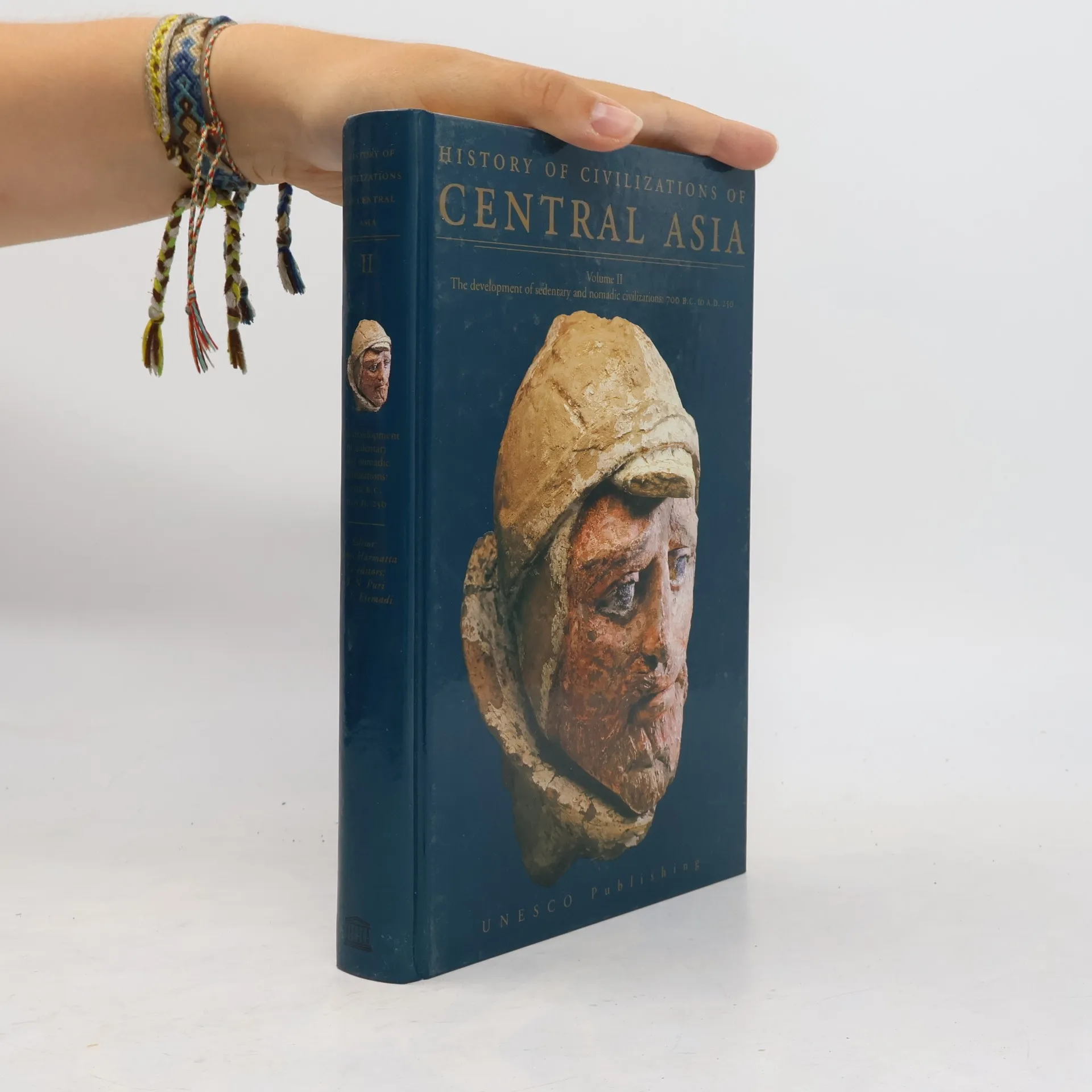



En savoir plus sur le livre
Volume II presents an account of various population movements and cultural exchanges in Central Asia between 700 B.C. and 250 A.D. Important nomadic tribal cultures such as the Kushans emerged during this period. Contacts between the Mediterranean and the Indus Valley were reinforced by the campaigns of Alexander the Great and, under his successors, the progressive syncretism between Zoroastrianism, Greek religion and Buddhism gave rise to a new civilization instituted by the Parthians, known for its artistic creations. Under Kushan rule, Central Asia became the crossroads of a prosperous trade between the Mediterranean and China along the Silk Route.
Achat du livre
History Of Civilizations Of Central Asia, Janos Harmatta, B.N. Puri, G.F. Etemadi, Unesco
- Langue

- Année de publication
- 1992
- Reliure
- (rigide),
- État du livre
- Bon
- Prix
- 34,49 €
Modes de paiement
Personne n'a encore évalué .
- Titre
- History Of Civilizations Of Central Asia
- Sous-titre
- The Development of Sedentary and Nomadic Civilizations: 700 B.C. to A.D. 250
- Langue
- Anglais
- Auteurs
- Janos Harmatta, B.N. Puri, G.F. Etemadi, Unesco
- Éditeur
- UNESCO
- Publié
- 1992
- Format
- rigide
- Pages
- 573
- ISBN10
- 9231028464
- ISBN13
- 9789231028465
- Séries
- Mots clés
- Thème historique, Asie, Civilisation, Asie centrale
- Description
- Volume II presents an account of various population movements and cultural exchanges in Central Asia between 700 B.C. and 250 A.D. Important nomadic tribal cultures such as the Kushans emerged during this period. Contacts between the Mediterranean and the Indus Valley were reinforced by the campaigns of Alexander the Great and, under his successors, the progressive syncretism between Zoroastrianism, Greek religion and Buddhism gave rise to a new civilization instituted by the Parthians, known for its artistic creations. Under Kushan rule, Central Asia became the crossroads of a prosperous trade between the Mediterranean and China along the Silk Route.