



En savoir plus sur le livre
"Focusing on linguistic signs, New Testament Semiotics navigates through different realist and nominalist traditions. From this perspective, Saussure's and Peirce's traditions exhibit similarities. Questioning Derrida's and Eco's semiotics based on their misuse of Peirce's innovations, Dr. Privatdozent Timo Eskola rehabilitates Benveniste and Ricoeur. A sign is about conditions and functions. Sign as a role is a manifestation of participation. Serving as a sign entails participation in a web of relations, participation in a network of meanings, and adoption of a set of rules. We should focus on sentences and networks, not primitive reference or binary oppositions. Enunciations are postulations producing evanescent meanings. Finally, the study suggests a linguistic approach to metatheology that is based on hermeneutics of discursive resistance"--
Achat du livre
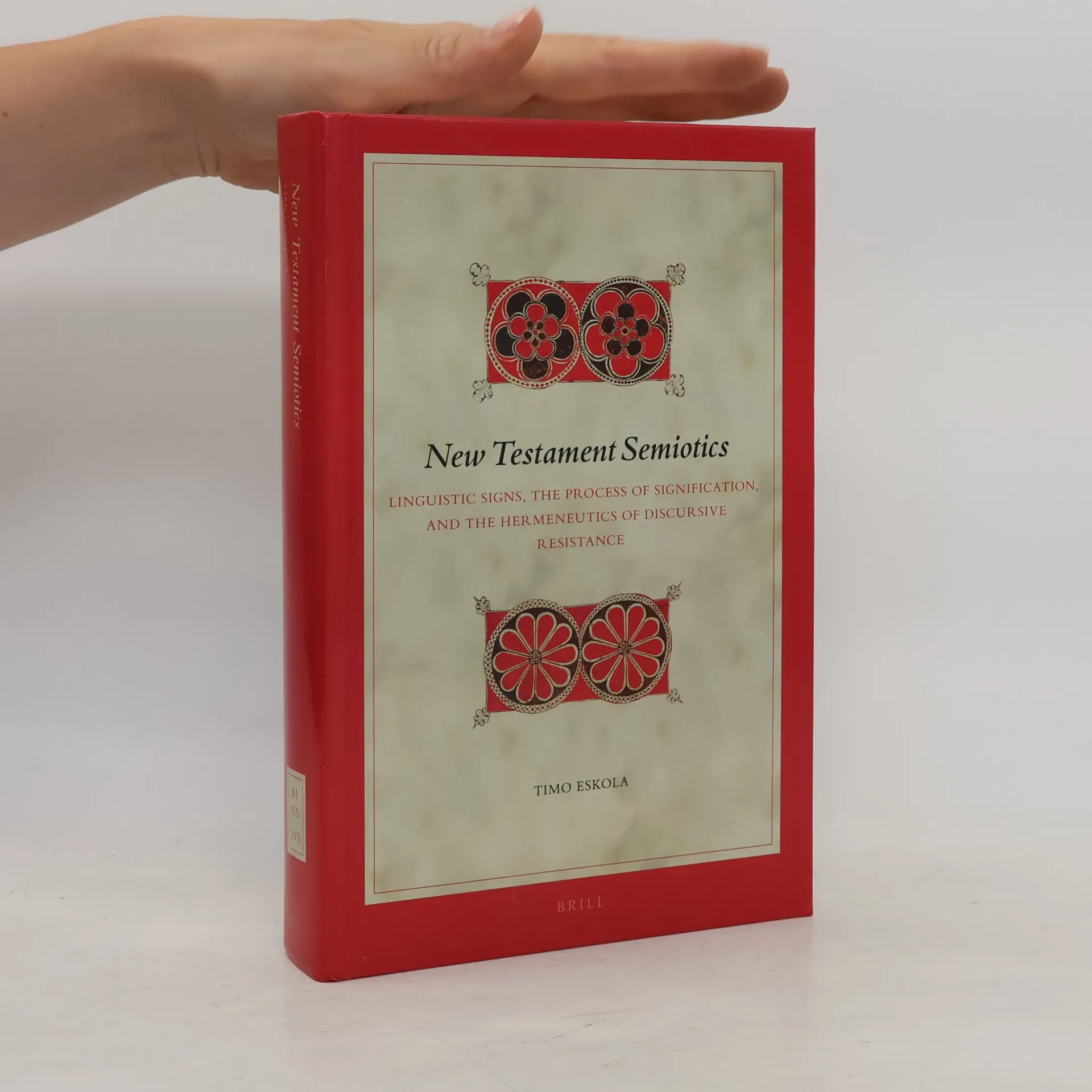
New Testament Semiotics, Timo Eskola, University of Helsinki
- Langue

- Année de publication
- 2021
- Reliure
- (rigide),
- État du livre
- Très bon
- Prix
- 49,99 €
Modes de paiement
Personne n'a encore évalué .
- Titre
- New Testament Semiotics
- Sous-titre
- Linguistic Signs, the Process of Signification, and the Hermeneutics of Discursive Resistance
- Langue
- Anglais
- Auteurs
- Timo Eskola, University of Helsinki
- Éditeur
- Brill
- Publié
- 2021
- Format
- rigide
- Pages
- 472
- ISBN10
- 9004465758
- ISBN13
- 9789004465756
- Séries
- Description
- "Focusing on linguistic signs, New Testament Semiotics navigates through different realist and nominalist traditions. From this perspective, Saussure's and Peirce's traditions exhibit similarities. Questioning Derrida's and Eco's semiotics based on their misuse of Peirce's innovations, Dr. Privatdozent Timo Eskola rehabilitates Benveniste and Ricoeur. A sign is about conditions and functions. Sign as a role is a manifestation of participation. Serving as a sign entails participation in a web of relations, participation in a network of meanings, and adoption of a set of rules. We should focus on sentences and networks, not primitive reference or binary oppositions. Enunciations are postulations producing evanescent meanings. Finally, the study suggests a linguistic approach to metatheology that is based on hermeneutics of discursive resistance"--