




Paramètres
- 262pages
- 10 heures de lecture
En savoir plus sur le livre
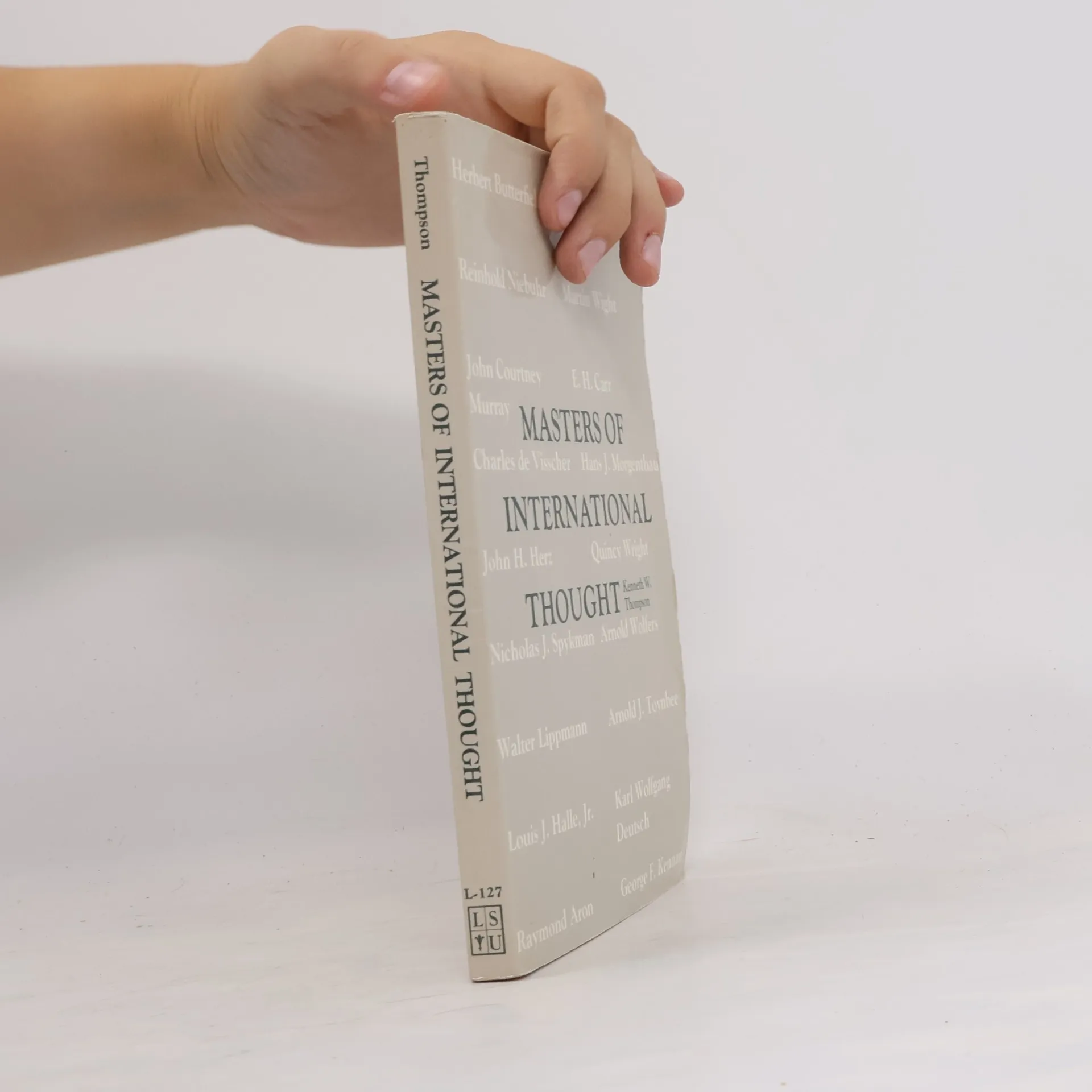
The complexities of modern politics and international relationships sometimes overwhelm us. Kenneth W. Thompson here offers clarity to replace obscurity, personal warmth and human values to replace abstractions. He states the aim of Masters of International Thought to introduce the ideas of eighteen “men of large and capacious thought” about twentieth-century international relations.He presents thinkers who assimilate practical ethics and religion (Butterfield, Niebuhr, Murray, Wight); who eschew utopia for the reality of power politics (Carr, Morgenthau, Spykman, Wolfers, Herz, Deutsch); who regard the Cold War as a mirror of the human condition (Lippman, Kennan, Halle, Aron); and who speculate about the possibilities of world order (Wright, Mitrany, de Visscher, and Toynbee).Thompson was guided in his selections by the enduring value of these men’s thought. Even those works that are fifty years old are still read by policy makers and scholars, Thompson points out. He also acknowledges his personal approach to these masters, for not only has he known their works, he has known many of the writers. He admits that they are “intellectual giants, but they are human beings, not gods.” In Masters of International Thought, he clearly fulfills his aim to share the wisdom and knowledge of these twentieth-century thinkers.
Achat du livre
Masters of International Thought, Kenneth Thompson
- Langue

- Année de publication
- 1980
- Reliure
- (souple),
- État du livre
- Bon
- Prix
- 5,29 €
Modes de paiement
Personne n'a encore évalué .
- Titre
- Masters of International Thought
- Langue
- Anglais
- Auteurs
- Kenneth Thompson
- Éditeur
- LSU Press
- Publié
- 1980
- Format
- souple
- Pages
- 262
- ISBN10
- 0807105813
- ISBN13
- 9780807105818
- Séries
- Mots clés
- Description
- The complexities of modern politics and international relationships sometimes overwhelm us. Kenneth W. Thompson here offers clarity to replace obscurity, personal warmth and human values to replace abstractions. He states the aim of Masters of International Thought to introduce the ideas of eighteen “men of large and capacious thought” about twentieth-century international relations.He presents thinkers who assimilate practical ethics and religion (Butterfield, Niebuhr, Murray, Wight); who eschew utopia for the reality of power politics (Carr, Morgenthau, Spykman, Wolfers, Herz, Deutsch); who regard the Cold War as a mirror of the human condition (Lippman, Kennan, Halle, Aron); and who speculate about the possibilities of world order (Wright, Mitrany, de Visscher, and Toynbee).Thompson was guided in his selections by the enduring value of these men’s thought. Even those works that are fifty years old are still read by policy makers and scholars, Thompson points out. He also acknowledges his personal approach to these masters, for not only has he known their works, he has known many of the writers. He admits that they are “intellectual giants, but they are human beings, not gods.” In Masters of International Thought, he clearly fulfills his aim to share the wisdom and knowledge of these twentieth-century thinkers.