

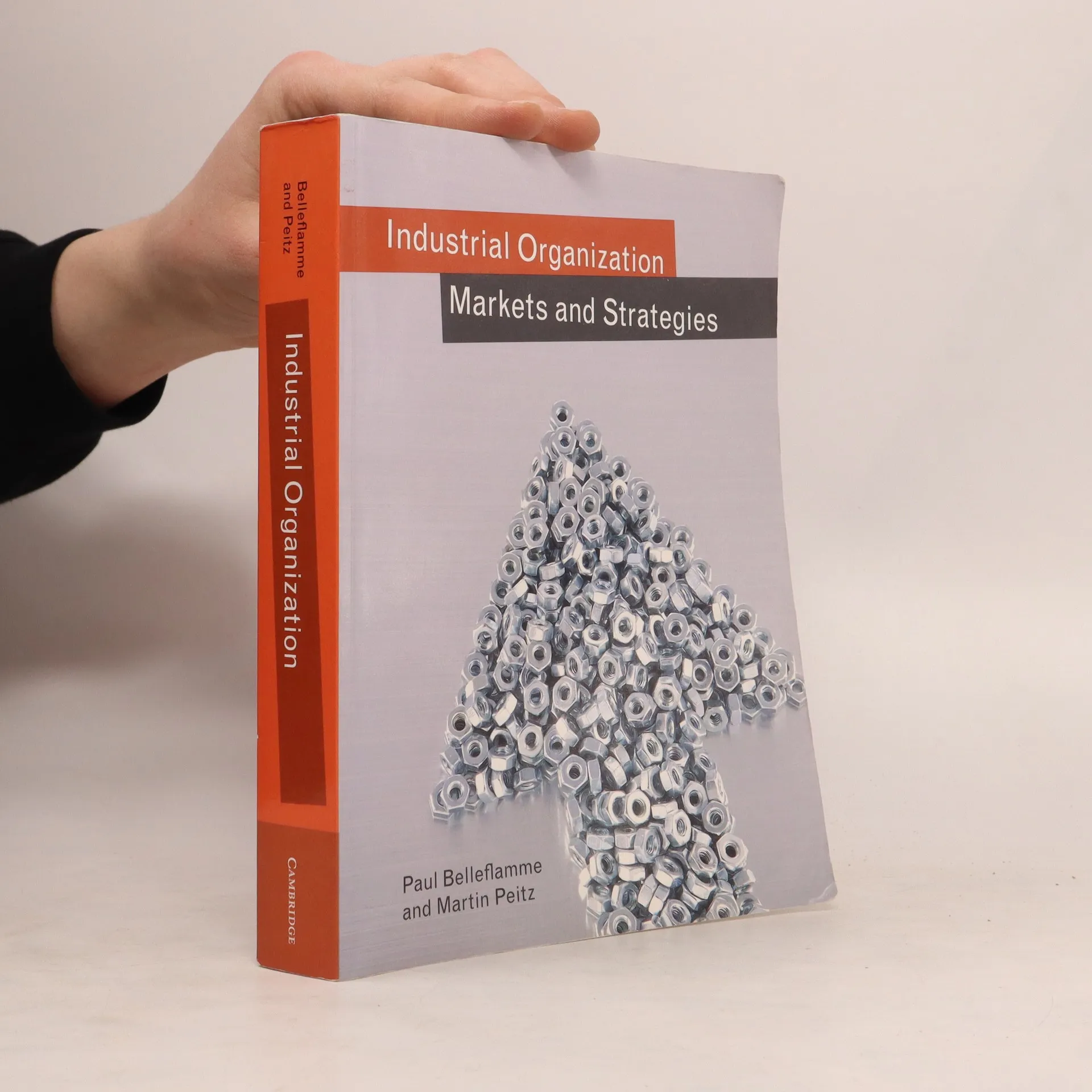
Industrial organization : markets and strategies
Auteurs
Évaluation du livre
En savoir plus sur le livre
Industrial Organization: Markets and Strategies provides an up-to-date account of modern industrial organization that blends theory with real-world applications. Written in a clear and accessible style, it acquaints the reader with the most important models for understanding strategies chosen by firms with market power and shows how such firms adapt to different market environments. It covers a wide range of topics including recent developments on product bundling, branding strategies, restrictions in vertical supply relationships, intellectual property protection, and two-sided markets, to name just a few. Models are presented in detail and the main results are summarized as lessons. Formal theory is complemented throughout by real-world cases that show students how it applies to actual organizational settings. The book is accompanied by a website containing a number of additional resources for lecturers and students, including exercises, answers to review questions, case material and slides.

Achat du livre
Industrial organization : markets and strategies, Paul Belleflamme, Martin Peitz
- Langue

- Année de publication
- 2010
- Reliure
- (souple)
Modes de paiement
Il manque plus que ton avis ici.
- Titre
- Industrial organization : markets and strategies
- Langue
- Anglais
- Auteurs
- Paul Belleflamme, Martin Peitz
- Éditeur
- Cambridge University Press
- Publié
- 2010
- Format
- souple
- Pages
- 720
- ISBN10
- 0521681596
- ISBN13
- 9780521681599
- Séries
- Mots clés
- Commerce, Manuels et guides
- Évaluation
- 4,4 sur 5
- Description
- Industrial Organization: Markets and Strategies provides an up-to-date account of modern industrial organization that blends theory with real-world applications. Written in a clear and accessible style, it acquaints the reader with the most important models for understanding strategies chosen by firms with market power and shows how such firms adapt to different market environments. It covers a wide range of topics including recent developments on product bundling, branding strategies, restrictions in vertical supply relationships, intellectual property protection, and two-sided markets, to name just a few. Models are presented in detail and the main results are summarized as lessons. Formal theory is complemented throughout by real-world cases that show students how it applies to actual organizational settings. The book is accompanied by a website containing a number of additional resources for lecturers and students, including exercises, answers to review questions, case material and slides.