

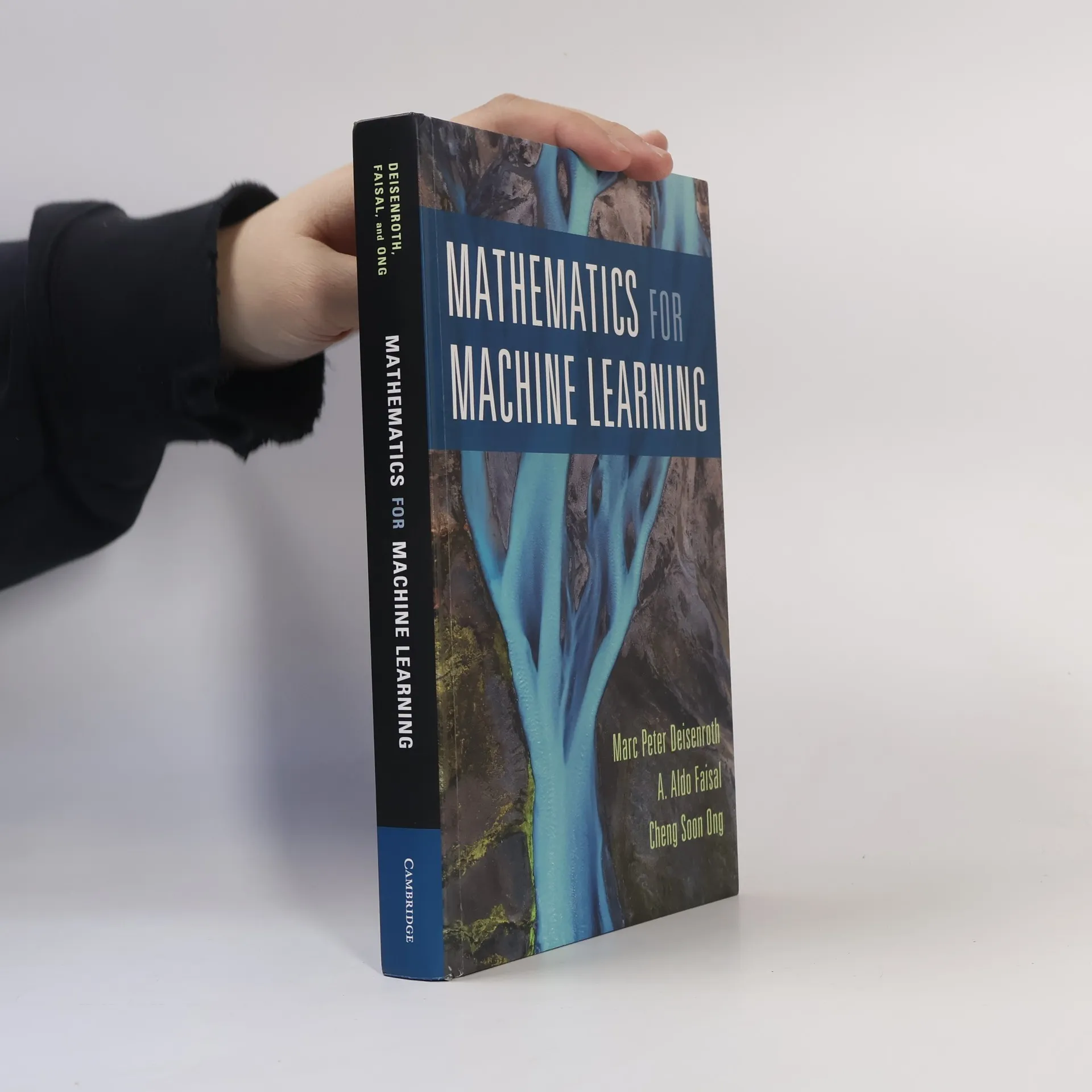
Mathematics for Machine Learning
Évaluation du livre
Paramètres
- 398pages
- 14 heures de lecture
En savoir plus sur le livre
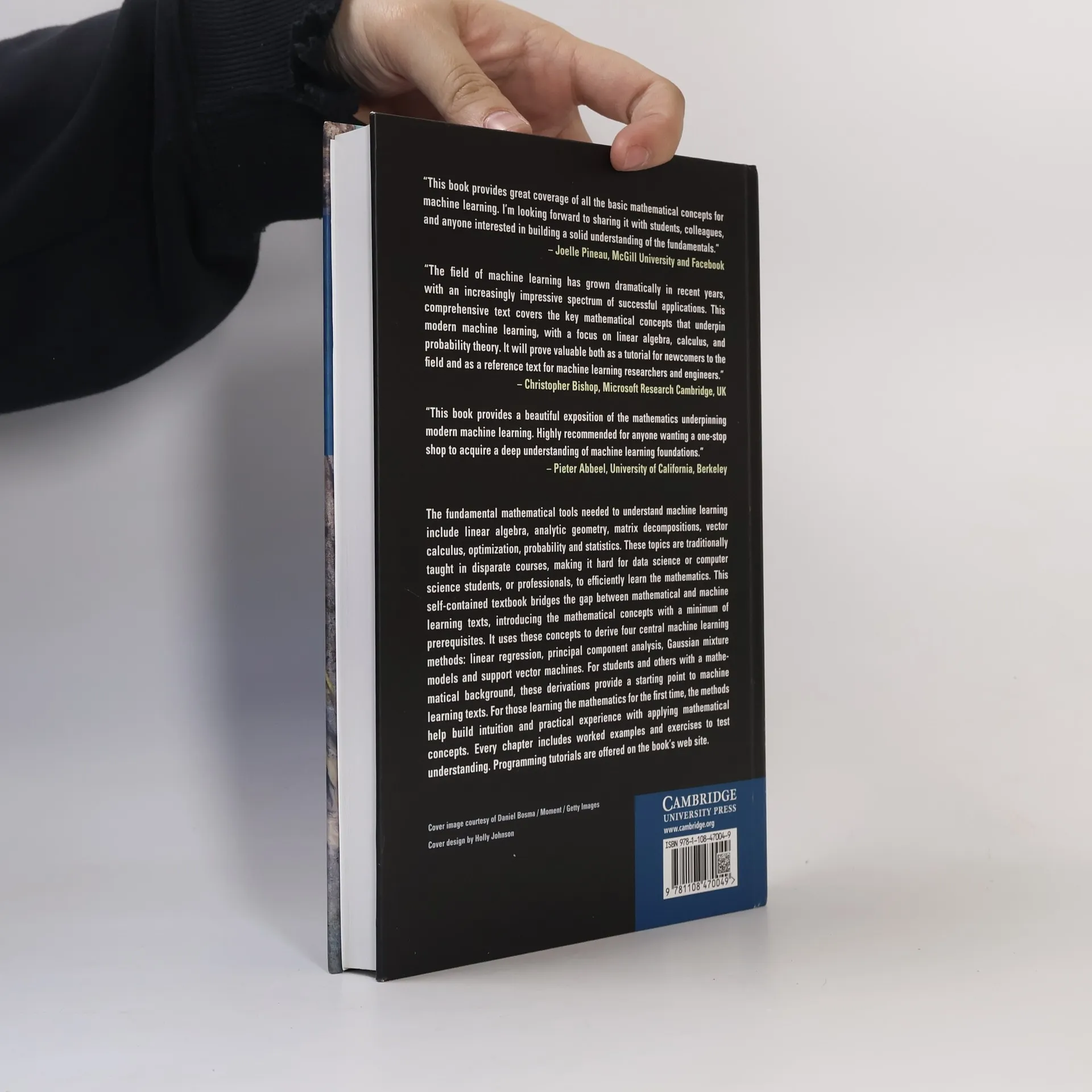
The fundamental mathematical tools needed to understand machine learning include linear algebra, analytic geometry, matrix decompositions, vector calculus, optimization, probability and statistics. These topics are traditionally taught in disparate courses, making it hard for data science or computer science students, or professionals, to efficiently learn the mathematics. This self-contained textbook bridges the gap between mathematical and machine learning texts, introducing the mathematical concepts with a minimum of prerequisites. It uses these concepts to derive four central machine learning methods: linear regression, principal component analysis, Gaussian mixture models and support vector machines. For students and others with a mathematical background, these derivations provide a starting point to machine learning texts. For those learning the mathematics for the first time, the methods help build intuition and practical experience with applying mathematical concepts. Every chapter includes worked examples and exercises to test understanding. Programming tutorials are offered on the book's web site.
Édition

Achat du livre
Mathematics for Machine Learning, Marc Peter Deisenroth, Cheng Soon Ong, A. Aldo Faisal
- Langue

- Année de publication
- 2020
- Reliure
- (rigide)
Modes de paiement
Il manque plus que ton avis ici.
- Titre
- Mathematics for Machine Learning
- Langue
- Anglais
- Éditeur
- Cambridge University Press
- Publié
- 2020
- Format
- rigide
- Pages
- 398
- ISBN10
- 1108470041
- ISBN13
- 9781108470049
- Séries
- Évaluation
- 4,25 sur 5
- Description
- The fundamental mathematical tools needed to understand machine learning include linear algebra, analytic geometry, matrix decompositions, vector calculus, optimization, probability and statistics. These topics are traditionally taught in disparate courses, making it hard for data science or computer science students, or professionals, to efficiently learn the mathematics. This self-contained textbook bridges the gap between mathematical and machine learning texts, introducing the mathematical concepts with a minimum of prerequisites. It uses these concepts to derive four central machine learning methods: linear regression, principal component analysis, Gaussian mixture models and support vector machines. For students and others with a mathematical background, these derivations provide a starting point to machine learning texts. For those learning the mathematics for the first time, the methods help build intuition and practical experience with applying mathematical concepts. Every chapter includes worked examples and exercises to test understanding. Programming tutorials are offered on the book's web site.