

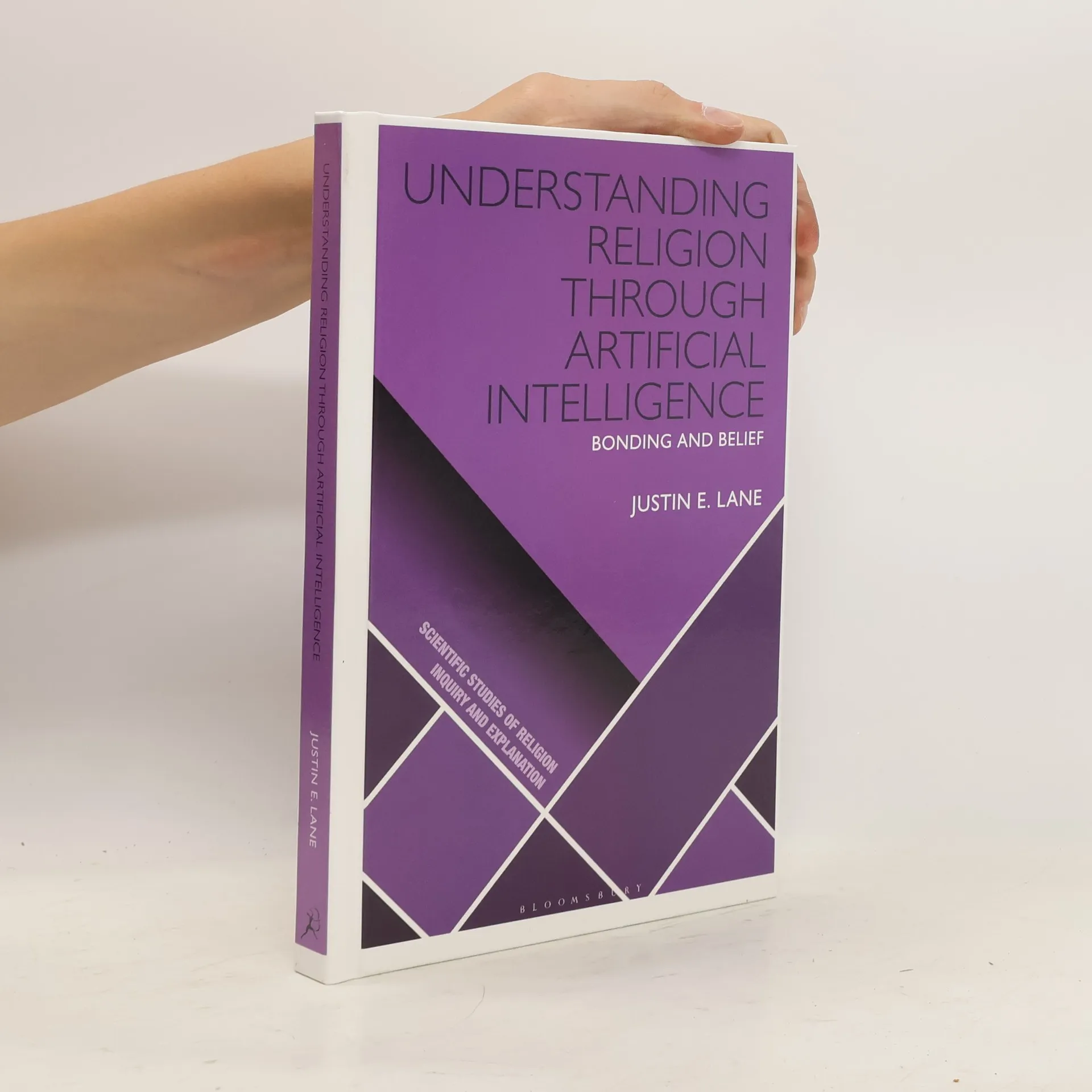


Understanding Religion Through Artificial Intelligence
Auteurs
Paramètres
En savoir plus sur le livre
In Understanding Religion through Artificial Intelligence , Justin E. Lane looks at the reasons why humans feel they are part of a religious group, despite often being removed from other group members by vast distances or multiple generations. To achieve this, Lane offers a new perspective that integrates religious studies with psychology, anthropology, and data science, as well as with research at the forefront of Artificial Intelligence (AI).After providing a critical analysis of approaches to religion and social cohesion, Lane proposes a new model for religious studies, which he calls the “Information Identity System.” This model focuses on the idea of conceptual links between an individual's self-concept and the ancient beliefs of their religious group. Lane explores this idea through real-world examples, ranging from the rise in global Pentecostalism, to religious extremism and self-radicalization, to the effect of 9/11 on sermons. Lane uses this lens to show how we can understand religion and culture today, and how we can better contextualize the changes we see in the social world around us.
Édition

Achat du livre
Understanding Religion Through Artificial Intelligence, Justin E. Lane
- Langue

- Année de publication
- 2021
- Reliure
- (rigide)
Modes de paiement
Personne n'a encore évalué .
- Titre
- Understanding Religion Through Artificial Intelligence
- Langue
- Anglais
- Auteurs
- Justin E. Lane
- Éditeur
- Bloomsbury
- Publié
- 2021
- Format
- rigide
- ISBN10
- 1350103551
- ISBN13
- 9781350103559
- Séries
- Mots clés
- Description
- In Understanding Religion through Artificial Intelligence , Justin E. Lane looks at the reasons why humans feel they are part of a religious group, despite often being removed from other group members by vast distances or multiple generations. To achieve this, Lane offers a new perspective that integrates religious studies with psychology, anthropology, and data science, as well as with research at the forefront of Artificial Intelligence (AI).After providing a critical analysis of approaches to religion and social cohesion, Lane proposes a new model for religious studies, which he calls the “Information Identity System.” This model focuses on the idea of conceptual links between an individual's self-concept and the ancient beliefs of their religious group. Lane explores this idea through real-world examples, ranging from the rise in global Pentecostalism, to religious extremism and self-radicalization, to the effect of 9/11 on sermons. Lane uses this lens to show how we can understand religion and culture today, and how we can better contextualize the changes we see in the social world around us.