

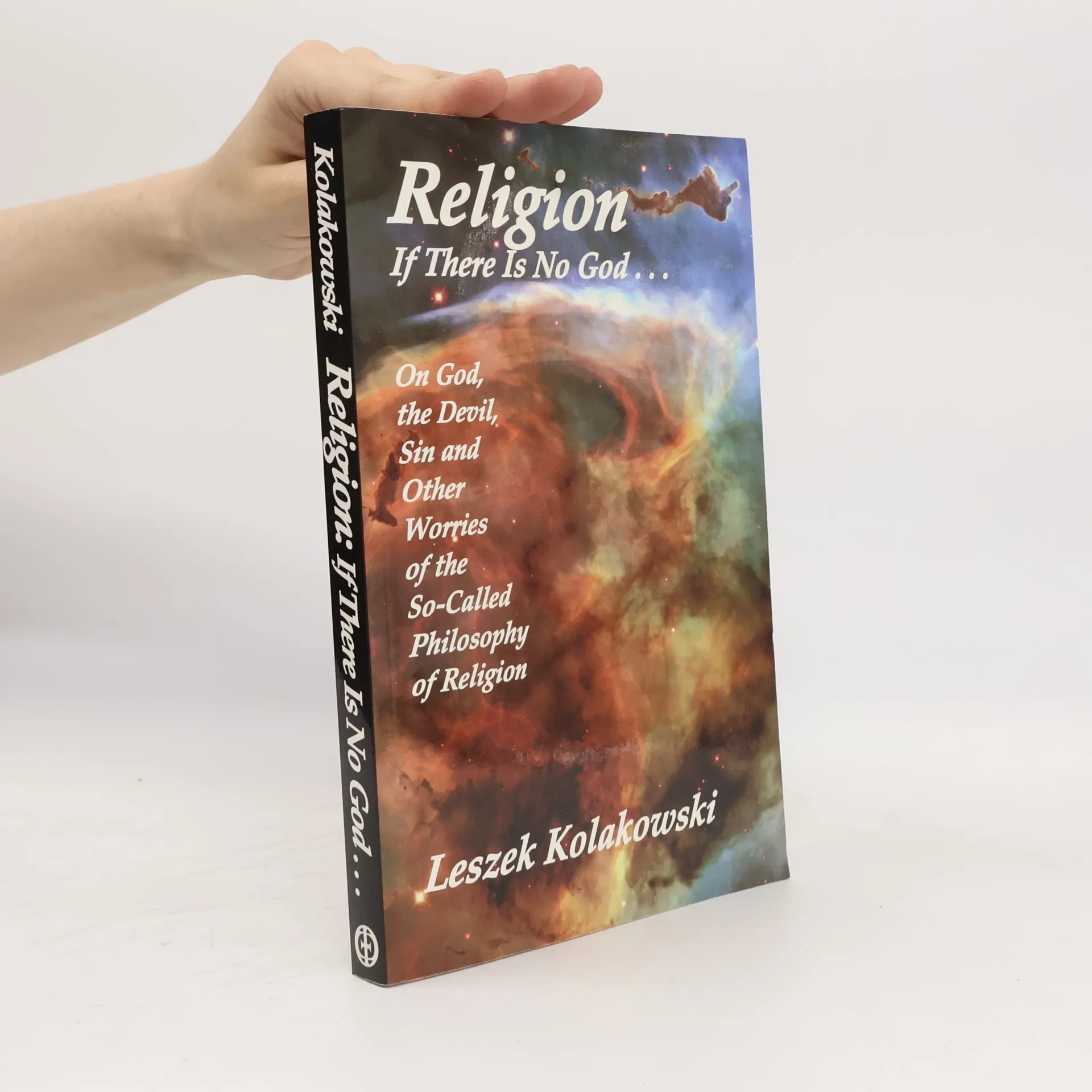


En savoir plus sur le livre
Leszek Kolakowski discusses, in a highly original way, the arguments for and against the existence of God as they have been conducted through the ages. He examines the critiques of religious belief, from the Epicureans through Nietzsche to contemporary anthropological inquiry, the assumptions that underlie them, and the counter-arguments of such apologists as Descartes, Leibniz, and Pascal.His exploration of the philosophy of religion covers the historical discussions of the nature and existence of evil, the importance of the concepts of failure and eternity to the religious impulse, the relationship between skepticism and mysticism, and the place of reason, understanding, and in models of religious thought. He examines why people, throughout known history, have cherished the idea of eternity and existence after death, and why this hope has been dependent on the worship of an eternal reality. He confronts the problems of meaning in religious language.

Édition

Achat du livre
Religion, Leszek Kolakowski
- Langue

- Année de publication
- 2001
- Reliure
- (souple)
Modes de paiement
Il manque plus que ton avis ici.
- Titre
- Religion
- Langue
- Anglais
- Auteurs
- Leszek Kolakowski
- Éditeur
- St. Augustine's Press
- Publié
- 2001
- Format
- souple
- Pages
- 221
- ISBN10
- 1890318876
- ISBN13
- 9781890318871
- Séries
- Catégories
- Mots clés
- Thèmes religieux, Thématique philosophique, Théologie, Foi
- Évaluation
- 4,15 sur 5
- Description
- Leszek Kolakowski discusses, in a highly original way, the arguments for and against the existence of God as they have been conducted through the ages. He examines the critiques of religious belief, from the Epicureans through Nietzsche to contemporary anthropological inquiry, the assumptions that underlie them, and the counter-arguments of such apologists as Descartes, Leibniz, and Pascal.His exploration of the philosophy of religion covers the historical discussions of the nature and existence of evil, the importance of the concepts of failure and eternity to the religious impulse, the relationship between skepticism and mysticism, and the place of reason, understanding, and in models of religious thought. He examines why people, throughout known history, have cherished the idea of eternity and existence after death, and why this hope has been dependent on the worship of an eternal reality. He confronts the problems of meaning in religious language.