



En savoir plus sur le livre
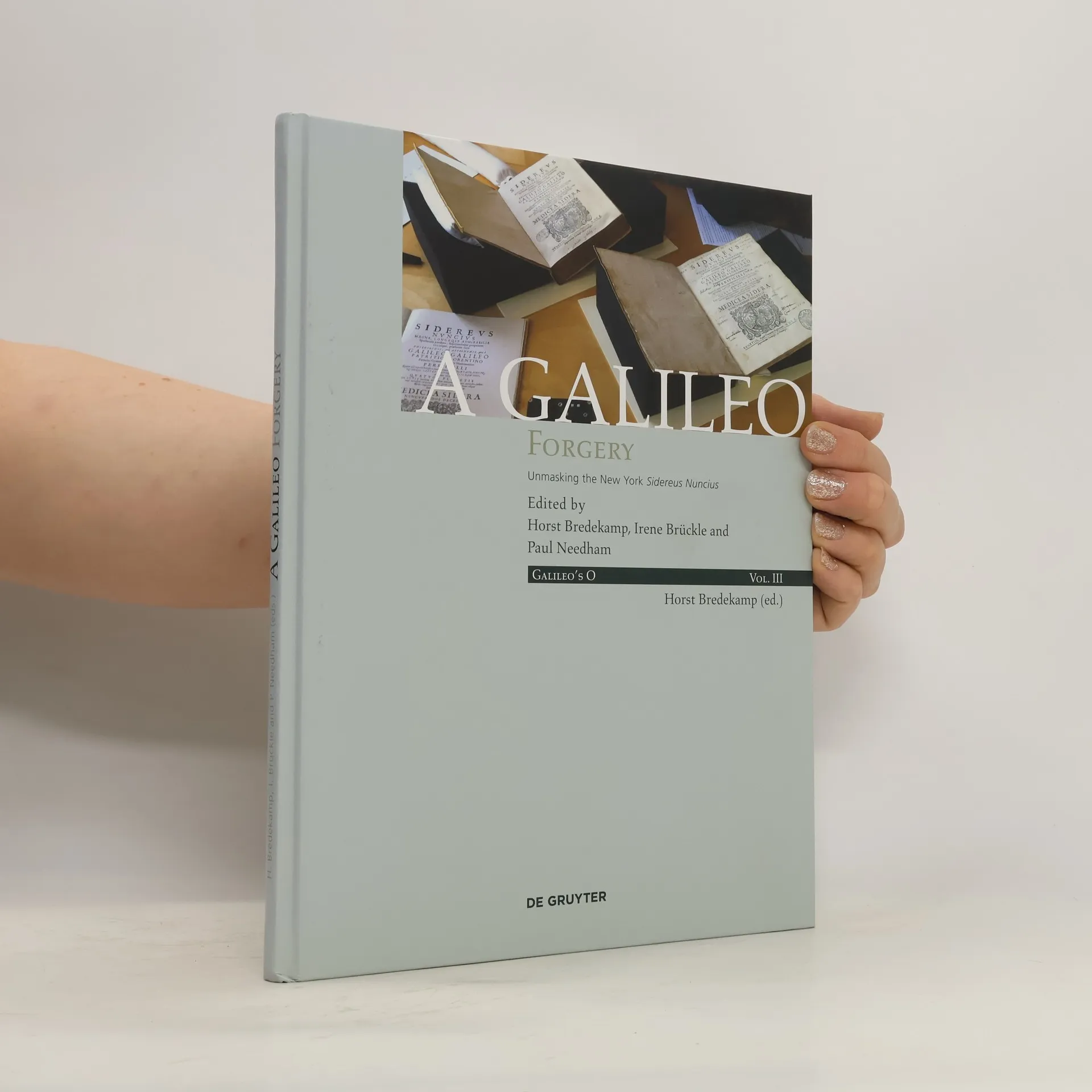
Galileo’s O, Volume III, is perhaps without peer in the history of the book. In this work, historians in various fields revise the results they presented in the first two volumes, which focused on the New York copy of Sidereus Nuncius, written in 1610. The analysis of this book was conceived as a uniquely multidisciplinary and cooperative undertaking, and many of its findings remain valid. Yet the subject of analysis proved to be the work of an international group of forgers. Volume III describes the chronology and methods by which the discovery of forgery was made – a veritable watershed moment in the continuing struggle between the ever-more refined methods of forgers and new methods used to apprehend them. Ultimately, the work also provides insight into the psychology of specialists who “research themselves” in order to prevent similar errors in the future.
Achat du livre
A Galileo Forgery, Horst Bredekamp
- Langue

- Année de publication
- 2014
- Reliure
- (rigide)
Modes de paiement
Il manque plus que ton avis ici.
- Titre
- A Galileo Forgery
- Langue
- Anglais
- Auteurs
- Horst Bredekamp
- Éditeur
- De Gruyter
- Publié
- 2014
- Format
- rigide
- Pages
- 102
- ISBN10
- 3110354640
- ISBN13
- 9783110354645
- Séries
- Catégories
- Mots clés
- Autres manuels scolaires
- Évaluation
- 4 sur 5
- Description
- Galileo’s O, Volume III, is perhaps without peer in the history of the book. In this work, historians in various fields revise the results they presented in the first two volumes, which focused on the New York copy of Sidereus Nuncius, written in 1610. The analysis of this book was conceived as a uniquely multidisciplinary and cooperative undertaking, and many of its findings remain valid. Yet the subject of analysis proved to be the work of an international group of forgers. Volume III describes the chronology and methods by which the discovery of forgery was made – a veritable watershed moment in the continuing struggle between the ever-more refined methods of forgers and new methods used to apprehend them. Ultimately, the work also provides insight into the psychology of specialists who “research themselves” in order to prevent similar errors in the future.