
Bookbot

Karl Sigmund

    1 janvier 1945
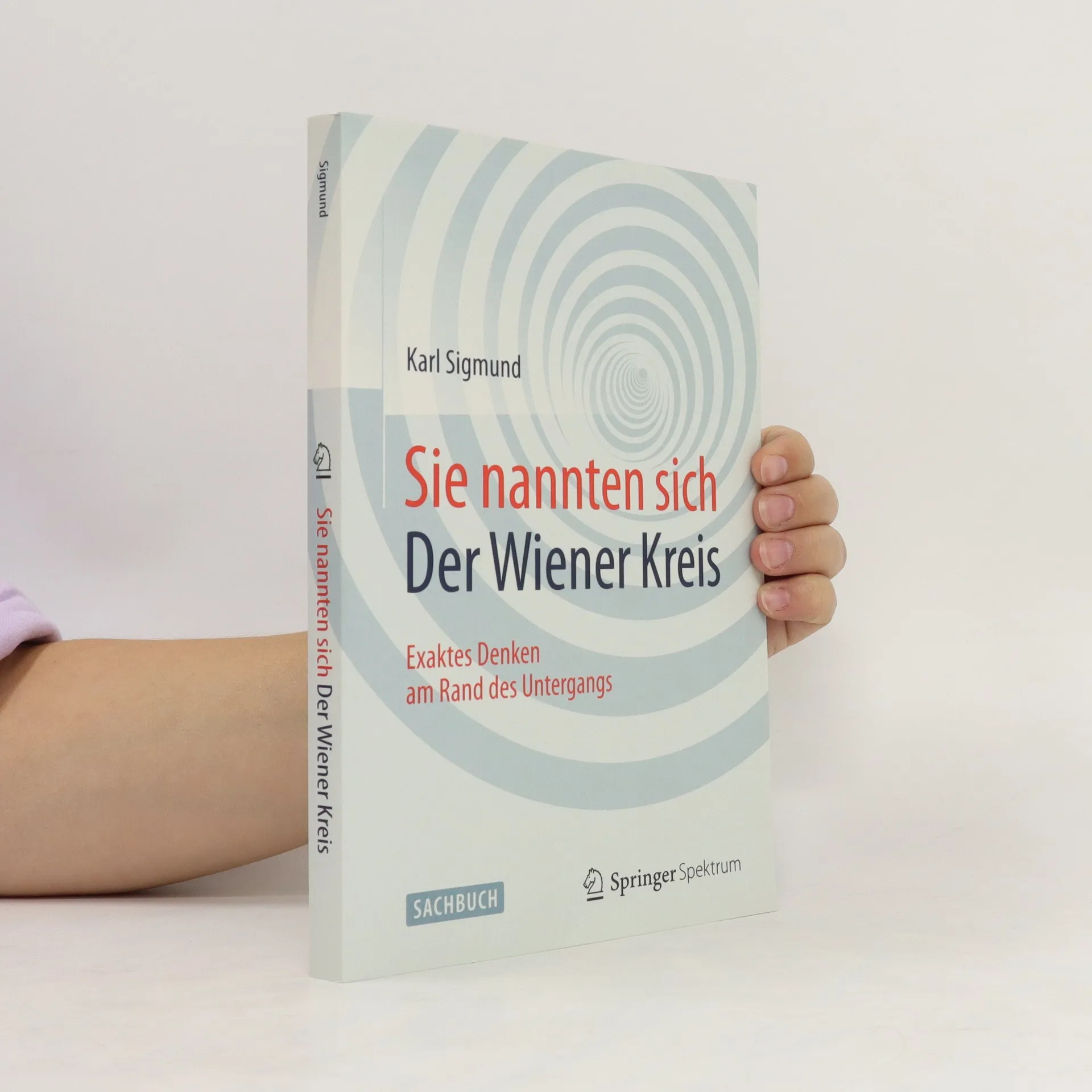
    Sie nannten sich Der Wiener Kreis
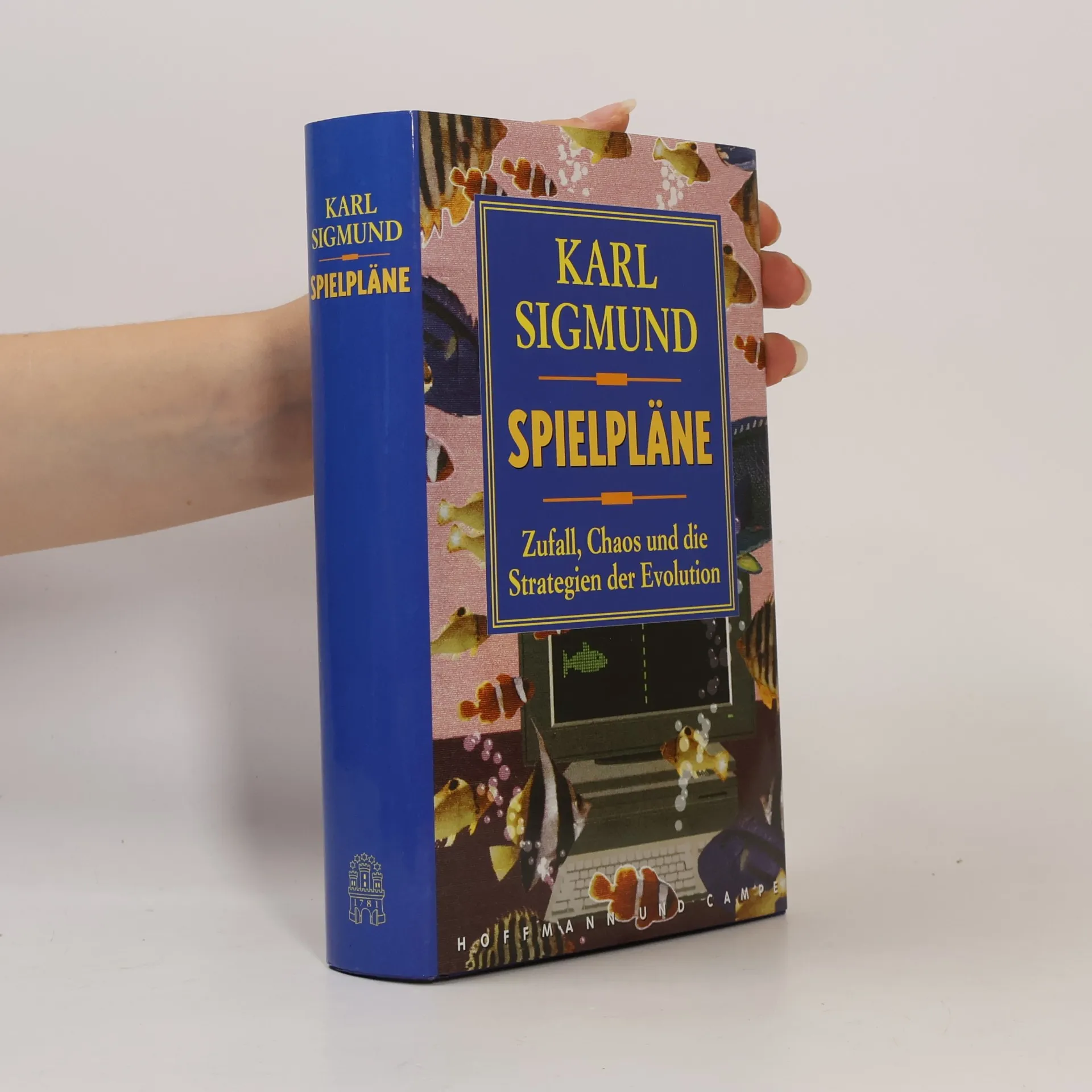
    Spielpläne
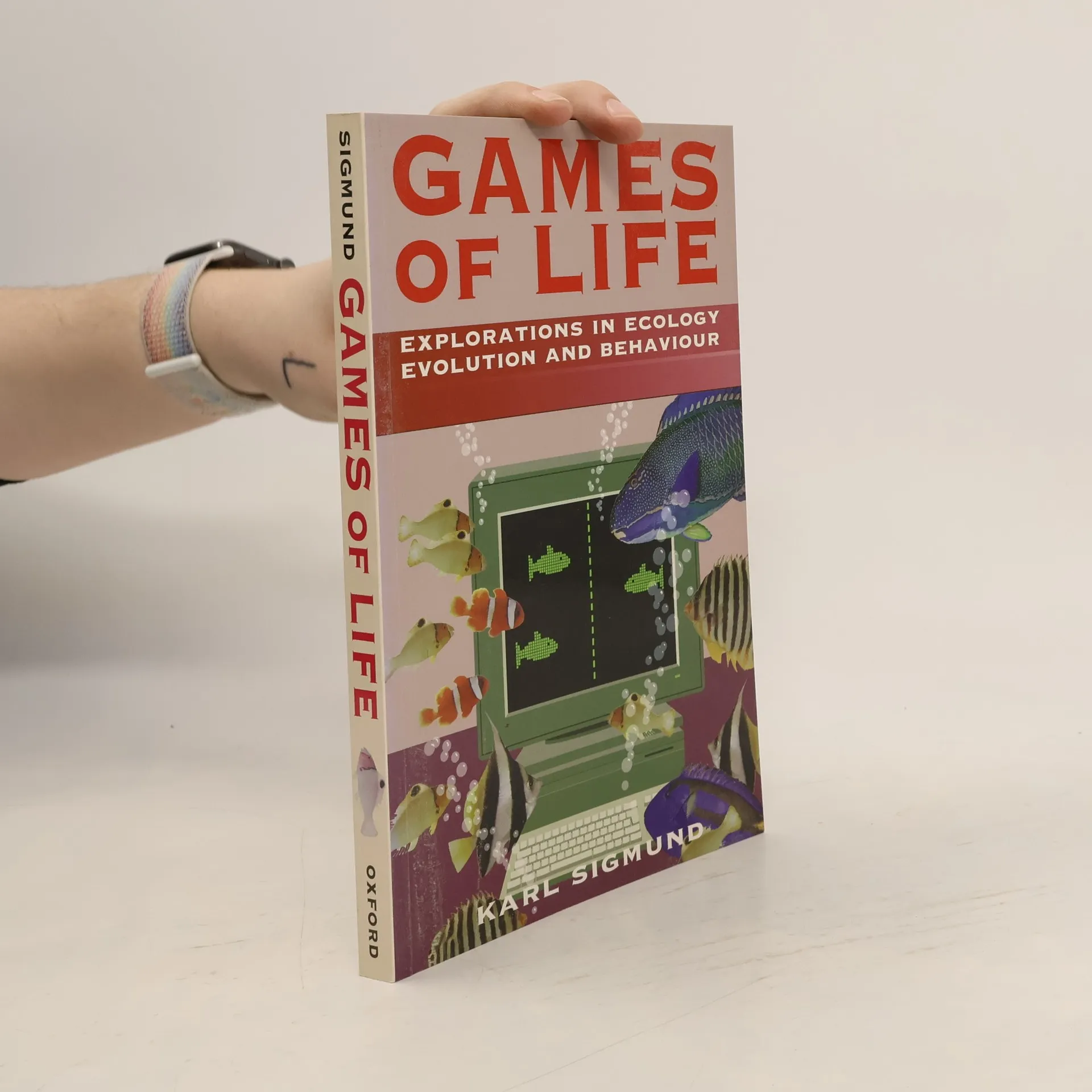
    Games of Life
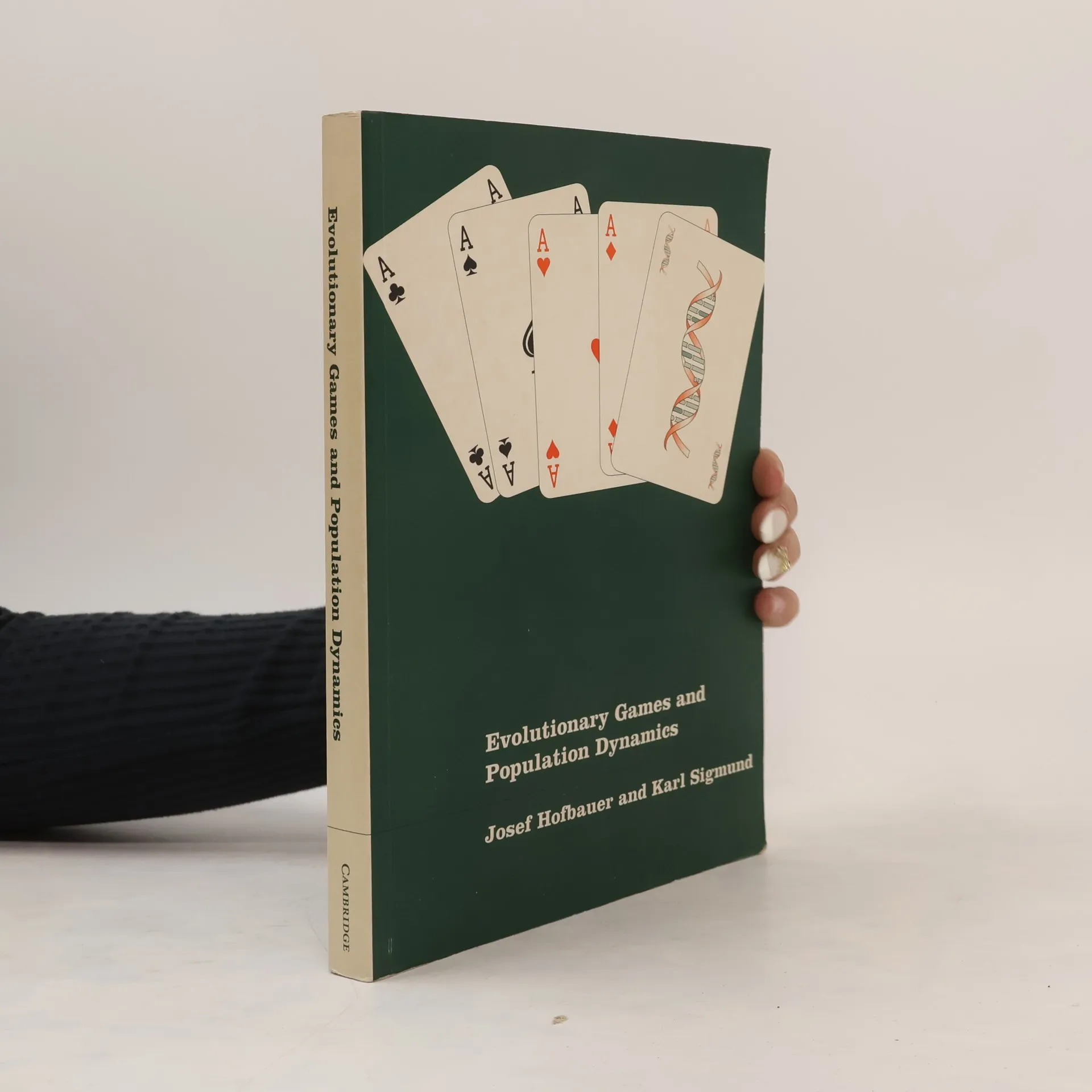
    Evolutionary Games and Population Dynamics
    Kurt Gödel
    • 2015

      Sie nannten sich Der Wiener Kreis

      • 357pages
      • 13 heures de lecture
      3,5(12)Évaluer

      Der Wiener Kreis ist aus dem Geistesleben des 20. Jahrhunderts nicht wegzudenken. Anknüpfend an Russell und Einstein versucht ein Team von Mathematikern, Naturwissenschaftlern und Philosophen die Grundlagen einer wissenschaftlichen Weltauffassung zu legen, im scharfen Gegenwind der reaktionären Politik der Zwischenkriegsjahre. Anschaulich, einfach und einprägsam stellt Karl Sigmund eine der spannendsten Episoden der radikalen Moderne dar - einer Episode, die vom Nationalsozialismus zerstört wurde, aber im angelsächsischen Exil reiche Früchte trug. Viele der damals angerissenen Fragen haben heute noch ihre Auswirkungen: Es führt eine Linie von der symbolischen Logik Carnaps und Gödels zur Informatik, und die wissenschaftliche Weltauffassung ist so selbstverständlich geworden, dass wir sie kaum mehr wahrnehmen. Ein Buch für alle an der Kulturgeschichte des 20. Jahrhunderts Interessierten, das naturwissenschaftlich und geisteswissenschaftlich orientierte Leserinnen und Leser in gleichem Maß anspricht.

      Sie nannten sich Der Wiener Kreis
    • 2006

      Kurt Gödel

      • 225pages
      • 8 heures de lecture
      4,0(3)Évaluer

      Laut Time Magazin zählt Kurt Gödel (geb. 1906) zu den wichtigsten Personen des 20. Jahrhunderts. Mit seinem Blick zurück eilte er gedanklich seiner Zeit weit voraus. Dieses Buch bietet eine besonders einfache und anschauliche Einführung in sein Leben und Werk, geschrieben für ein Publikum mit Interesse an den menschlichen und kulturellen Aspekten der Wissenschaft - Gödel für Genießer. Mit wenig Text (in Deutsch und Englisch) und vielen Abbildungen (Fotos und Dokumenten) soll Gödels Geschichte nacherzählt werden: sein Studium in Wien, als jüngstes Mitglied des Wiener Kreises, seine fundamentalen Entdeckungen in mathematischer Logik, seine Jahre als Privatdozent in Wien und Princeton, seine Arbeiten zur Mengenlehre, seine dramatische Flucht über Sibirien 1940, seine Freundschaft mit Einstein, seine kosmologischen Entdeckungen, seine langen Jahre am Institute for Advanced Study, seine philosophischen Aufzeichnungen, seine Leiden, sein Tod, und seine Nachwirkung. Dieses Buch ist eine sehr gute Begleitung zu den Ausstellungen im Gödel Jahr.

      Kurt Gödel
    • 1998

      Every form of behavior is shaped by trial and error. Such stepwise adaptation can occur through individual learning or through natural selection, the basis of evolution. Since the work of Maynard Smith and others, it has been realized how game theory can model this process. Evolutionary game theory replaces the static solutions of classical game theory by a dynamical approach centered not on the concept of rational players but on the population dynamics of behavioral programs. In this book the authors investigate the nonlinear dynamics of the self-regulation of social and economic behavior, and of the closely related interactions among species in ecological communities. Replicator equations describe how successful strategies spread and thereby create new conditions that can alter the basis of their success, i.e., to enable us to understand the strategic and genetic foundations of the endless chronicle of invasions and extinctions that punctuate evolution. In short, evolutionary game theory describes when to escalate a conflict, how to elicit cooperation, why to expect a balance of the sexes, and how to understand natural selection in mathematical terms.

      Evolutionary Games and Population Dynamics
    • 1995

      Die Spieltheorie liefert nicht nur den Wirtschaftswissenschaften, sondern auch der Biologie einen Schlüssel zum Verständnis komplexer Anpassungsvorgänge: Denn die verschlungenen Wege der Evolution werden von den Zufälligkeiten genetischer Lotterien ebenso gesteuert wie von den strategischen Notwendigkeiten erbitterter Konflikte. Der Wiener Mathematiker Karl Sigmund versteht es, die "Spielpläne der Natur" überzeugend und auf vergnügliche Weise darzustellen.

      Spielpläne
    • 1993

      Games of Life

      Explorations in Ecology, Evolution, and Behaviour

      • 256pages
      • 9 heures de lecture

      Life is often a matter of gambles, pay-offs, and trade-offs, just like a game. This book takes readers on a tour through the games and computer simulations that are actually helping to advance knowledge in such fields as ecology, evolution, and animal behavior. Although the book deals with questions of vital importance, like sex and survival, it does so in the lively, entertaining spirit of game-playing. It starts with artificial life and self-replicating automata, a topic ideally suited for a computer-games approach. The book goes on to study pursuit games between predators and prey, and chaotic motion and its role in ecology. Games of chance and statistical paradoxes illuminate the randomness in molecular evolution, while some bizarre double games played by chromosomes help explain the laws of population genetics. Other topics include courtship, ownership, partnership, and brinksmanship--illustrated through the game of poker and computer tournaments. No other book explains so well why scientific observations and insights can be structured as the rules of a survival game, and what happens when they are assembled on a computer or in the mind and allowed to run their course. General readers as well as professionals and students in ecological, evolutionary, and behavioral studies will find this a fascinating and informative work.

      Games of Life