The Moral Foundations of Civil Society
- 250pages
- 9 heures de lecture
Wilhelm Roepke may have been the soundest economist of the twentieth century


Wilhelm Röpke était professeur d'économie et l'un des pères spirituels de l'économie sociale de marché. Ses théories et son travail ont contribué de manière significative au renouveau économique de l'Allemagne d'après-guerre. Röpke, qui était également historien, a développé les idées du néolibéralisme sociologique. Son influence est considérée comme essentielle pour avoir permis le « miracle » économique allemand d'après-guerre.



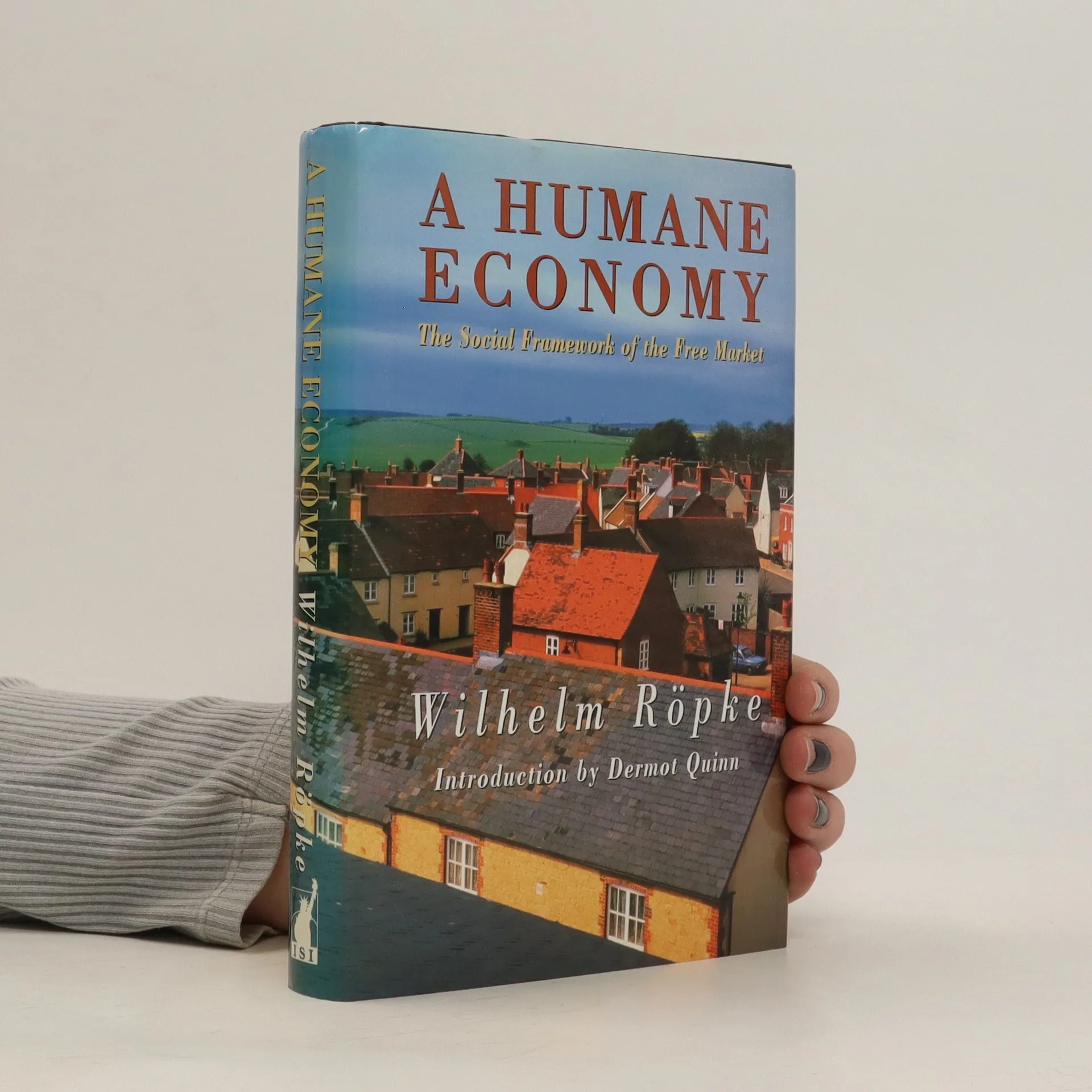

Wilhelm Roepke may have been the soundest economist of the twentieth century
An introduction to economic thinking which holds that the vital things in life are those beyond supply and demand, written by the chief architect of Germany's post-war social market economy. A Humane Economy offers an understandable and compelling explanation of how economies operate. A sweeping and brilliant exposition of market mechanics and moral philosophy, Rpke's masterwork cuts through the jargon and statistics that make most economic writing so obscure and confusing. Over and over, the great Swiss economist stresses one simple You cannot separate economic principles from human behavior.
Roepke's The Social Crisis of Our Time is a series of blasts against the "malformations" of economics: the Nazi and Communist forms of collectivism both come in for severe criticism. Roepke shows the process by which the Western liberal tradition itself makes possible these rebellions against open economic systems. The drive toward social welfare, full employment policies, and the state management of fiscal fluctuations all lead away from free societies no less than market economies.
ausgewählte Aufsätze.