

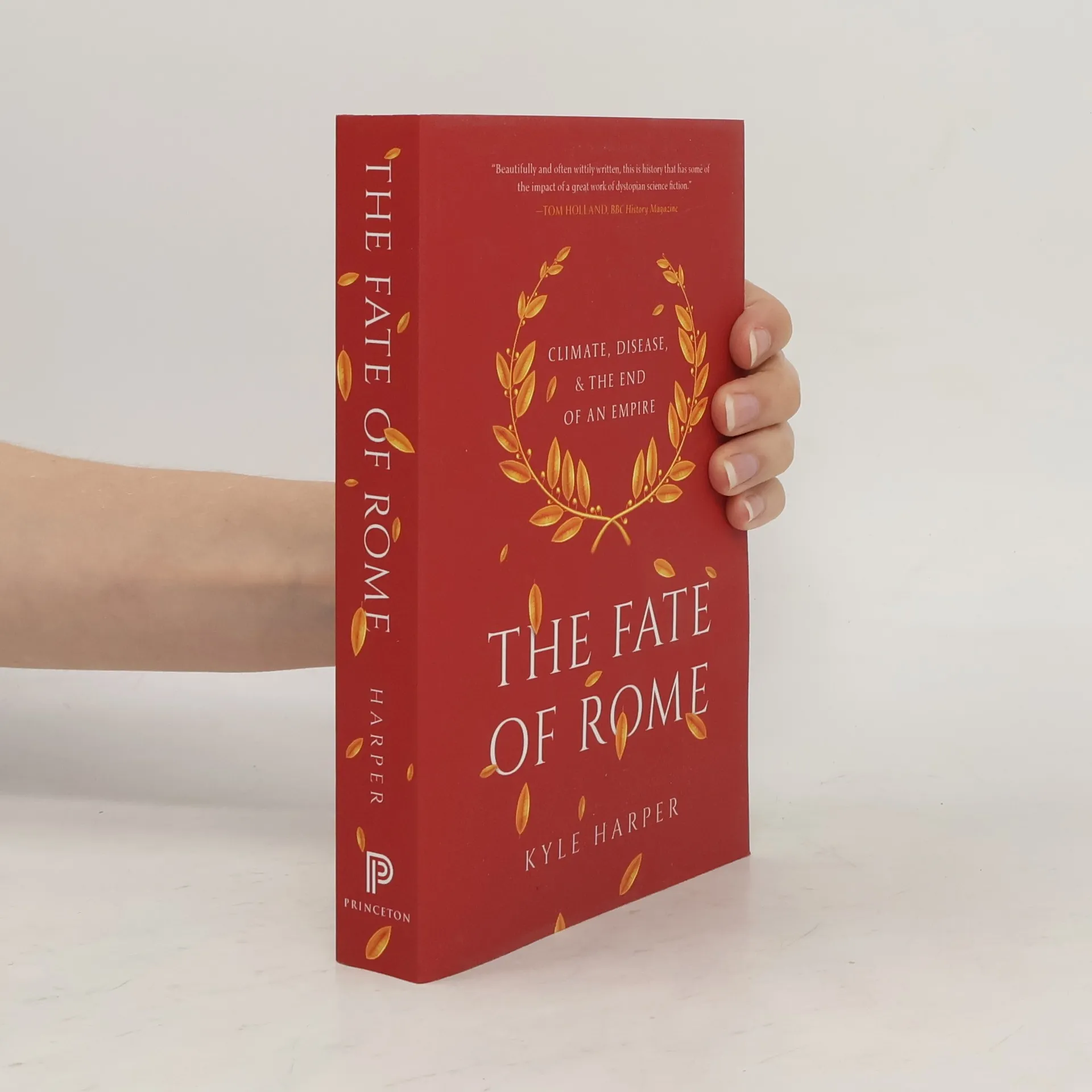
Cet auteur explore en profondeur l'histoire sociale et économique de l'Empire romain et du début du Moyen Âge. Son travail se concentre sur l'histoire environnementale et démographique du premier millénaire, examinant l'impact du changement climatique et des maladies sur la trajectoire de la civilisation. Son approche offre une perspective fascinante du passé, pertinente pour les défis actuels.
In this riveting history, Kyle Harper shows that disease and environmental
conditions were not just instrumental in the final collapse of the Roman
Empire but were serious problems for centuries before the fall. Harper's
compelling and cautionary tale documents the deadly plagues, fevers, and other
pestilences that ravaged the population time and again, resulting in far more
deaths than ever caused by enemy forces. One wonders - like Edward Gibbon -
how the empire managed to last as long as it did.--Eric H. Cline, author of
1177 B.C.: The Year Civilization Collapsed
"Panoramic in scope, Plagues upon the Earth traces the role of disease in the transition to farming, the spread of cities, the advance of transportation, and the stupendous increase in human population. Harper offers a new interpretation of humanitys path to control over infectious diseaseone where rising evolutionary threats constantly push back against human progress, and where the devastating effects of modernization contribute to the great divergence between societies. The book reminds us that human health is globally interdependentand inseparable from the well-being of the planet itself."--]cFrom publisher's description.
2. vydání.
Pozoruhodná práce, napsaná v roce 2017, líčí, jak ničivé pandemie a klimatické změny zpustošily rozsáhlou římskou říši a přispěly k pádu nejmocnější civilizace starověku.
Dějepisci jsou po staletí fascinováni pádem římské civilizace. Kyle Harper ve své knize poprvé klade důraz na úlohu, kterou při něm hrály klimatické změny a velké epidemie. Pomocí moderních vědeckých metod a dat z „přírodních archivů“, tedy z ledovcových jader nebo sekvenování DNA, Harper odhaluje, že osud Říma nebyl psán pouze jeho politiky, vojáky a okolními barbary, ale že k němu přispěly i sopečné erupce, sluneční cykly, klimatická nestabilita či devastující účinky rychlého šíření virů a bakterií, které umožnila pokročilá římská infrastruktura. Kolaps Říma byl totiž podle autora zejména triumfem přírody nad lidskou ctižádostí.
Ve 2. století, na vrcholu své síly, byl Řím neporazitelnou supervelmocí. O několik století později byly všechny jeho zdroje vyčerpané a říše se topila v politickém chaosu. Kniha popisuje boj Římanů s neustále se zhoršujícími výkyvy podnebí a opakovaně propukajícími epidemiemi pravých neštovic, dýmějového moru a jiných, kterým obležená říše nemohla odolávat navěky.
V Harperově břitké reflexi vztahu lidstva a planety slouží Řím jako memento toho, že dějiny naší civilizace jsou klimatickými vlivy a evolucí mikrobů psány v mnohem větší míře, než si ještě dnes dokážeme přiznat.
ISBN 978-80-88411-02-4 (chybné)
FATUM ist das erste Buch, in dem konsequent die katastrophale Rolle untersucht und beschrieben wird, die Klimawandel und Seuchen beim Zusammenbruch des römischen Weltreichs spielten. Gestützt auf neueste wissenschaftliche Erkenntnisse aus dem Bereich der Klimawissenschaft und der Genetik erzählt Kyle Harper die Geschichte eines Infernos, in dem wir wie in einem fernen Spiegel beängstigend vertraute Züge unserer eigenen Welt wiedererkennen. Kyle Harper lehrt als Professor für Altertumswissenschaften an der Universität Oklahoma.--Umschlagstext