Bookbot

Jean M. Twenge

    Cette auteure concentre son travail sur la jeunesse contemporaine et la jeune génération d'aujourd'hui. S'appuyant sur de vastes ensembles de données, elle analyse leurs comportements, leurs motivations et leurs défis. Ses recherches explorent souvent les tendances sociales et technologiques qui façonnent les jeunes, offrant un aperçu de leur vision unique du monde. Elle apporte une compréhension précieuse de cette démographie clé.

    Mein Kind, sein Smartphone und ich
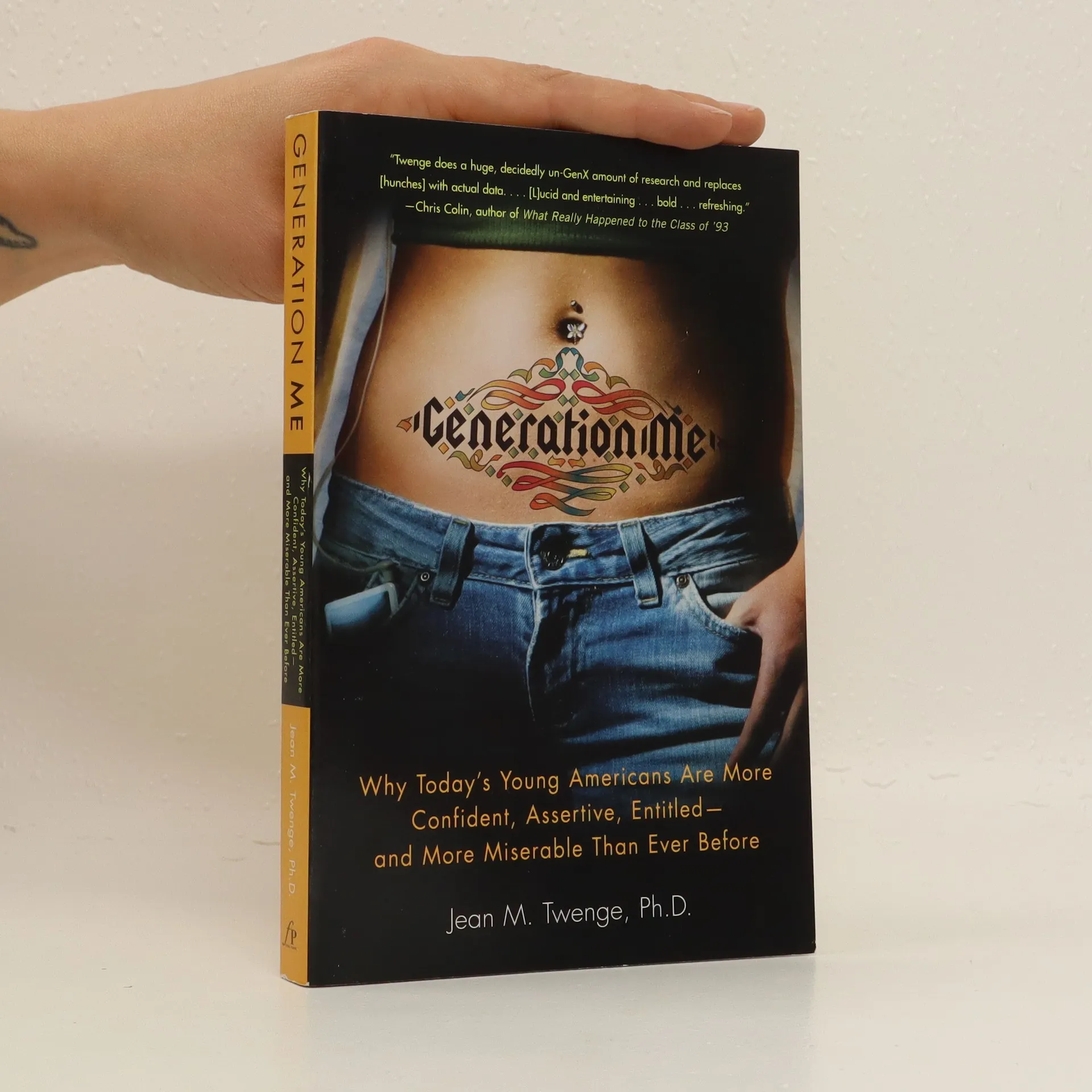
    Generation Me
    Generation Me - Revised and Updated
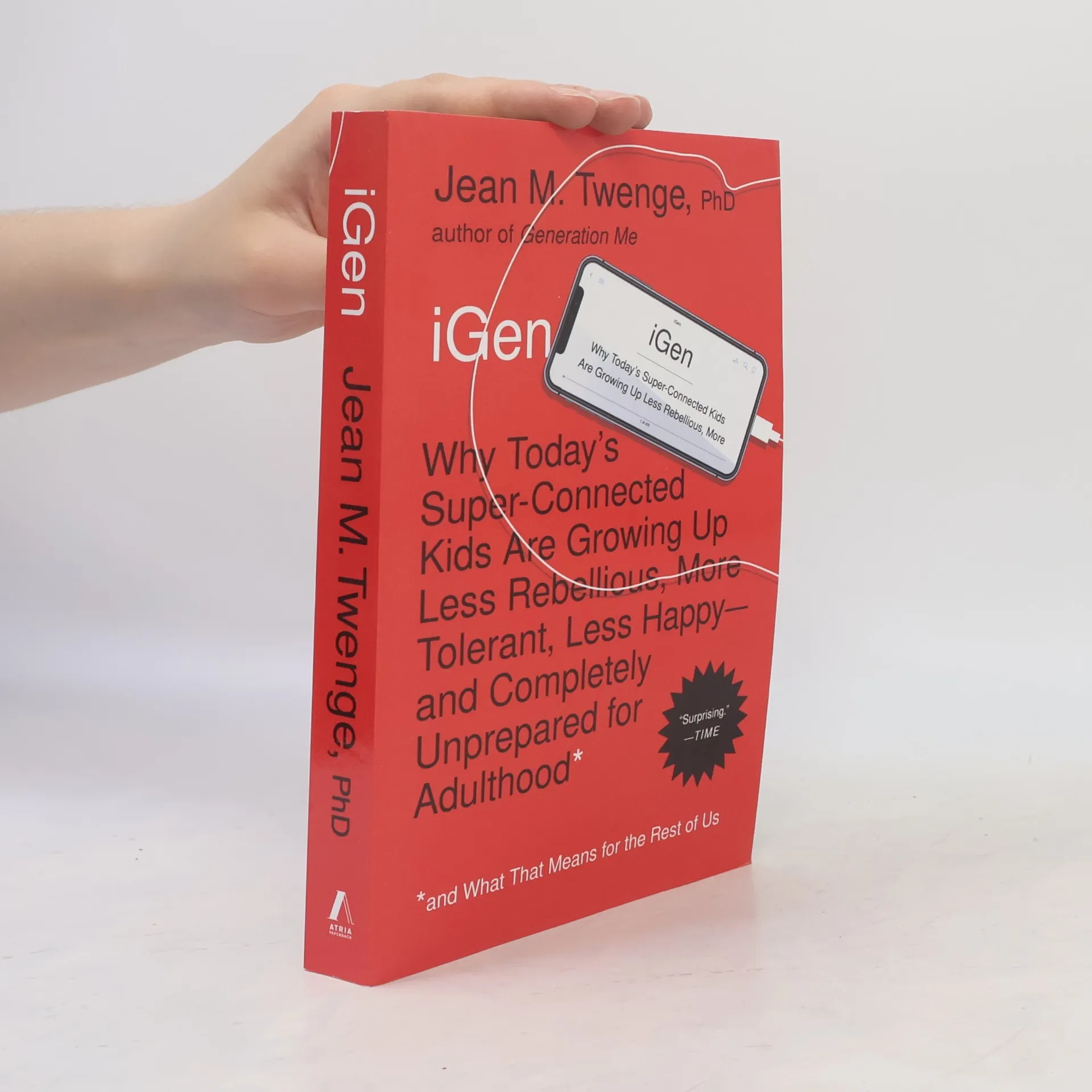
    iGen
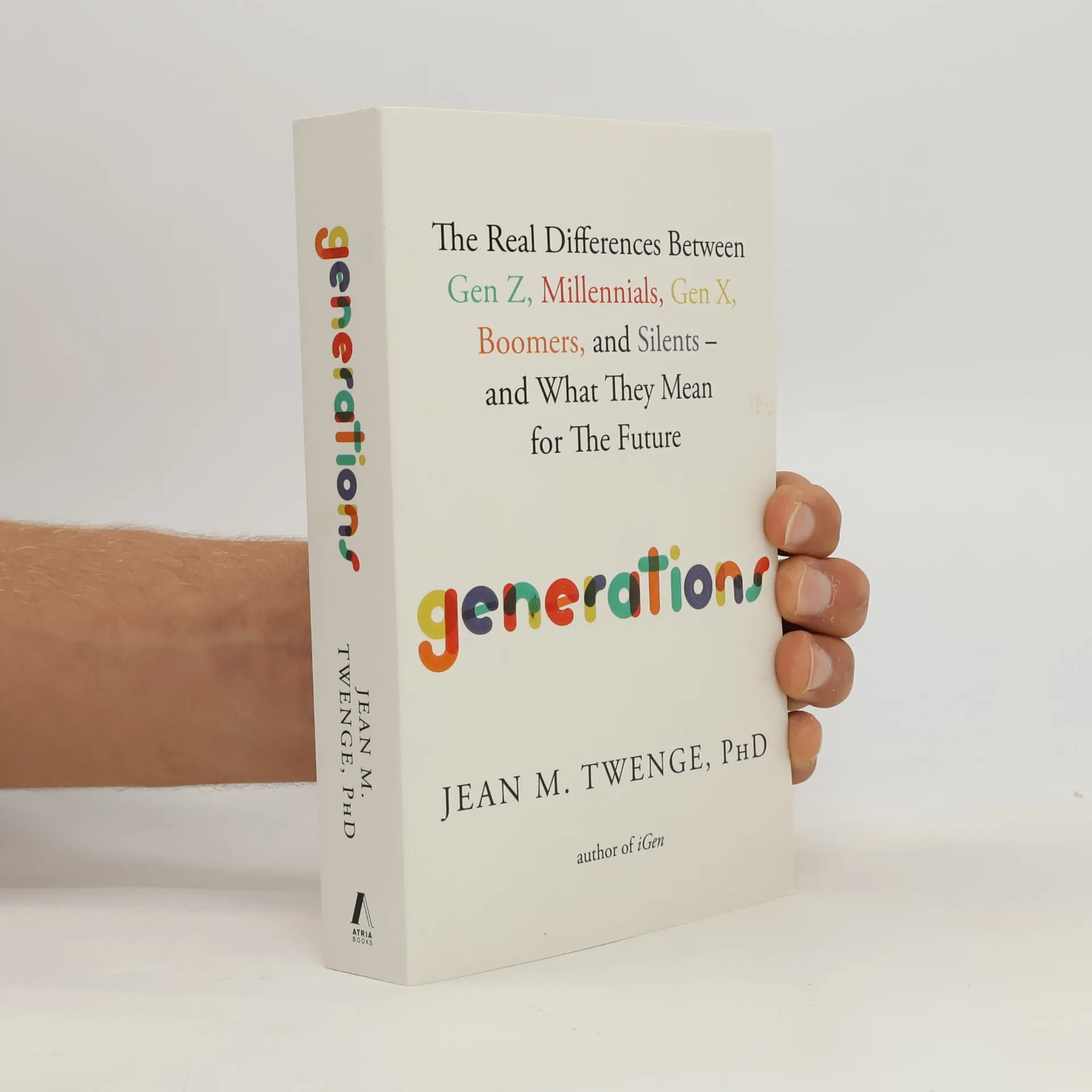
    Generations
    The Narcissism Epidemic
    • The Narcissism Epidemic

      • 368pages
      • 13 heures de lecture
      5,0(1)Évaluer

      Citing a rise in such factors as cosmetic surgery, status-related debt and misrepresented Facebook profiles, a cautionary report on the increase of unhealthy ego-related behaviors examines its actual cost to families, organizations and societies. By the author of Generation Me.

      The Narcissism Epidemic
    • A groundbreaking, revelatory portrait of the six generations that currently live in the United States and how they connect, conflict, and compete with one another-from the acclaimed author of Generation Me and iGen.

      Generations
    • iGen

      • 342pages
      • 12 heures de lecture
      3,8(4609)Évaluer

      They were born after 1995. They grew up with cell phones, had an Instagram page before they started high school, and do not remember a time before the Internet. They are iGen. In the book that has sparked conversations around the world, Dr. Jean Twenge offers a revelatory portrait of a new generation growing up more slowly and more anxious -- but also more socially tolerant and safe -- then any generation in history. Through her deep analysis of data drawn from more than 11 million respondents over multiple decades, Dr. Twenge identifies iGen's surprising attitudes toward religion, sexuality, and politics, as well as unprecedented levels of anxiety and loneliness. As this new group of young people grows into adulthood, parents, educators, and employers have an urgent need to understand them. Because where iGen goes, so goes our nation -- and the world. - Back cover

      iGen
    • Generation Me - Revised and Updated

      • 377pages
      • 14 heures de lecture
      3,7(83)Évaluer

      Born in the 1980s and 1990s, Millennials are reshaping schools, colleges, and businesses all over the country. They are tolerant, confident, open-minded, aand ambitious, but also disengaged, narcissistic, distrustful and anxious. And these children of the Baby Boomers are now feeling the effects of the changing job market -- even as they are affect change the world over."--Back cover.

      Generation Me - Revised and Updated
    • Generation Me

      • 304pages
      • 11 heures de lecture
      3,6(2329)Évaluer

      Noted researcher Dr. Twenge uses 14 years of research and its data from 1.3 million respondents to reveal how profoundly different today's young adults are from previous generations, and makes controversial predictions about what the future holds.

      Generation Me
    • Mein Kind, sein Smartphone und ich

      Warum es so wichtig ist, die neue Generation zu verstehen

      4,0(3)Évaluer

      Sie sind zwischen 1995 und 2005 geboren und damit die erste Generation, die schon im Jugendalter ein Smartphone besitzt. Sie verbringen Stunden in sozialen Netzwerken und mit dem Schreiben von Kurznachrichten, sehen ihre Freunde aber seltener von Angesicht zu Angesicht. Sie sind toleranter, drehen sich jedoch mehr um sich selbst. Sie werden langsamer erwachsen und haben ein höheres Sicherheitsbedürfnis. Anhand von zahlreichen Interviews zeichnet die Psychologin Dr. Jean M. Twenge ein erhellendes Bild dieser neuen Generation und verdeutlicht, warum es für uns alle wichtig ist, sie zu verstehen. Denn sie werden es sein, die unser aller Zukunft prägen. Dieses Buch erschien bereits 2018 unter dem Titel »Me, my Selfie and I« im Mosaik Verlag.

      Mein Kind, sein Smartphone und ich
    • Sie sind zwischen 1995 und 2005 geboren und damit die erste Generation, die schon im Jugendalter ein Smartphone besitzt. Sie verbringen Stunden in sozialen Netzwerken und mit dem Schreiben von Kurznachrichten, aber sehen ihre Freunde seltener von Angesicht zu Angesicht. Sie sind toleranter, drehen sich jedoch mehr um sich selbst. Sie werden langsamer erwachsen und haben ein höheres Sicherheitsbedürfnis. Anhand von zahlreichen Interviews zeichnet die Psychologin Jean Twenge ein erhellendes Bild dieser neuen Generation und verdeutlich, warum es für uns alle wichtig ist, sie zu verstehen. Denn sie werden es sein, die unser aller Zukunft prägen.

      Me, my selfie and I
    • W współczesnym świecie żyją przedstawiciele sześciu pokoleń: cichego pokolenia (1925–1945), baby boomersów (1946–1964), pokolenia X (1965–1979), milenialsów (1980–1994), pokolenia Z (1995–2012) oraz nienazwanych kohort po 2012 roku. Różne doświadczenia życiowe tych grup wpływają na ich przekonania i zachowania. Jean Twenge, ekspertka w dziedzinie zmian pokoleniowych, bada, jak historyczne wydarzenia, takie jak Wielki Kryzys czy ataki z 11 września, kształtują pokolenia, a także jak szybki postęp technologiczny wpływa na ich różnice. Twenge analizuje pragnienia cichego pokolenia i baby boomersów, wyzwania pokolenia X w wieku średnim, ideały milenialsów jako rodziców i pracowników oraz zmiany w pokoleniu Z spowodowane pandemią COVID-19. Książka oferuje zaskakujące i pouczające spostrzeżenia, które mogą zmienić sposób postrzegania relacji międzypokoleniowych. Twenge, autorka ponad stu publikacji naukowych, łączy psychologię z historią i popkulturą, dostarczając wgląd w życie różnych pokoleń. Jej prace były szeroko omawiane w mediach, a książka stanowi lekturę obowiązkową dla tych, którzy chcą zrozumieć współczesny kryzys zdrowia psychicznego oraz różnice międzypokoleniowe.

      Pokolenia
    • Urodzeni po 1995 roku, przedstawiciele iGen dorastali w świecie zdominowanym przez technologię, nie pamiętając czasów sprzed internetu. To pokolenie, które dojrzewa wolniej, jest bardziej znerwicowane, ale również bardziej tolerancyjne i bezpieczne niż wcześniejsze generacje. Młodzi ludzie unikają dorosłych pokus, takich jak alkohol czy seks, a także odpowiedzialności związanej z dorosłością. Cechuje ich ostrożność i otwartość, co może być zaskakujące. Aby skutecznie nawiązywać z nimi kontakty – jako rodzice, pedagodzy czy pracodawcy – konieczne jest zrozumienie ich zachowań. Media społecznościowe i esemesowanie zastępują tradycyjne formy komunikacji, co prowadzi do wzrostu lęku, depresji i samotności wśród młodzieży. Dr Jean Twenge, korzystając z badań i wywiadów z ponad 11 milionami osób, ukazuje unikalne cechy tego pokolenia, w tym ich podejście do religii, seksualności i polityki. Dominacja smartfonów wpływa na każdą sferę życia nastolatków, a ich doświadczenia są podobne niezależnie od statusu społecznego. Zrozumienie iGenu jest kluczowe, ponieważ ich przyszłość kształtuje kierunek, w jakim podąża świat.

      iGen wyd. 2