Too Many Pills
- 320pages
- 12 heures de lecture
An eye-opening account of the over-medicalisation of our lives, by a leading medical practitioner and popular Telegraph health expert.


James Le Fanu est un médecin et écrivain dont le travail fait le lien entre la médecine et les sciences humaines. Il examine de manière critique les controverses actuelles, apportant des perspectives originales aux débats concernant les expériences sur les embryons humains, l'environnementalisme, les causes alimentaires des maladies et le diagnostic erroné de blessures non accidentelles chez les enfants. Le Fanu offre une perspective pointue sur l'intersection de la science, de l'éthique et des préoccupations de santé sociale. Son écriture pousse les lecteurs à considérer des sujets complexes avec une approche réfléchie et analytique.



An eye-opening account of the over-medicalisation of our lives, by a leading medical practitioner and popular Telegraph health expert.
How Science Rediscovered the Mystery of Ourselves
The imperative to `know thyself' is both fundamental and profoundly elusive - for how can we ever truly comprehend the drama and complexity of the human experience?
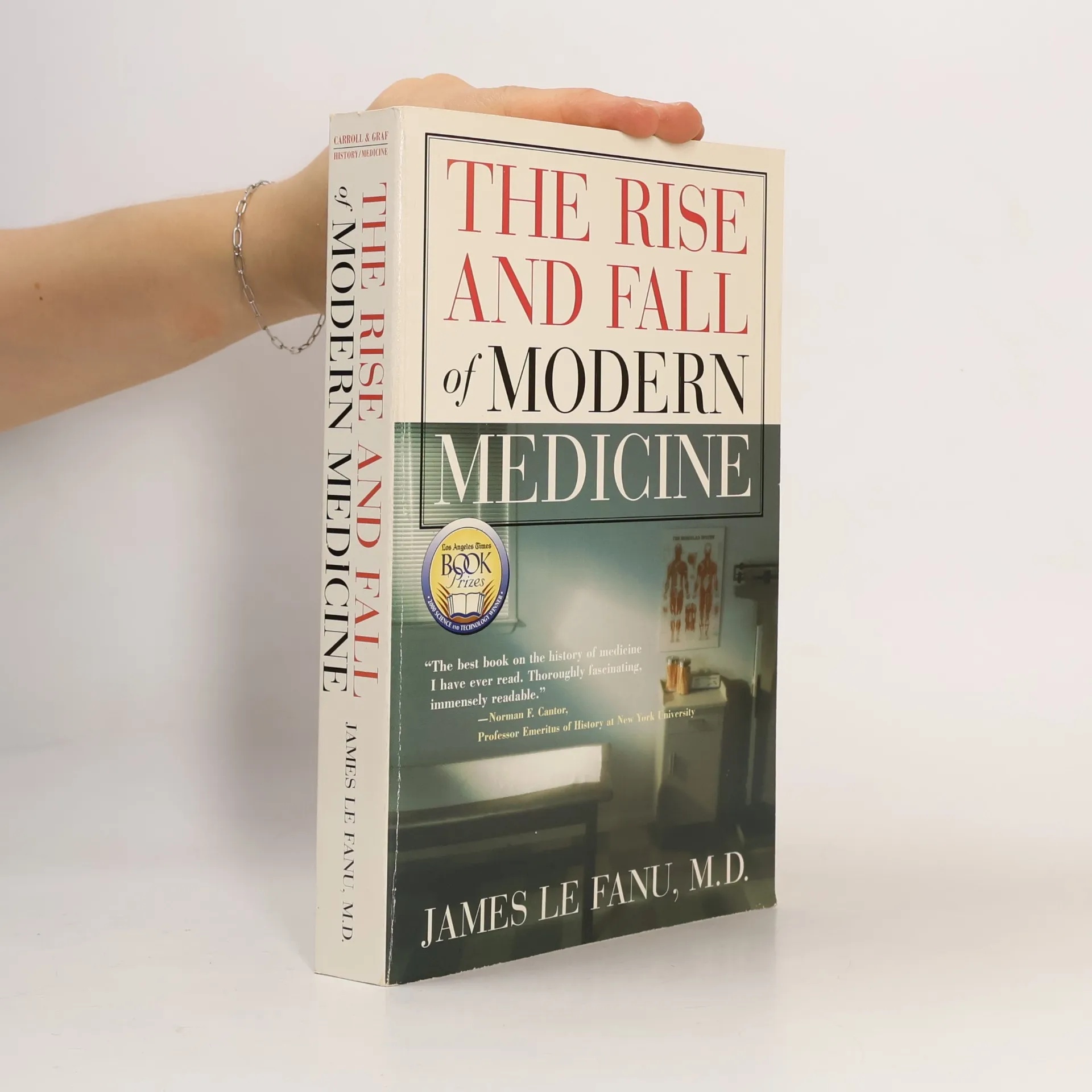
In the years following World War II, medicine achieved significant victories against diseases like smallpox, diphtheria, and polio, while also developing treatments for conditions such as Parkinson's, rheumatoid arthritis, and schizophrenia. Innovations like open-heart surgery, organ transplants, and test-tube babies emerged during this time, marking a high point in medical achievement. However, progress has notably stagnated in recent decades. In this award-winning work, medical doctor and columnist James Le Fanu examines the remarkable advancements of the postwar era and investigates the factors that have contributed to a widening gap between past achievements and current advancements. He explores the impact of social theories, ethical dilemmas, and political debates on healthcare, which have hindered vaccine development and the search for new "miracle" cures. While highlighting the extraordinary progress made in the latter half of the twentieth century, Le Fanu also warns of the challenges facing medicine today. Accompanied by 16 pages of black-and-white photographs, this work offers a critical perspective on the notion of medicine as an endless source of miraculous solutions, presenting important insights that have often been overlooked.
Rozvoj medicíny od konce druhé světové války do let devadesátých bychom mohli považovat za zázrak. Sulfonamidy, pak antibiotika, očkování proti obrně, operace srdce, přenos srdce, dialýza ledvin, přenos ledvin, pilulky proti početí. Autor, známý žurnalista, který se medicíně věnuje podstatnou část svého života, vytyčil takových mezníků dvanáct a každému z nich věnuje kapitolu. Jsou to napínavé příběhy šťastných objevů. O klinické vědě a medicíně se dozvíte všechno podstatné. Ale pak se autor ptá: Proč lidé utíkají k alternativní medicíně a o své zdraví se bojí víc než v dobách infekcí, kdy se při artróze kyčelních kloubů zchromlo a při zápalu plic se umíralo?