


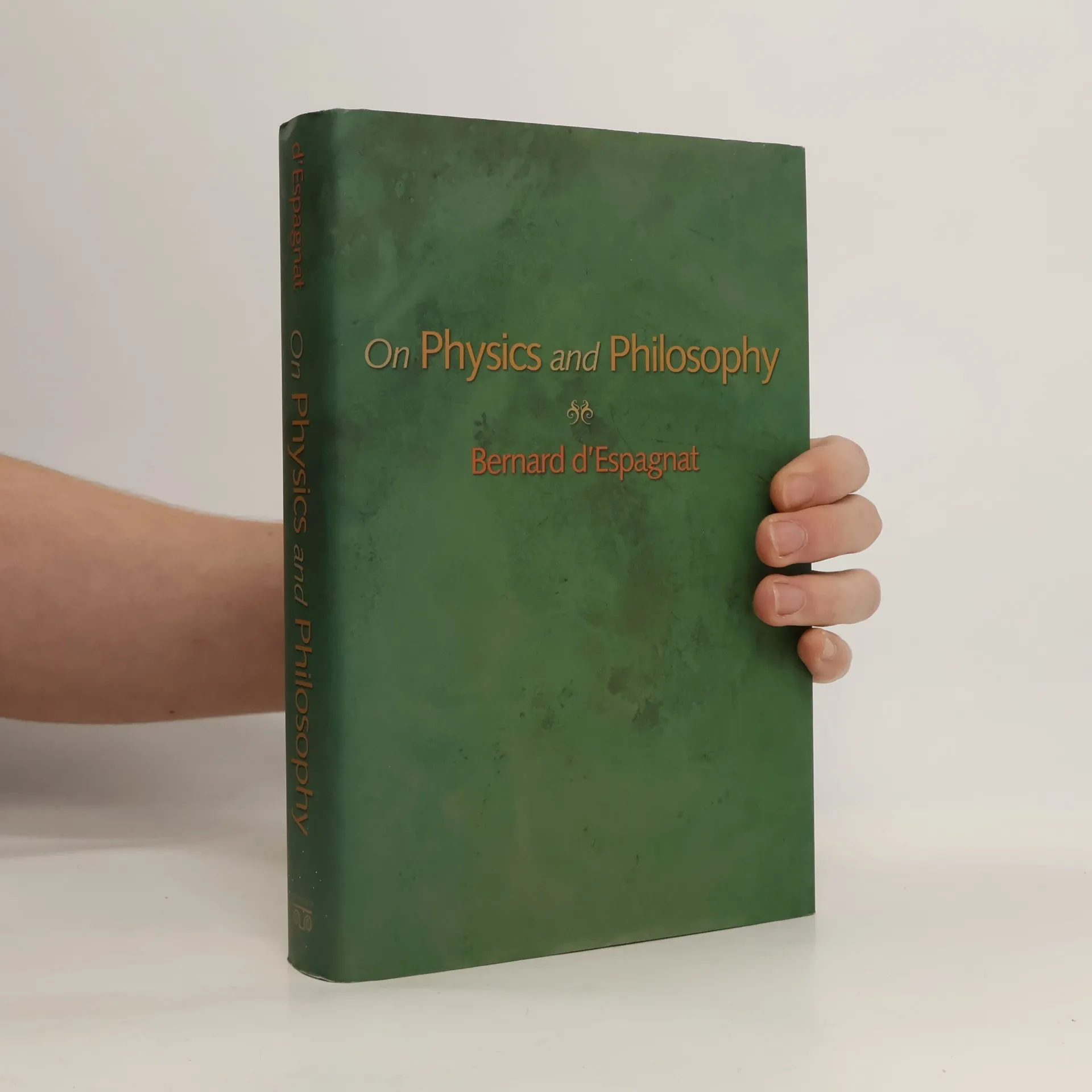
On Physics and Philosophy
- 504pages
- 18 heures de lecture
Among the great ironies of quantum mechanics is that its strange conceptual foundations perplex even physicists, while philosophers have largely ignored its implications. Bernard d'Espagnat argues that quantum physics challenges traditional concepts such as space, material objects, and causality, necessitating a reevaluation of much of philosophy. This accessible, mathematics-free reflection explores the philosophical significance of the quantum revolution, presented by a leading authority on the subject. D'Espagnat offers an objective overview of contemporary physics, particularly quantum mechanics, and examines the philosophical consequences of these developments. He begins by discussing recent discoveries in quantum physics, including nonseparability, and highlights the importance of phenomena like decoherence. The author then contrasts various philosophical theories of knowledge—such as materialism, realism, Kantism, and neo-Kantism—with the conceptual challenges posed by quantum theory. Ultimately, he concludes that while quantum theory suggests that scientific knowledge cannot fully capture mind-independent reality, the concept of an ultimate reality—referred to as "veiled reality"—remains a necessary philosophical construct, even if it is one we can never access directly or rationally.