

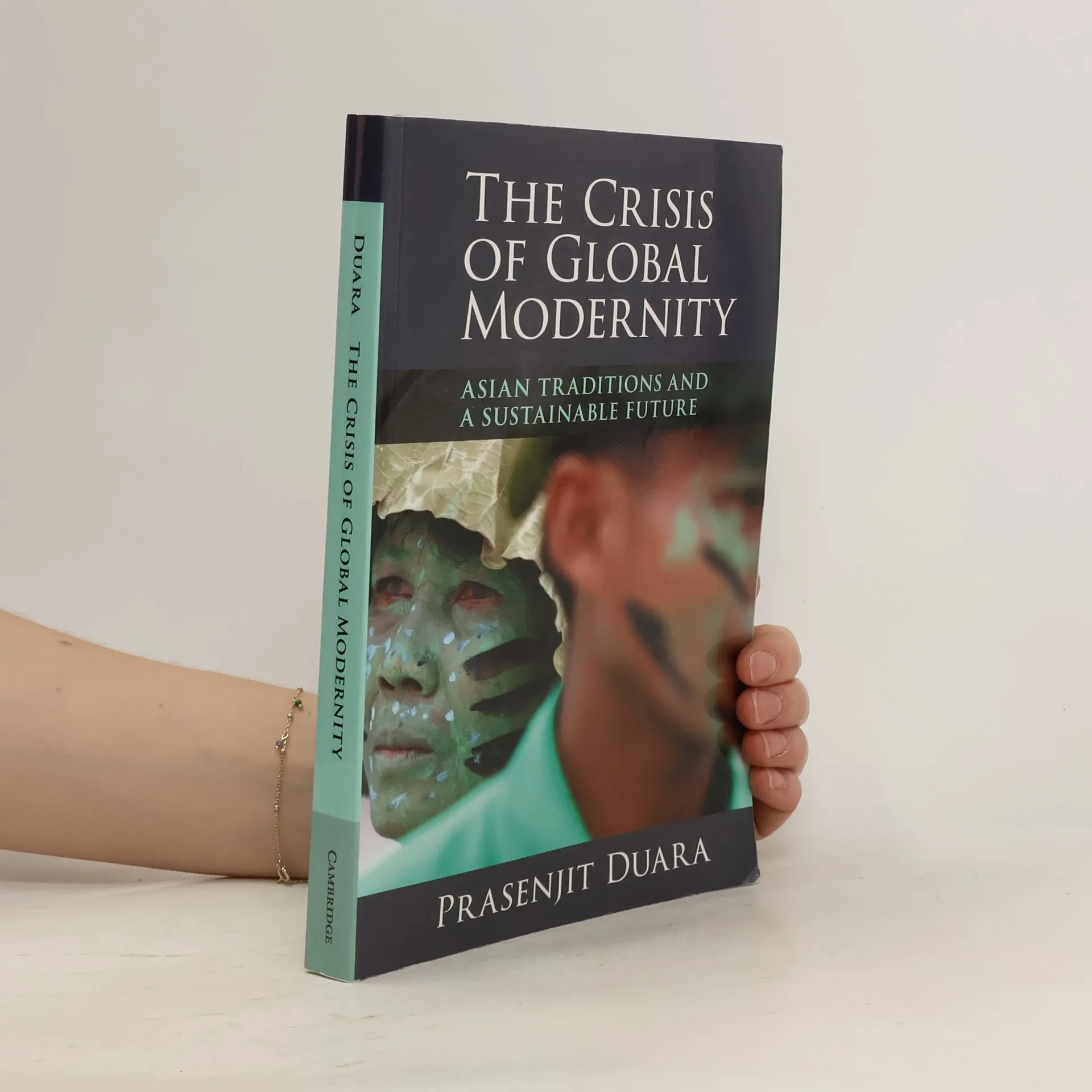
In this major new study, Prasenjit Duara expands his influential theoretical framework to present circulatory, transnational histories as an alternative to nationalist history. Duara argues that the present day is defined by the intersection of three global changes: the rise of non-western powers, the crisis of environmental sustainability and the loss of authoritative sources of what he terms transcendence - the ideals, principles and ethics once found in religions or political ideologies. The physical salvation of the world is becoming - and must become - the transcendent goal of our times, but this goal must transcend national sovereignty if it is to succeed. Duara suggests that a viable foundation for sustainability might be found in the traditions of Asia, which offer different ways of understanding the relationship between the personal, ecological and universal. These traditions must be understood through the ways they have circulated and converged with contemporary developments.
Prasenjit Duara Livres

The European 'dark ages' in the millennium 500 to 1500 CE was a bright age of scientific achievements in China, India and the Middle East. The contributors to this volume address the implications of this seminal era of Asian science for comparative and connective science studies. Although such studies have generally adopted a binary perspective focusing on one or another of the Asian (Chinese, Indian, Islamic) civilizations, this study brings them together into a single volume within a wider Eurasian perspective. Moreover, by drawing together historical, philosophical, and sociological dimensions into one volume it promotes a richer understanding of how Eurasian connections and comparisons in the millennium preceding the modern era can illuminate the birth and growth of modern science.Contributors are Arun Bala, Andrew Brennan, James Robert Brown, George Gheverghese Joseph, Henrik Lagerlund, Norva Y.S. Lo, Roddam Narasimha, Hyunhee Park, Franklin Thomas Perkins, Hans Pols, Kapil Raj, Sundar Sarukkai, Mohd. Hazim Shah, Geir Sigurðsson and Cecilia Wee.