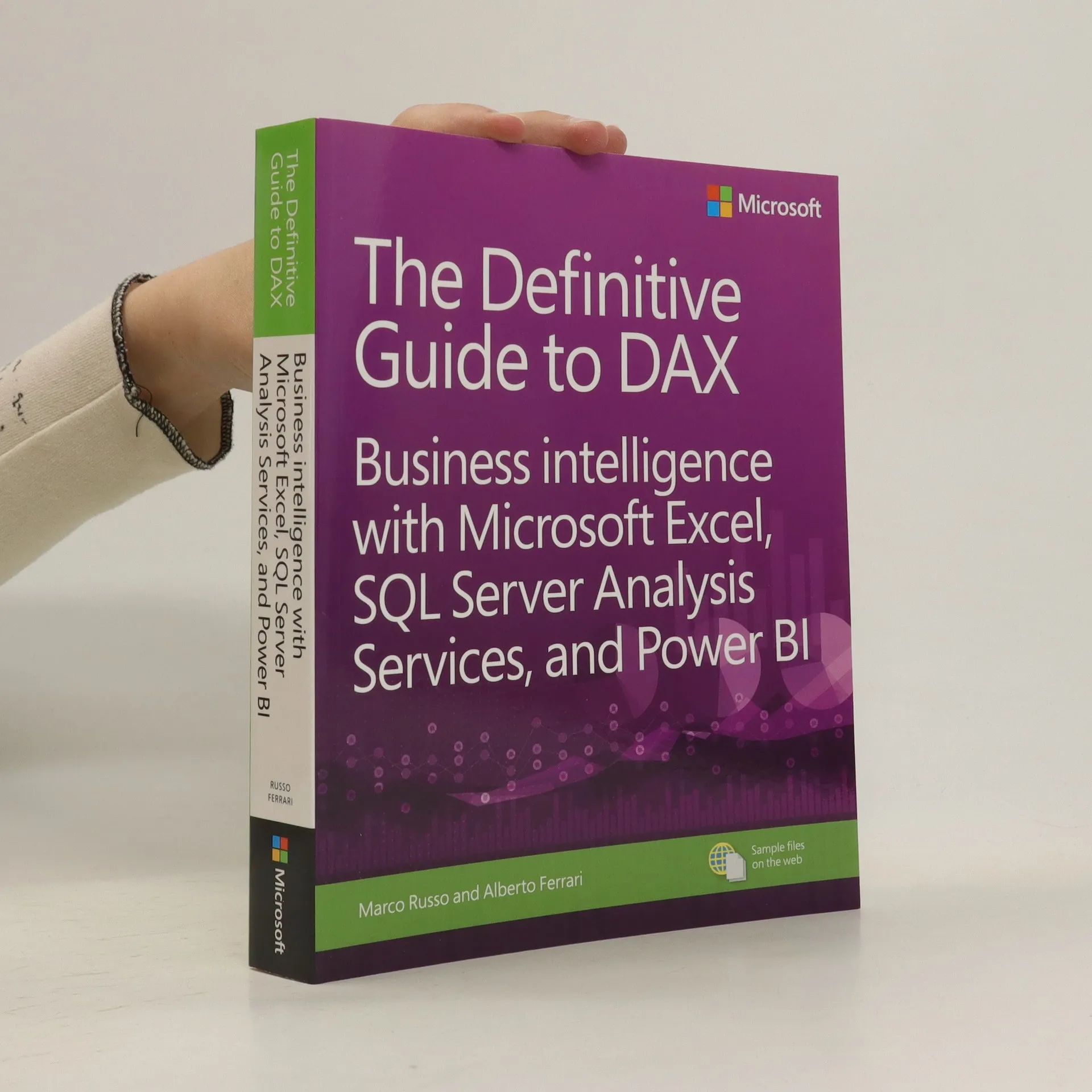
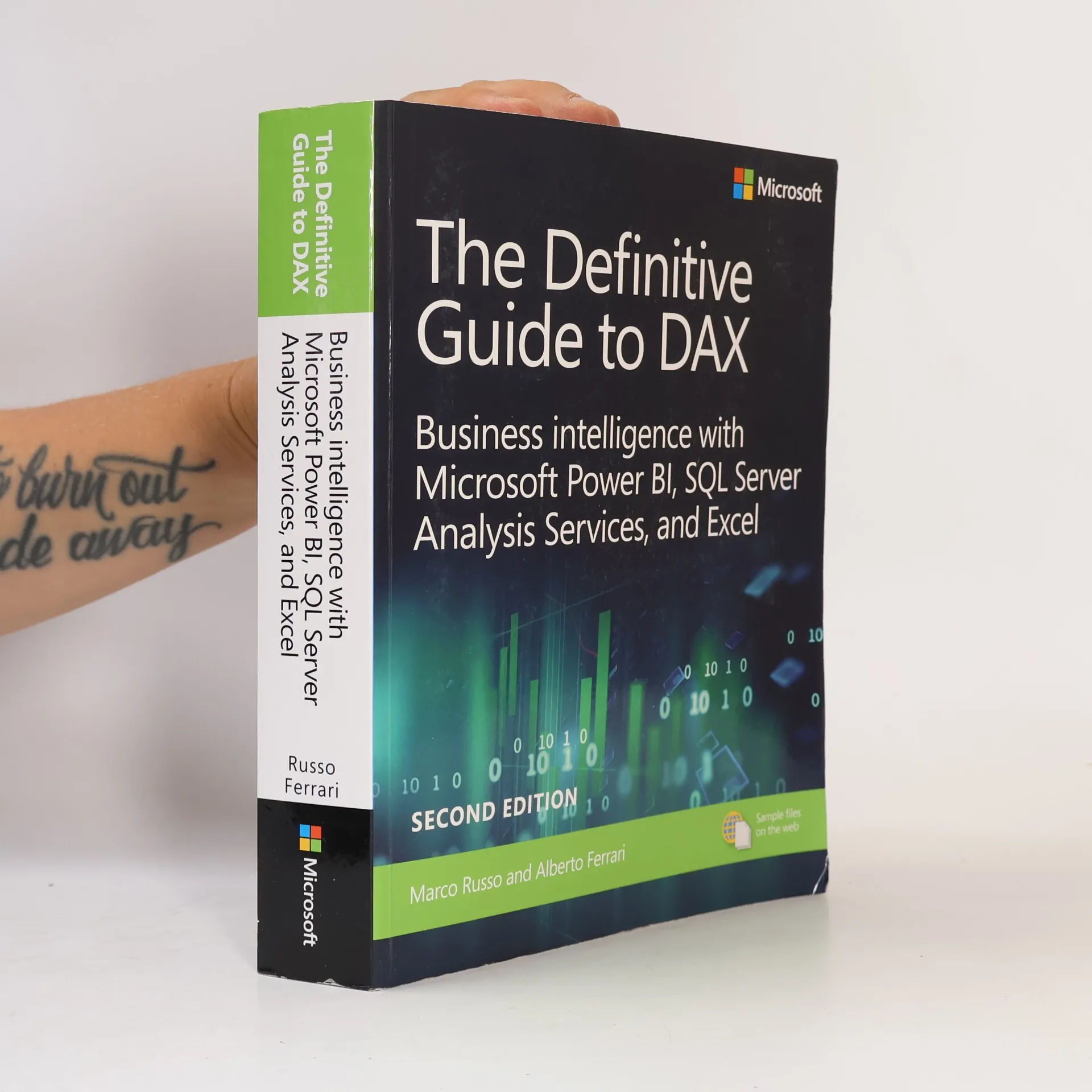
This comprehensive and authoritative guide will teach you the DAX language for business intelligence, data modeling, and analytics. Leading Microsoft BI consultants Marco Russo and Alberto Ferrari help you master everything from table functions through advanced code and model optimization. You'll learn exactly what happens under the hood when you run a DAX expression, how DAX behaves differently from other languages, and how to use this knowledge to write fast, robust code. If you want to leverage all of DAX's remarkable power and flexibility, this no-compromise "deep dive" is exactly what you need. Perform powerful data analysis with DAX for Microsoft SQL Server Analysis Services, Excel, and Power BI Master core DAX concepts, including calculated columns, measures, and error handling Understand evaluation contexts and the CALCULATE and CALCULATETABLE functions Perform time-based calculations: YTD, MTD, previous year, working days, and more Work with expanded tables, complex functions, and elaborate DAX expressions Perform calculations over hierarchies, including parent/child hierarchies Use DAX to express diverse and unusual relationships Measure DAX query performance with SQL Server Profiler and DAX Studio
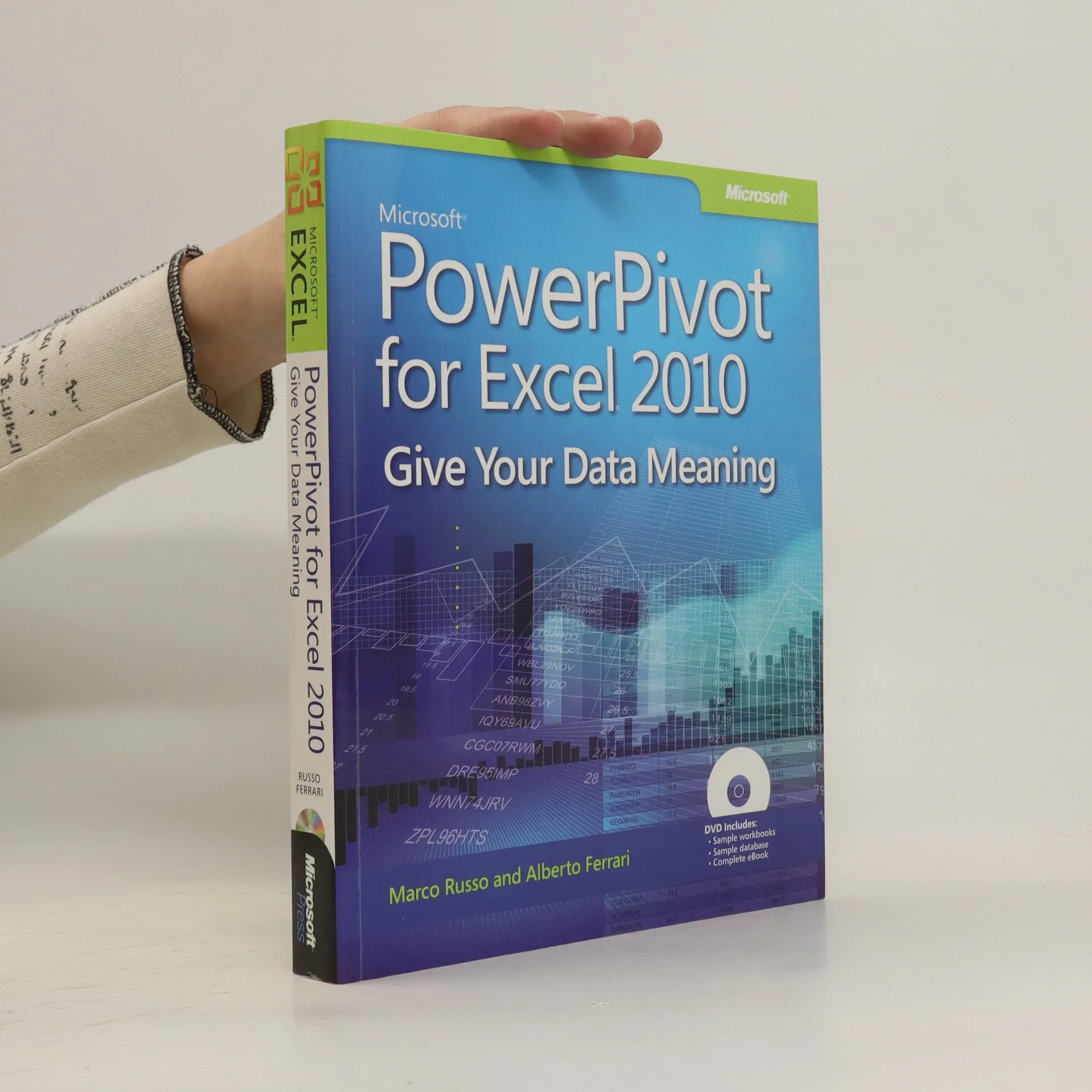
"The Data Analysis Expression (DAX) language is a functional language used by PowerPivot and Analysis Services Tabular to define calculations within the data model and to query the data model itself. DAX has its roots in Microsoft Excel expressions and inherits a similar syntax and a functional approach, but ut also extends its scope in order to handle calculations on data stored in multiple tables."--Chapter 1.
This is a practical tutorial for Analysis Services that shows readers how to solve problems commonly encountered while designing cubes, and explains which features of Analysis Services work well and which should be avoided. The book walks through the whole cube development lifecycle, from building dimensions, cubes and calculations to tuning and moving the cube into production. This book is aimed at Analysis Services developers who already have some experience but who want to go into more detail on advanced topics, and who want to learn best practices for cube design.
Get comprehensive guidance for using the Microsoft Language Integrated Query (LINQ) Project--with in-depth insights from two experienced developers. Data-rich applications can be difficult to create because of the tremendous differences between query languages used to access data and the programming languages commonly used to write applications. This practical guide covers the intricacies of LINQ, a set of extensions to the Visual C# and Visual Basic programming languages. Instead of traversing different language syntaxes required for accessing data from relational and hierarchical data sources, developers will learn how to write queries natively in Visual C# or Visual Basic--helping reduce complexity and boost productivity. Written by two experienced developers with strong ties to the developer teams at Microsoft, this book describes the LINQ architecture and classes, details the new language features in both Visual C# and Visual Basic, and provides code samples in both languages.
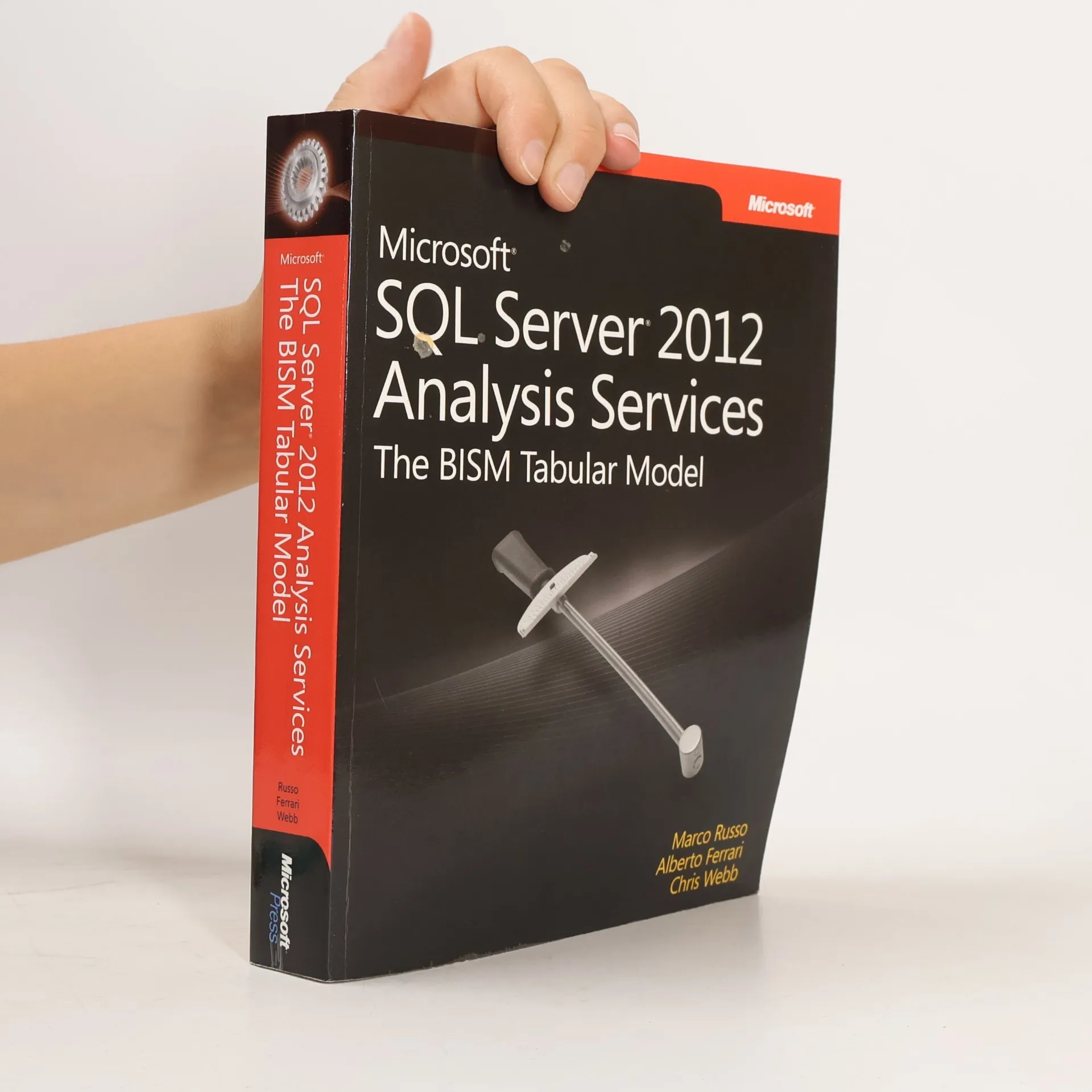
Build agile and responsive Business Intelligence solutions Analyze tabular data using the BI Semantic Model (BISM) in Microsoft® SQL Server® 2012 Analysis Services—and discover a simpler method for creating corporate-level BI solutions. Led by three BI experts, you’ll learn how to build, deploy, and query a BISM tabular model with step-by-step guides, examples, and best practices. This hands-on book shows you how the tabular model’s in-memory database enables you to perform rapid analytics—whether you’re a professional BI developer new to Analysis Services or familiar with its multidimensional model. Discover how to: Determine when a tabular or multidimensional model is right for your project Build a tabular model using SQL Server Data Tools in Microsoft Visual Studio® 2010 Integrate data from multiple sources into a single, coherent view of company information Use the Data Analysis eXpressions (DAX) language to create calculated columns, measures, and queries Choose a data modeling technique that meets your organization’s performance and usability requirements Optimize your data model for better performance with xVelocity storage engine Manage complex data relationships, such as multicolumn, banding, and many-to-many Implement security by establishing administrative and data user roles
Profesjonalne modelowanie danych to klucz do sukcesu w biznesie! Excel, wzbogacony o narzędzia takie jak Analysis Services, Power BI i Power Pivot, stał się doskonałym narzędziem do analizy i modelowania dużych zbiorów danych. Umiejętności te są przydatne nie tylko w biznesie, a ich opanowanie może przynieść radość, zwłaszcza osobom lubiącym pracować z liczbami. Osoby, które osiągną wysoki poziom umiejętności, mogą liczyć na konkretne korzyści. Książka ta wprowadza w modelowanie danych w Excelu, ucząc, jak optymalnie analizować dane i wydobywać z nich potrzebne informacje. Poznasz kluczowe pojęcia oraz podstawowe techniki kształtowania modeli danych w Excelu i Power BI. Dzięki praktycznym przykładom zyskasz nową perspektywę na zgromadzone dane. Dowiesz się, że budowanie modelu nie jest trudne i pozwala uzyskać odpowiedzi na ważne pytania. W książce znajdziesz zasady i techniki modelowania danych, tabele faktów, metody śledzenia atrybutów historycznych oraz dobieranie modelu do pytań biznesowych. Autorzy, Alberto Ferrari i Marco Russo, to eksperci w dziedzinie business intelligence, posiadający tytuły Microsoft MVP i SSAS Maestro, często występujący na prestiżowych konferencjach.
Um die richtigen Erkenntnisse aus Ihren Daten ziehen zu können, müssen Sie sie richtig modellieren. Microsoft bietet Ihnen starke und zugleich zugängliche Tools für die Datenmodellierung, von Power BI bis Power Pivot für Excel. Wie Sie diese Tools effektiv einsetzen, zeigen Ihnen Alberto Ferrari und Marco Russo, international anerkannte Experten für Datenanalyse mit Microsoft, in diesem Buch.Nach einer kurzen Einführung in das Konzept der Datenmodellierung lernen Sie Schritt für Schritt anhand realer Beispiele mit steigendem Schwierigkeitsgrad, wie Sie einfache Tabellen in umfassende und aussagekräftige Modelle verwandeln