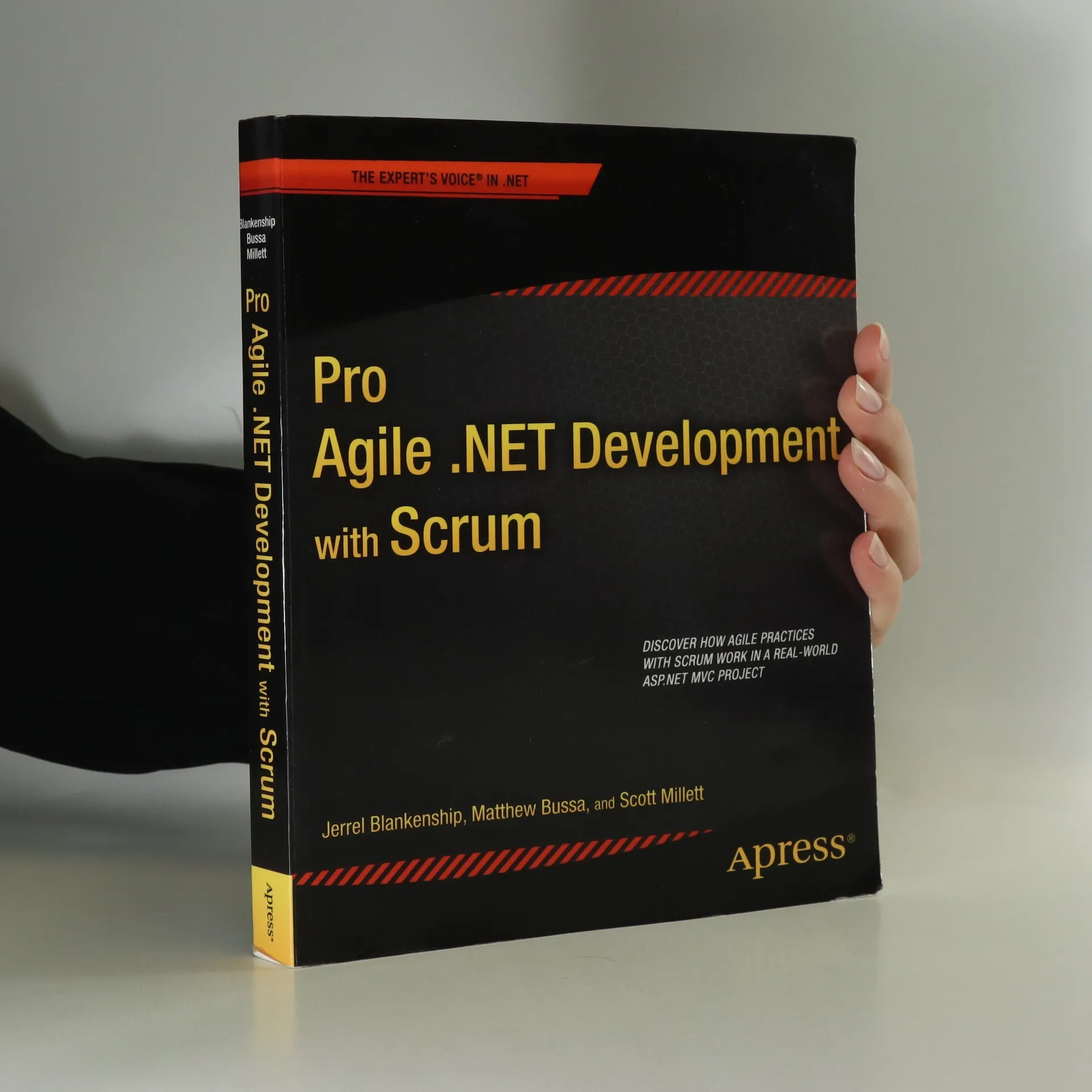
Focusing on Domain-Driven Design, this book offers practical methods for effectively managing complex software development. It emphasizes key principles and patterns while providing clear C# code examples to illustrate concepts. Readers will gain insights into structuring software projects, improving collaboration among teams, and enhancing code quality. The approach aims to bridge the gap between technical and business domains, making it a valuable resource for software developers and architects looking to refine their skills in building robust applications.
This book serves as a comprehensive guide for experienced Microsoft .NET developers, providing a roadmap to the latest enterprise development methodologies. It delves into essential tools beyond Visual Studio, such as Spring.NET and nUnit, applicable to ASP.NET, C#, VB, Office (VBA), and databases. The content is designed to help developers create flexible, testable, and extensible enterprise applications with minimal upfront costs.
The book assists C#, VB.Net, and ASP.NET developers in migrating their applications and skillsets to modern enterprise methodologies. Each new pattern or feature is described with its benefits, alongside a discussion of its implementation pros and cons. An introduction to enterprise development highlights the distinctions between contemporary enterprise patterns and traditional Microsoft programming.
It explains how to upgrade existing code bases to implement these patterns, emphasizing benefits like flexibility, automated testing, extensibility, modular code, test-driven development, unit testing, test automation, refactoring, inversion of control, and object-relational mapping. Additionally, it covers enterprise design patterns such as MVC, MVP, and the observer pattern.
Ultimately, this resource addresses the balance between innovative design and business needs, guiding developers in building applications that fulfill both requirements.
Professional ASP. NET Design Patterns will show you how to implement design patterns in real ASP. NET applications by introducing you to the basic OOP skills needed to understand and interpret design patterns. A sample application used throughout the book is an enterprise level ASP.