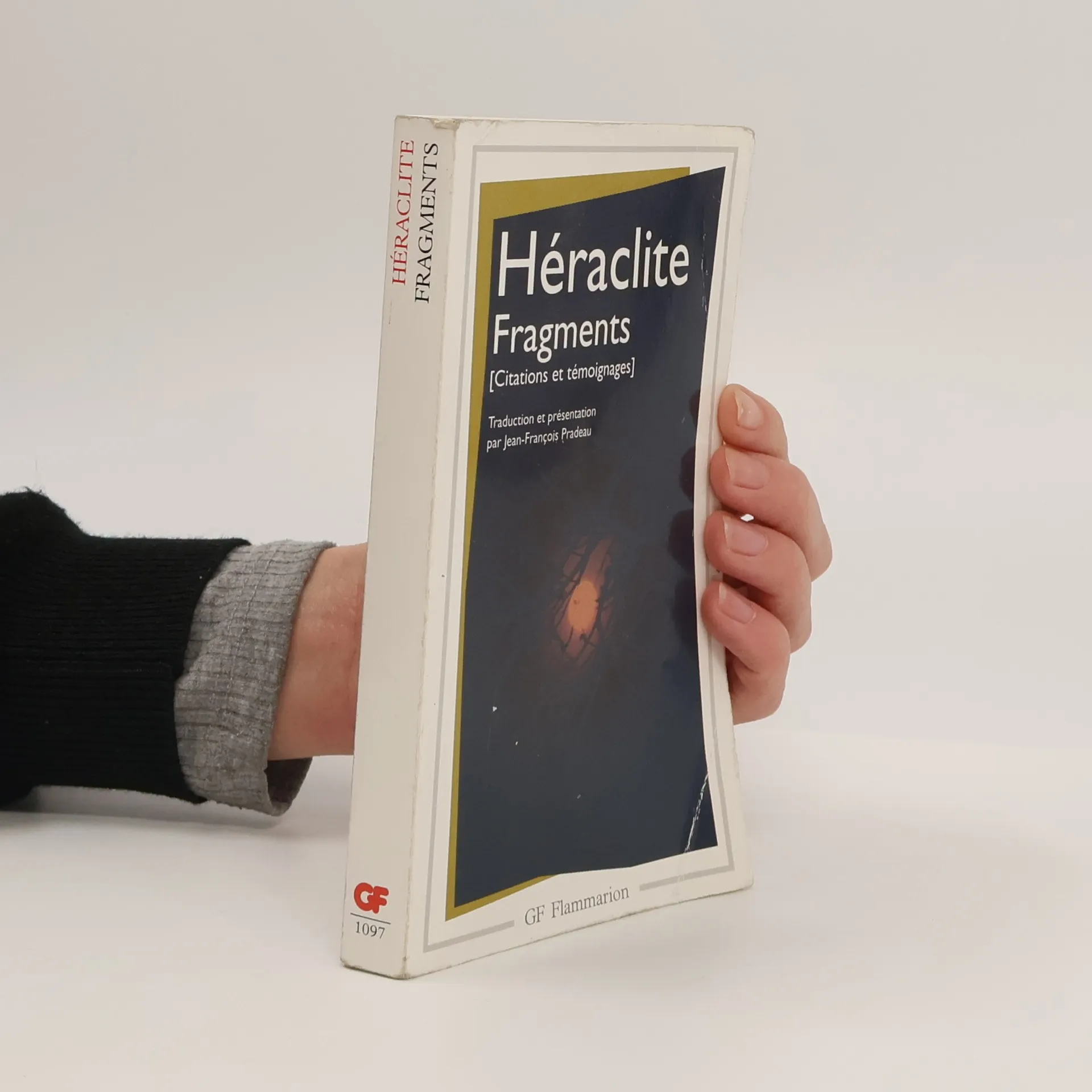
Peut-être Héraclite d'Ephèse (520-460 ?), dont nous ne savons presque rien, a-t-il de son vivant écrit un livre Sur la nature. Les auteurs anciens en ont conservé une centaine de brèves citations, énigmatiques, qui sont autant d'oracles prononcés sur le monde, le feu qui le constitue et le changement perpétuel auquel tout est éternellement soumis. Ces «fragments», qui sont ici rassemblés et commentés avec quelques-uns des témoignages anciens relatifs à la vie et à la doctrine de ce solitaire que les auteurs anciens nommaient l'«Obscur», montrent un effort inédit : en s'appuyant sur les acquis de la science de la nature qu'avaient élaborée ses compatriotes de Milet (Thalès ou Anaximandre, par exemple), Héraclite exige des hommes qu'ils abandonnent les rêves de leur existence ensommeillée pour vivre enfin à la mesure de la réalité qui les entoure. Il ne faut plus vivre comme nos parents, comme si le monde était autre chose que l'harmonie des contraires et des mouvements que révèle une connaissance enfin conforme à la nature. Un siècle plus tard, l'Athénien Platon donnera le nom de «philosophes» à ceux qui aspirent ainsi à ordonner la réforme des modes de vie à la connaissance savante de la réalité. Héraclite fut sans doute le premier d'entre eux.
Heraclitus (of Ephesus ). Livres
Héraclite d'Éphèse était un philosophe grec présocratique, célèbre pour son affirmation que le changement constant est l'essence fondamentale de l'univers. Il a défendu l'unité des opposés, postulant que toutes choses existent en paires de propriétés contraires, et a affirmé avec force que "nul ne peut entrer deux fois dans le même fleuve". Sa philosophie, souvent perçue comme cryptique et paradoxale, associée à son insistance sur l'inconscience humaine, lui a valu les épithètes "L'Obscur" et "Le Philosophe qui pleure". Son profond concept du Logos, qui gouverne toute existence, demeure un sujet d'interprétation profonde.