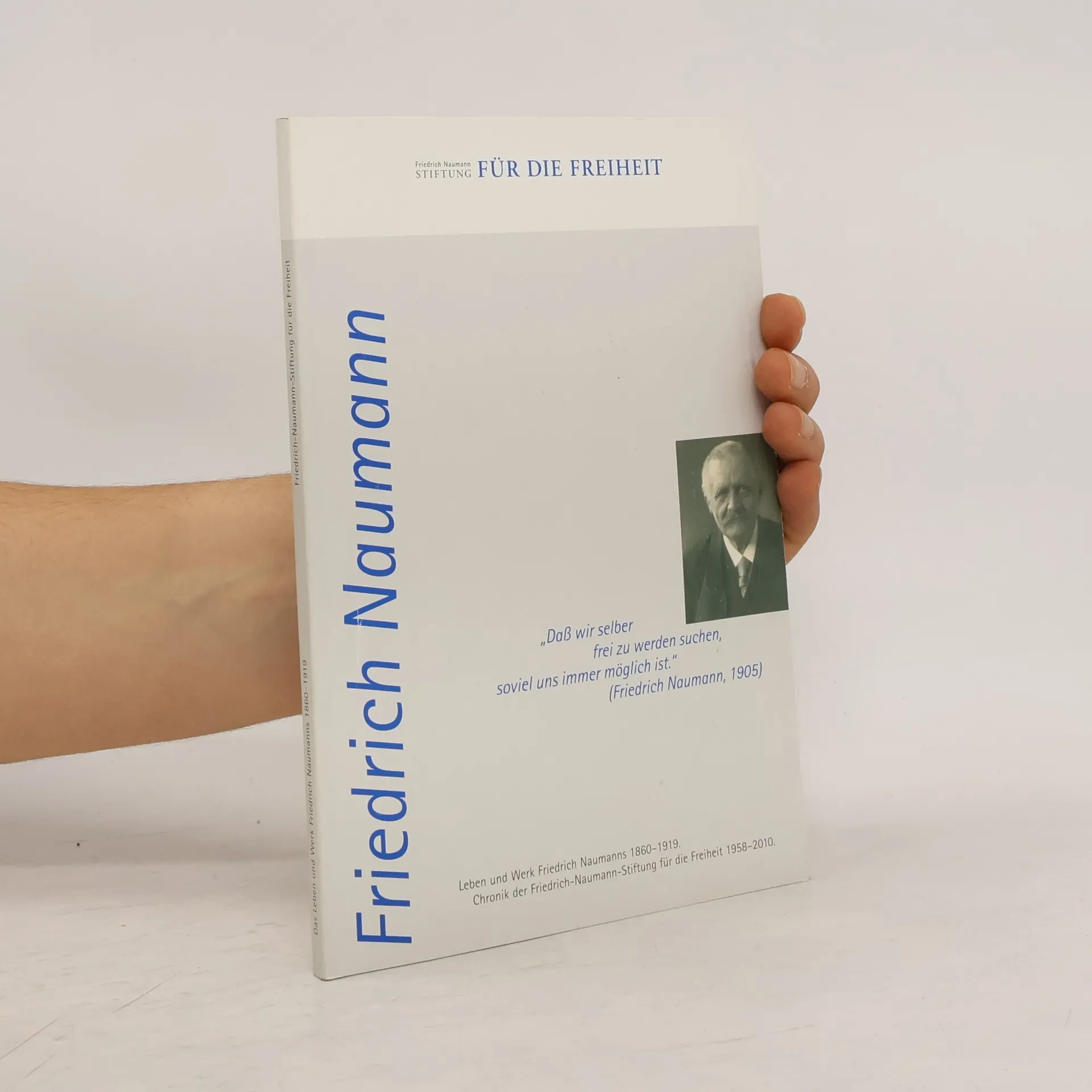
Friedrich Naumann (1860-1919) był kluczową postacią niemieckiego liberalizmu na początku XX wieku. Jego książka "Mitteleuropa", wydana w 1915 roku, przedstawia projekt dominacji Niemiec między Bałtykiem, Morzem Czarnym i Adriatykiem. Dla współczesnego czytelnika stanowi fascynujący przykład myślenia niemieckich elit o regionie. Naumann, odwołując się do wcześniejszych idei w niemieckiej myśli politycznej, wypracował oryginalne stanowisko, które przez lata było ważnym punktem odniesienia w dyskusjach w kluczowych kręgach politycznych i gospodarczych Niemiec. Książka skłania do refleksji nad pytaniem, czy program dążący do ustanowienia niemieckiego wpływu i kontroli nad Europą Środkową oraz nałożenia trwałej bariery rozwojowej na Polskę rzeczywiście odszedł do przeszłości.
Friedrich Naumann Livres
Friedrich Naumann était un homme politique libéral allemand et un pasteur protestant. Initialement partisan du Parti social chrétien, conservateur et clérical, il s'intéressa plus tard aux théories sociales de Max Weber. En 1896, il co-fonda l'Association National-Sociale comme une force libérale active aux côtés des sociaux-démocrates. Plus tard dans sa vie, Naumann œuvra pour un rapprochement des mouvements sociaux-démocrates et libéraux allemands, tout en faisant face à une opposition considérable de la part des conservateurs. En 1919, il fut l'un des fondateurs du Parti démocratique allemand, social-libéral, et fut élu au Parlement de la République de Weimar. Il est souvent considéré comme un défenseur du nationalisme allemand, notamment en raison de son livre "Mitteleuropa" (1915), qui explorait la géopolitique d'une Europe centrale sous direction allemande.
Dějiny informatiky
- 422pages
- 15 heures de lecture
Od abaku k internetu. Kniha zpracovává zajímavé a obsáhlé téma, pojednává o dějinách informatiky v širokém kontextu historie přírodních věd. Kromě dějin výpočetní techniky zahrnuje pozoruhodné události z historie matematiky, fyziky, geodezie, elektrotechniky, elektroniky a dokonce i obchodu a podnikání. Dějiny informatiky jsou v ní podány velmi podrobně a přitom přehledně, stylem „od Adama“. Kořeny dnešní informatiky jsou totiž vystopovány až k různým způsobům počítání na prstech a k základům zeměměřictví. Kniha obsahuje relevantní historické informace kvalitativního charakteru (co, kde, kdo) i přesné kvantitativní údaje (kdy, kolik). Podrobnost kvantitativních údajů je tak vysoká, že se čtenář může dozvědět přesné údaje, např. o počtu vyrobených počítačů v určitých letech, o kapacitě jejich operační paměti i počtech zaměstnanců výrobních firem apod.
Die zentrale Aussage des Buches thematisiert das Zusammenspiel von Christentum und dem bereits bestehenden Leben der Menschen. Es wird betont, dass die individuelle Identität eines Christen erst durch die Verbindung von Glauben und Lebensrealität entsteht. Der Autor untersucht, wie die Lehren des Christentums in die alltäglichen Erfahrungen und Herausforderungen integriert werden können, um ein authentisches Christsein zu fördern.
Friedrich Naumann lädt ein, den Renaissancegelehrten Georgius Agricola (1494–1555) zu entdecken. Geboren in Glauchau, studierte er an der Universität Leipzig und in Italien, bevor er Stadtarzt in Chemnitz wurde. Agricola veröffentlichte bedeutende Werke über Bergbau und Mineralien, darunter sein Hauptwerk „De re Metallica“, das europaweit rezipiert wurde.
Neudeutsche Wirtschaftspolitik
- 120pages
- 5 heures de lecture
Nachdruck der Originalausgabe von 1902. Friedrich Naumann beschreibt in seinem Werk die Aspekte: Bevölkerungsvermehrung, Lohnquantum und Krisis, Brotpreis, Ansiedlung und Bodenreform, Kampf der Frauen, Sozialismus und Sozialreform wie sie sich am Beginn des 20. Jahrhunderts in Deutschland stellten.
Die Kunst in Industrie und Handel
Jahrbuch des deutschen Werkbundes 1913