

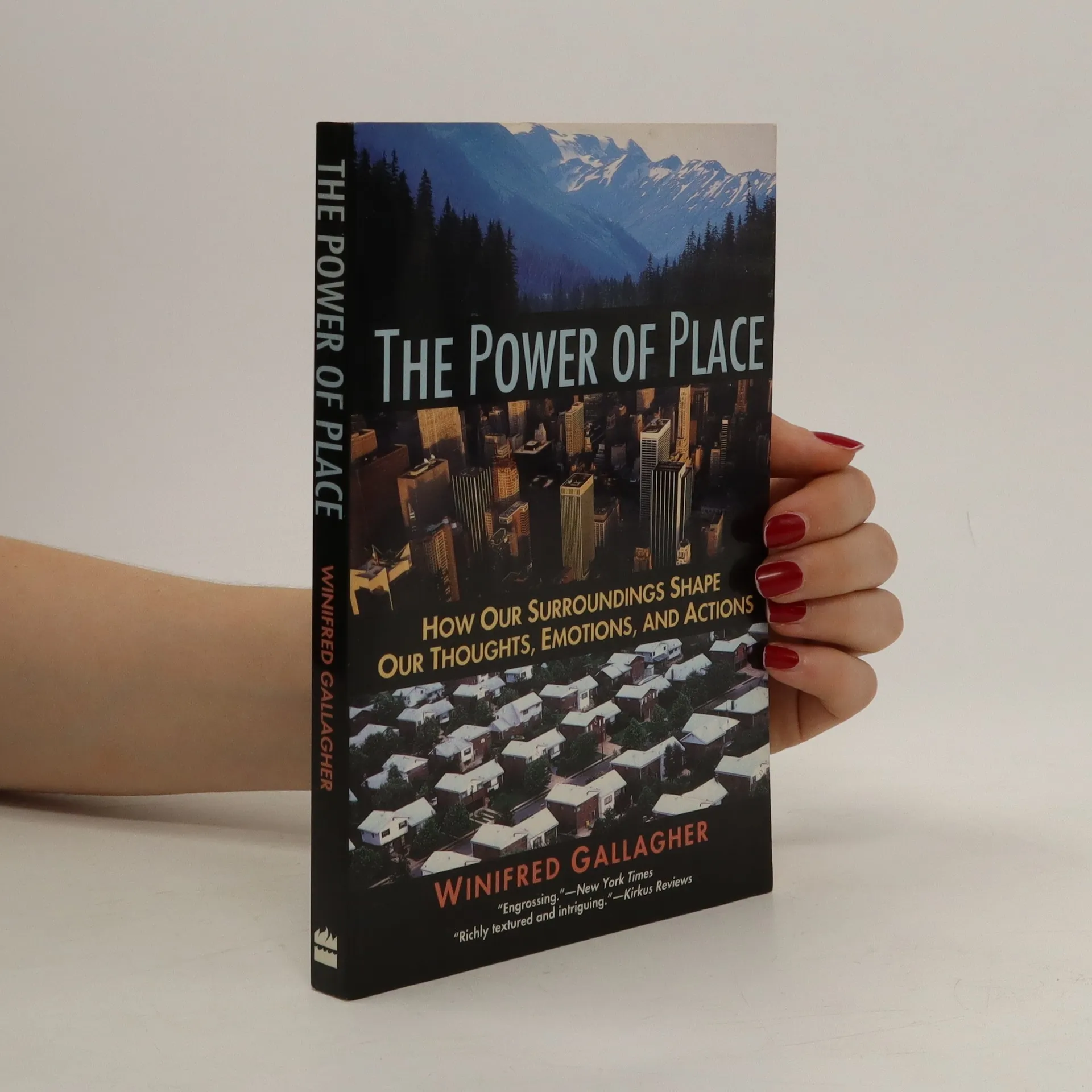
Are New Yorkers and Californians so different because they live in such different settings? Why do some of us prefer the city to the country? How do urban settings increase crime? Why do we feel better after an experience in nature? In this fascinating and enormously entertaining book, Winifred Gallagher explores the complex relationships between people and the places in which they live, love, and work. Drawing on the latest research on behavioral and environmental science, The Power of Place examines our reactions to light, temperature, the seasons, and other natural phenomena and explores the interactions between our external and internal worlds. Gallagher's broad and dynamic definition of place includes mountaintops and the womb, Alaska's hinterlands and Manhattan's subway, and she relates these settings to everything from creativity to PMS, jet lag to tales of UFOs. Full of complex information made totally accessible, The Power of Place offers the latest insights into the any ways we can change our lives by changing the places we live.
Winifred Gallagher Livres


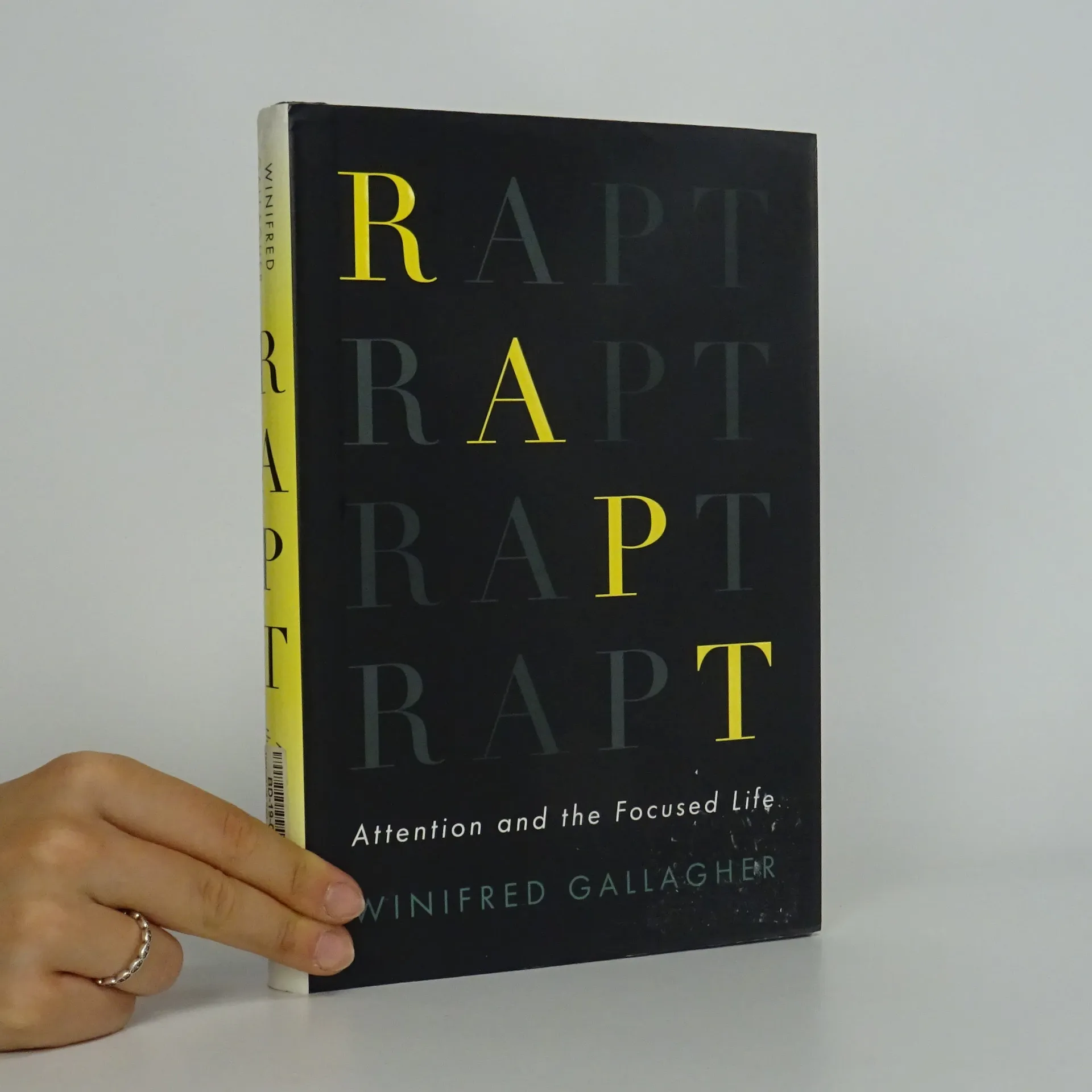
Rapt
- 244pages
- 9 heures de lecture
The behavioral scientist author of Just the Way You Are presents a provocative argument that the quality of one's life is directly related to the focus of one's attention, drawing on the latest findings in neuroscience and psychology to cover such topics as the human capacity for training concentration, the ways in which the creative mind thinks, and why people deliberate on the wrong factors when making big decisions.
A riveting history of the American West told for the first time through the pioneering women who used the challenges of migration and settlement as opportunities to advocate for their rights, and transformed the country in the processBetween 1840 and 1910, hundreds of thousands of men and women traveled deep into the underdeveloped American West, lured by the prospect of adventure and opportunity, and galvanized by the spirit of Manifest Destiny. Alongside this rapid expansion of the United States, a second, overlapping social shift was taking place: survival in a settler society busy building itself from scratch required two equally hardworking partners, compelling women to compromise eastern sensibilities and take on some of the same responsibilities as their husbands. At a time when women had very few legal or economic--much less political--rights, these women soon proved they were just as essential as men to westward expansion. Their efforts to attain equality by acting as men's equals paid off, and well before the Nineteenth Amendment, they became the first American women to vote.During the mid-nineteenth century, the fight for women's suffrage was radical indeed. But as the traditional domestic model of womanhood shifted to one that included public service, the women of the West were becoming not only coproviders for their families but also town mothers who established schools, churches, and philanthropies. At a time of few economic opportunities elsewhere, they claimed their own homesteads and graduated from new, free coeducational colleges that provided career alternatives to marriage. In 1869, the men of the Wyoming Territory gave women the right to vote--partly to persuade more of them to move west--but with this victory in hand, western suffragists fought relentlessly until the rest of the region followed suit. By 1914 most western women could vote--a right still denied to women in every eastern state.In New Women in the Old West , Winifred Gallagher brings to life the riveting history of the little-known women--the White, Black, and Asian settlers, and the Native Americans and Hispanics they displaced--who played monumental roles in one of America's most transformative periods. Like western history in general, the record of women's crucial place at the intersection of settlement and suffrage has long been overlooked. Drawing on an extraordinary collection of research, Gallagher weaves together the striking legacy of the persistent individuals who not only created homes on weather-wracked prairies and built communities in muddy mining camps, but also played a vital, unrecognized role in the women's rights movement and forever redefined the "American woman."