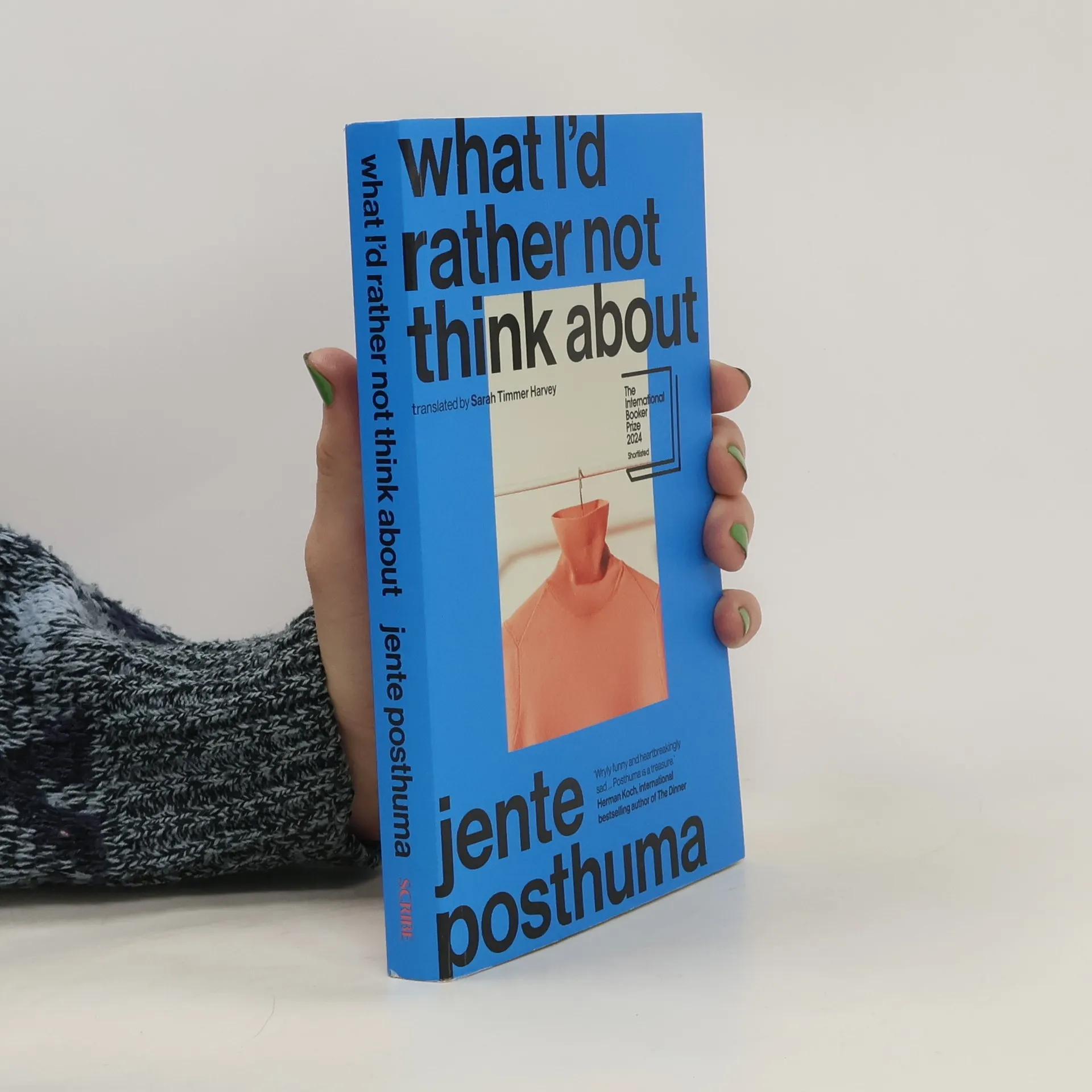
What if one half of a pair of twins no longer wants to live? What if the other can't live without them? This question lies at the heart of Jente Posthuma's deceptively simple What I'd Rather Not Think About. The narrator is a twin whose brother has recently taken his own life. She looks back on their childhood, and tells of their adult lives: how her brother tried to find happiness, but lost himself in various men and the Bhagwan movement, though never completely. In brief, precise vignettes, full of gentle melancholy and surprising humour, Posthuma tells the story of a depressive brother, viewed from the perspective of the sister who both loves and resents her twin, struggles to understand him, and misses him terribly.
Jente Posthuma Livres
Jente Posthuma crée des récits qui explorent les thèmes de l'isolement et de la quête d'identité, employant souvent des éléments autobiographiques pour examiner les complexités des relations humaines. Sa prose se caractérise par une introspection pointue et une qualité lyrique qui plonge les lecteurs dans la vie intérieure de ses personnages. Posthuma enquête sur des questions existentielles qui résonnent auprès du public contemporain, capturant la solitude silencieuse qui se cache sous la surface de la vie quotidienne. Son œuvre se distingue par son honnêteté brute et une profonde compréhension de la psyché humaine.


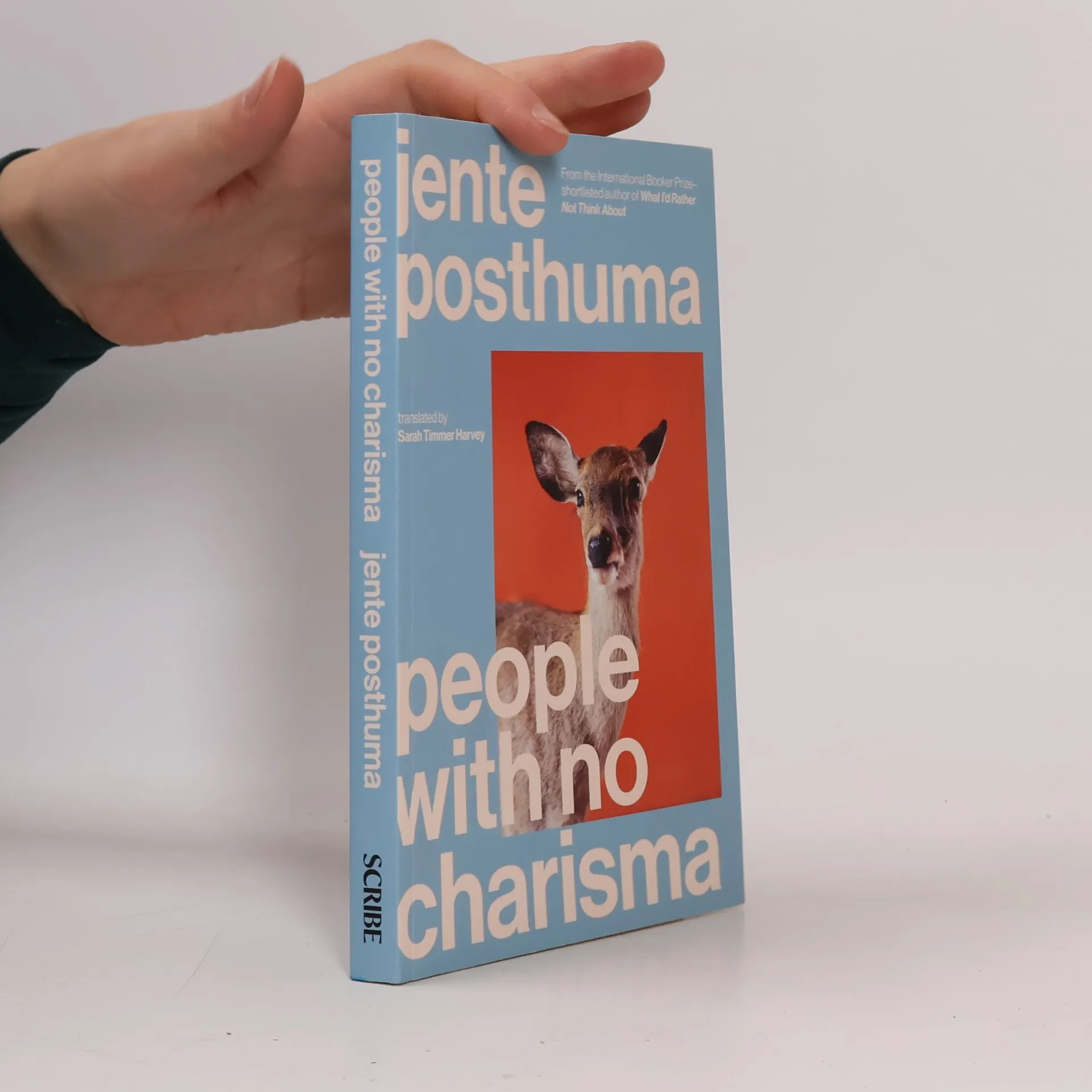
People with No Charisma
- 176pages
- 7 heures de lecture
From the International Booker Prize-shortlisted author of What I'd Rather Not Think Aboutcomes a darkly humorous novel about multigenerational family dynamics and individuality in Dutch suburbia. An unnamed narrator grows up overshadowed by her unconventional mother, an ex-Jehovah's Witness and former television star with an inferiority complex. Her father is the head of a psychiatric institution, whose only form of parenting is to offer his daughter the same life advice he dispenses to his patients. Reserved and somewhat aloof, he chooses not to intervene when his wife obsesses about charisma, calorie counting, and turning their daughter into a child prodigy. Their daughter strives to meet her mother's expectations and bond with her father while secretly worrying she lacks the drive or charisma to do anything significant with her life. When her mother is diagnosed with terminal cancer, she begins to address their generational trauma, forge a new relationship with her father, and discover life on her terms. In twelve chapters -- each reflecting a different phase of life -- Posthuma expertly dissects a fraught family history, exposing the absurdity that often lies at the heart of life's most poignant and challenging moments.