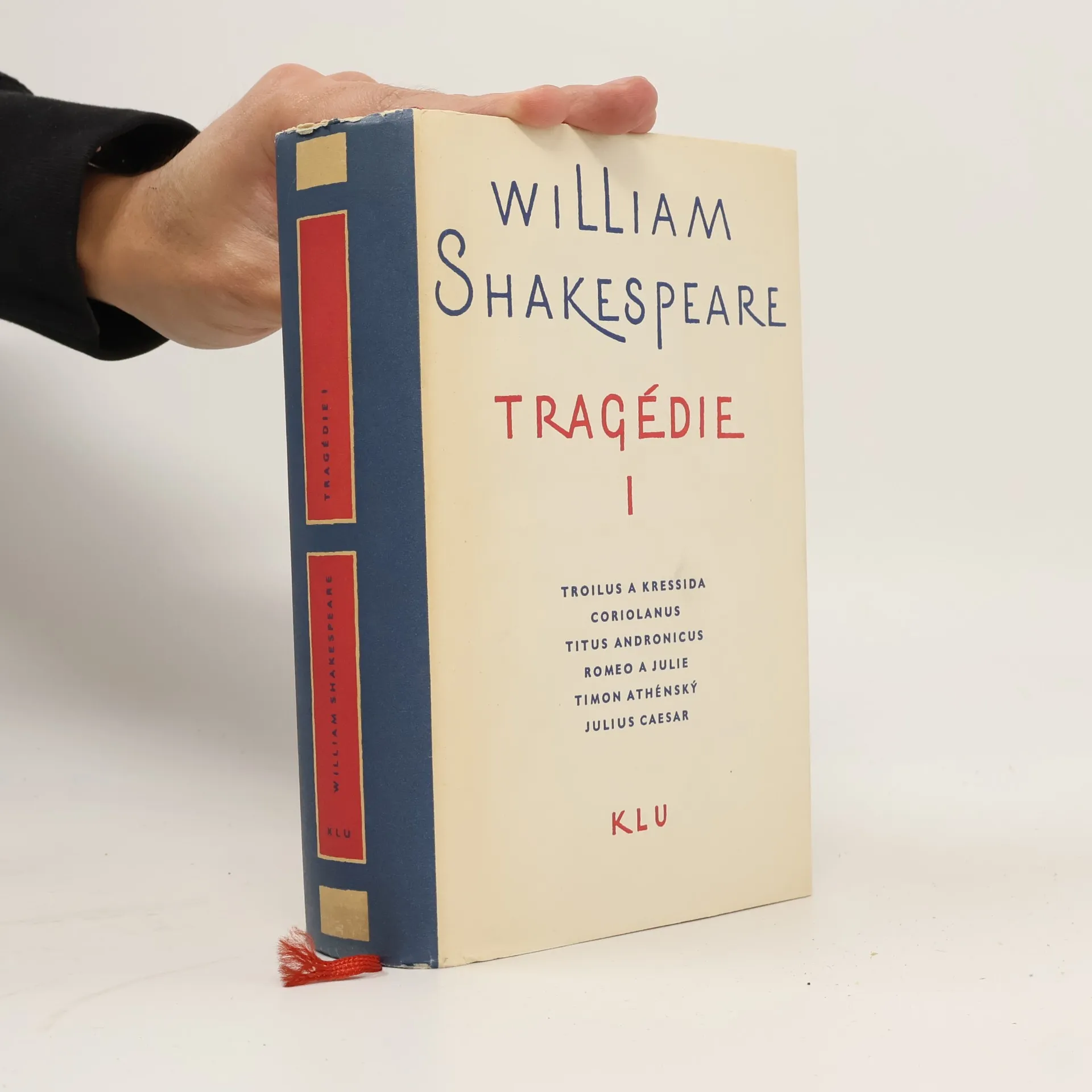
Troilus a Kressida, Coriolanus, Titus Andronicus, Romeo a Julie, Timon Athénský, Julius Caesar
První svazek tragedií zahrnuje nejproslulejší Shakespearova dramata: ranou lyrickou truchlohru Romeo a Julie, klasického Julia Caesara, vzniklého v středním tvůrčím období, a tři vrcholná díla Shakespearova genia, Hamleta, Othella a Makbetha.
Čtyři hry (Sen noci svatojanské, Romeo a Julie, Hamlet, Othello), určené mladým čtenářům, naznačují myšlenkovou rozlohu a hlavní rysy tvorby anglického dramatika, jenž ovlivnil i naši literaturu a hudbu. Každá z her je uvedena charakteristikou hry a jejích hrdinů, v doslovu jsou v hlavních rysech zachyceny Shakespearovy lidské i umělecké osudy a v obsáhlých poznámkách řečeno vše podstatné o vzniku her a objasněna jejich méně jasná nebo příliš náročná místa.
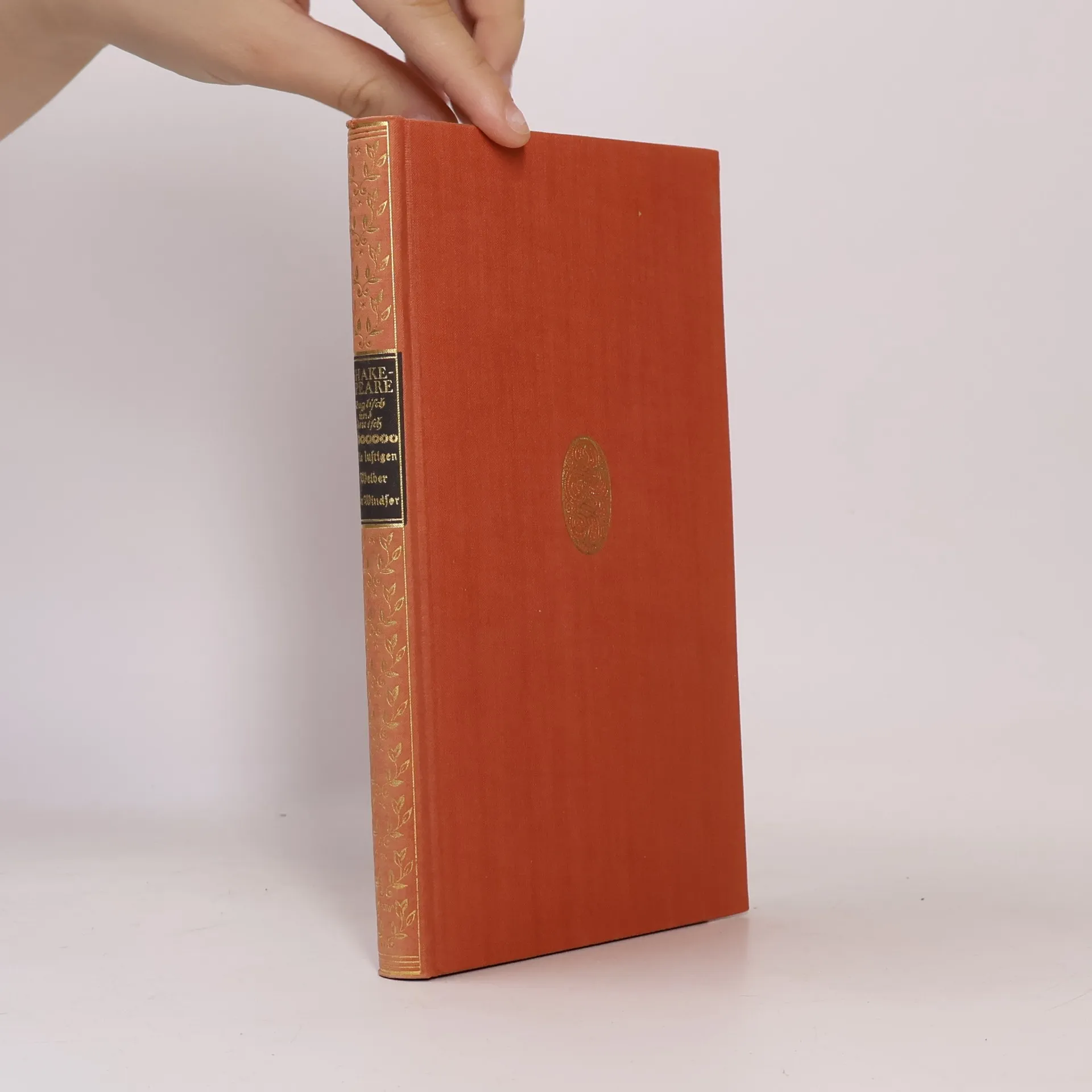
Tradition holds that Shakespeare wrote the comedy The Merry Wives of Windsor at the request of Queen Elizabeth, who was fond of the character Falstaff and wanted to see him in love on stage. However, Shakespeare cleverly subverts this expectation, as Falstaff is not in love with the two Windsor wives but rather with their husbands' money. His plan to acquire this wealth ultimately fails, and in the comedic conclusion of the play, he is ritually punished and ridiculed in Windsor Park. The Merry Wives of Windsor is unique as Shakespeare's only comedy set in England and his only middle-class comedy. It captivates with its bursts of linguistic wit, as each character possesses a distinct and individual speech. The Welsh priest Hugo Evans distorts English with his accent and comically twisted phrases, while Dr. Caius, a Frenchman, mangles English with his French pronunciation and idioms. Mistress Quickly speaks in her own unique manner, and of course, Sir John Falstaff stands out as one of Shakespeare's greatest comedic characters.
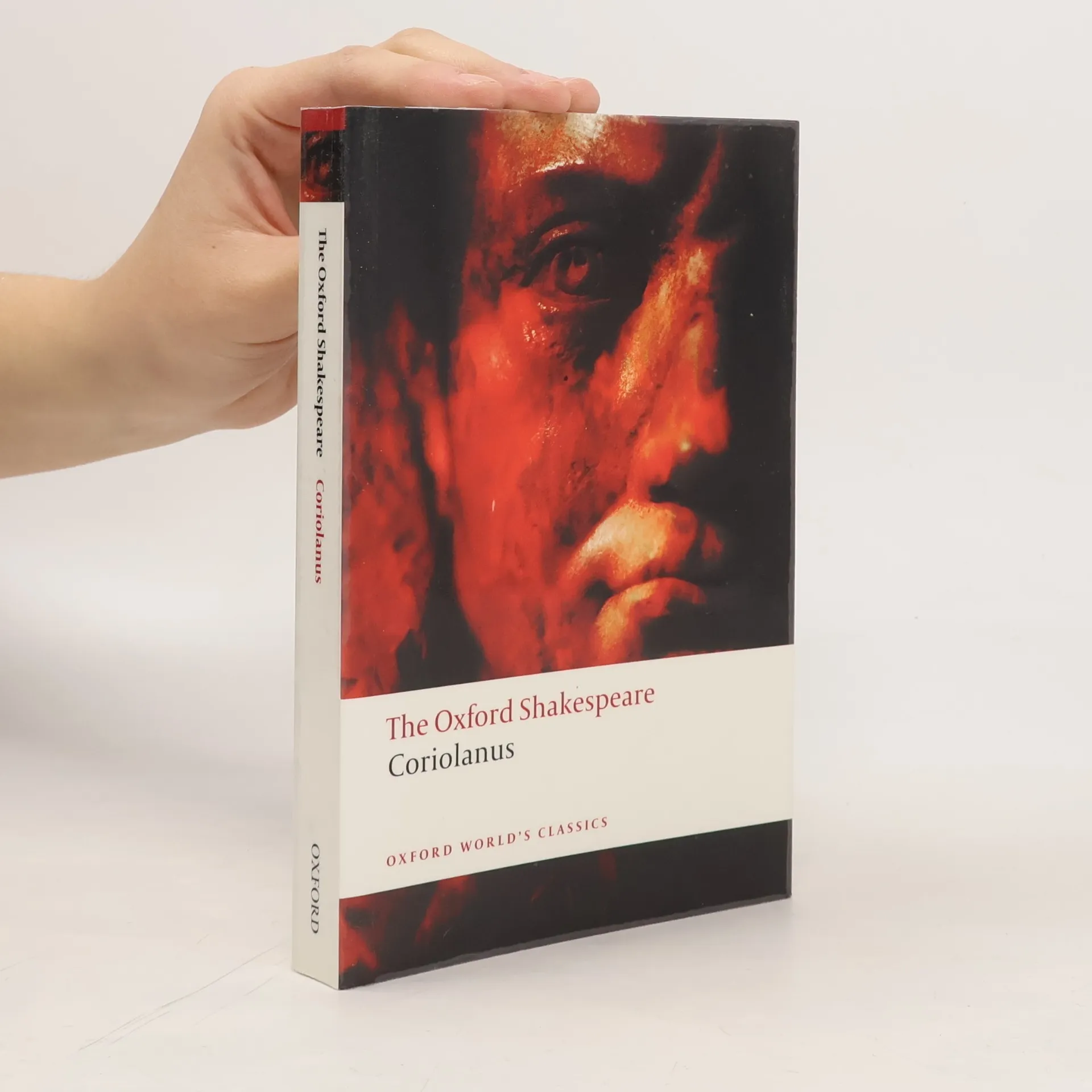
"Coriolanus is perhaps the most brilliant political play ever written. Set in Ancient Rome, it remains a gripping psychological study of the relationship between personality and politics. The introduction to this new edition considers Shakespeare's adaptation of his historical material (Plutarch's Lives) in relation to the social and political conditions in London and Stratford at the time of the play's composition, also offering new evidence that it was written in 1608. Professor Parker examines the play's history and particularly its staging at the Blackfriars theatre, where it was probably the first of Shakespeare's plays to be presented and for which it may have been written. A thorough commentary pays special attention to the needs of actors and directors."--Publisher description
Antonio, un riche armateur de Venise, décide d'emprunter trois mille ducats à l'usurier juif Shylock afin d'aider son ami Bassanio à gagner Belmont où il espère faire la conquête de la belle et riche Portia. Comme les autres prétendants, il doit se soumettre à l'épreuve que le père disparu de la jeune femme a imaginée, et choisir entre trois coffrets, d'or, d'argent, et de plomb. Mais, au moment où il l'emporte sur ses rivaux, il apprend qu'Antonio vient d'être jeté en prison pour n'avoir pu rembourser sa dette à Shylock qui exige qu'en verni du contrat une livre de chair soit prélevée sur le corps de son débiteur. Publié en octobre 1600, Le Marchand de Venise entrecroise deux intrigues dont l'une met en scène, à Venise, le monde de l'argent et de la justice, tandis que l'autre, à Belmont, fait place à la musique et l'amour : une double comédie qui ne se referme pas sur une fin heureuse, mais laisse à leur mvstère les figures complexes du juif cruel, et cependant humain, et des chrétiens qui ont su en faire leur victime.
This reproduction focuses on making historical works accessible to individuals with impaired vision through large print. Megali, the publishing house behind this initiative, emphasizes the importance of preserving and sharing these texts while ensuring readability for all.