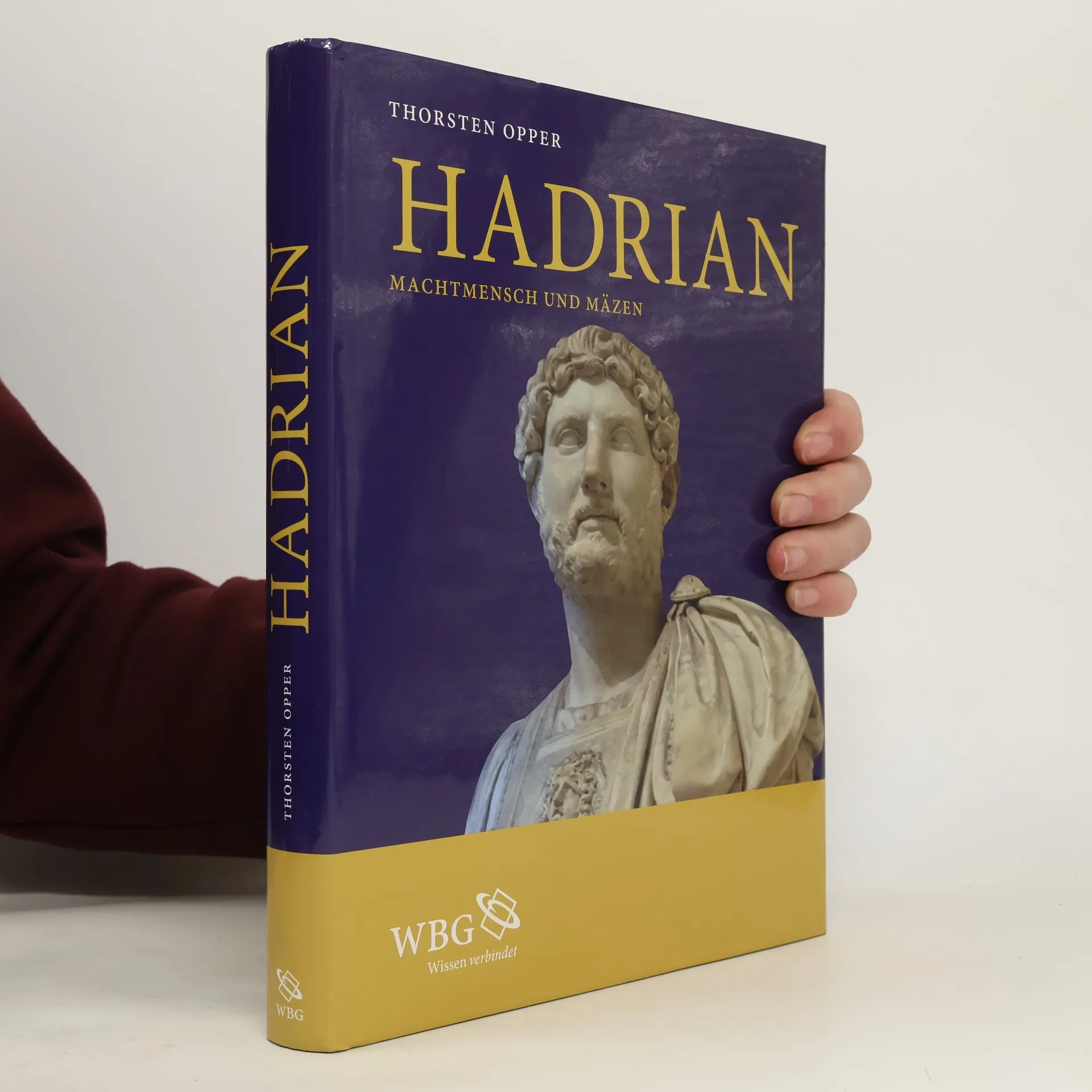
Hadrian, exclusive exhibition catalogueHadrian (r. AD 117-138) is known for his restless and ambitious nature, his interest in architecture and his passion for Greece and Greek culture. This book and exhibition move beyond this image to give a new appraisal of this Emperor,Individual chapters of the book look at Hadrian the man as an individual; Hadrian the military leader and strategist; Hadrian the amateur architect who created magnificent buildings such as his villa at Tivoli; Hadrian the lover who deified his male favourite Antinous after his mysterious death in the Nile; and Hadrian the traveller who tirelessly roamed his empire and its boundaries. The book concludes with the legacy of Hadrian, including a discussion of the genesis of MargueriteYourcenar's famous Memoirs of Hadrian, about to be turned into a major Hollywood film.This important book is richly illustrated throughout with key works of art -both celebrated and less well-known sculptures, bronzes, coins and medals, drawings and watercolours
Thorsten Opper Livres
Thorsten Opper est conservateur au Département des antiquités grecques et romaines du British Museum. Ses travaux publiés portent sur la sculpture antique et l'antiquariat au XVIIIe siècle. Cette orientation suggère un engagement profond envers la culture matérielle de l'Antiquité et l'histoire de sa réception. Les recherches d'Opper explorent probablement comment les objets anciens étaient compris, collectionnés et interprétés à travers différentes périodes historiques, reliant ainsi l'étude archéologique à l'histoire de la collection.


Beinahe 21 Jahre, 117 bis 138, regierte Hadrian eines der mächtigsten Imperien, das die Welt je gesehen hat. Die Grenzen dieses Reiches umfassten Teile von drei Kontinenten – von Schottland bis zur Sahara, vom Atlantischen Ozean bis zum Euphrat. Die expansive Politik seines Vorgängers Trajan hatte das Reich zu seiner größten Ausdehnung geführt – damit aber auch zu einer Überdehnung. Hadrian erkannte dieses Problem und begann schon kurz nach der Erhebung zum Kaiser, die Grenzen zu konsolidieren und teilweise zurückzunehmen. Aber Hadrian war keineswegs nur der schwärmerische Griechenfreund und Kunstliebhaber, der um seinen Lebensgefährten Antinoos trauerte. Er war ein Machtmensch, der auch vor brutaler Härte und rücksichtsloser Unterdrückung jedes Widerspruchs nicht zurückschreckte. Ausdruck seines Herrschaftsverständnisses ist seine Bautätigkeit – etwa das Pantheon oder sein Mausoleum, bis heute eines der Wahrzeichen Roms: die Engelsburg.