

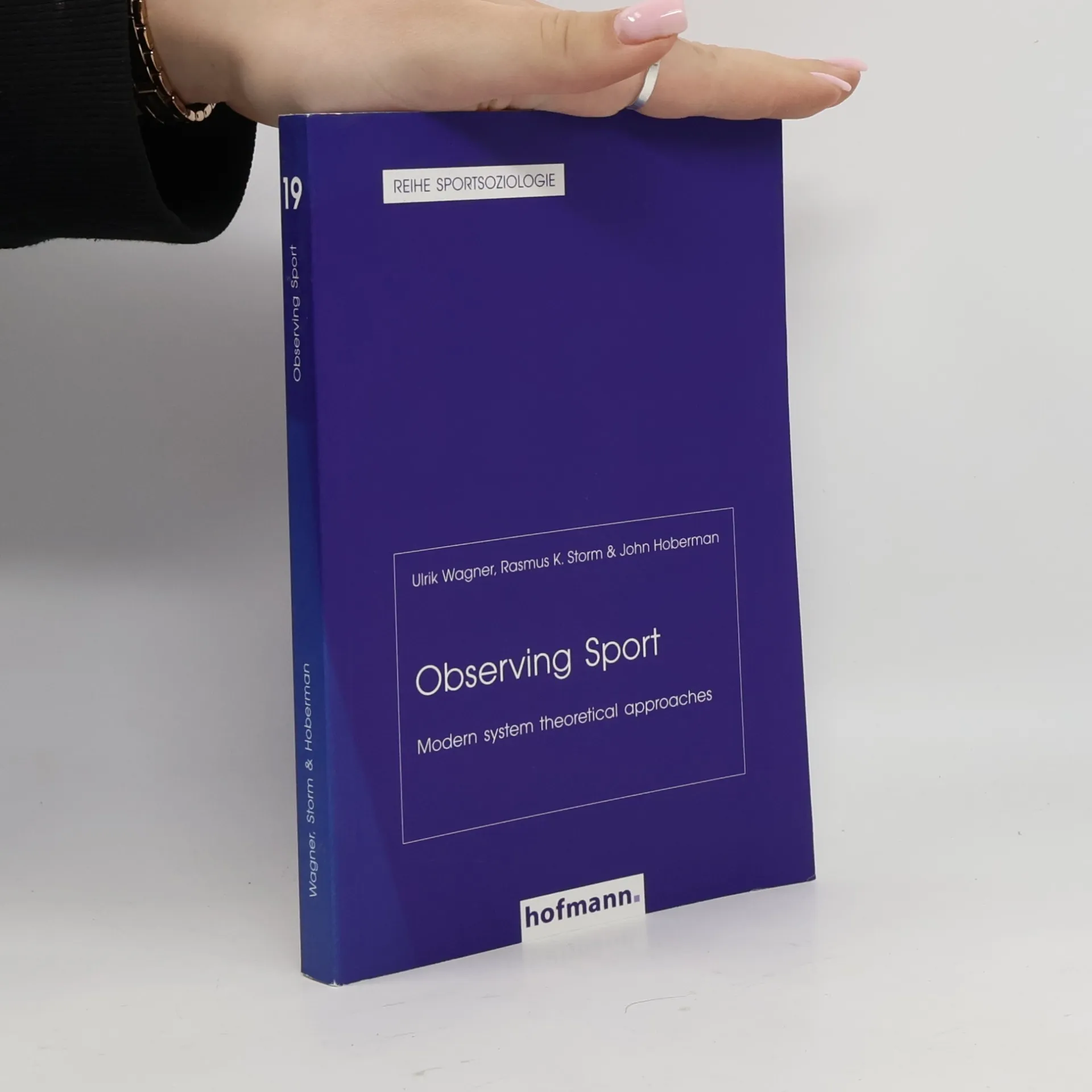


Reihe Sportsoziologie - 19: Observing Sport
En savoir plus sur le livre
In the recent years, the work of the German sociologist Niklas Luhmann (1927 – 1998) has influenced a number of scientific areas such as sociology, educational studies, political science and organization and management studies both in and outside Germany. By (re-)introducing concepts like communication, autopoiesis and meaning, his genuine theoretical outline offers inspiration and new reflections for current social science. This volume contains essays by Danish, German, Norwegian and American scholars who use the elements of the modern systems theory developed by Luhmann to investigate a variety of topics currently facing social scientists of sport. Like this, the anthology represents an attempt to present the application of modern systems theory to a broader English speaking audience.
Achat du livre
Reihe Sportsoziologie - 19: Observing Sport, John M. Hoberman, Ulrik Wagner, Rasmus K. Storm
- Langue

- Année de publication
- 2010
- Reliure
- (souple),
- État du livre
- Bon
- Prix
- 9,99 €
Modes de paiement
Personne n'a encore évalué .
- Titre
- Reihe Sportsoziologie - 19: Observing Sport
- Langue
- Anglais
- Auteurs
- John M. Hoberman, Ulrik Wagner, Rasmus K. Storm
- Éditeur
- Hofmann
- Publié
- 2010
- Format
- souple
- Pages
- 282
- ISBN10
- 3778033964
- ISBN13
- 9783778033968
- Séries
- Catégories
- Mots clés
- Manuels et guides, Sport
- Description
- In the recent years, the work of the German sociologist Niklas Luhmann (1927 – 1998) has influenced a number of scientific areas such as sociology, educational studies, political science and organization and management studies both in and outside Germany. By (re-)introducing concepts like communication, autopoiesis and meaning, his genuine theoretical outline offers inspiration and new reflections for current social science. This volume contains essays by Danish, German, Norwegian and American scholars who use the elements of the modern systems theory developed by Luhmann to investigate a variety of topics currently facing social scientists of sport. Like this, the anthology represents an attempt to present the application of modern systems theory to a broader English speaking audience.