

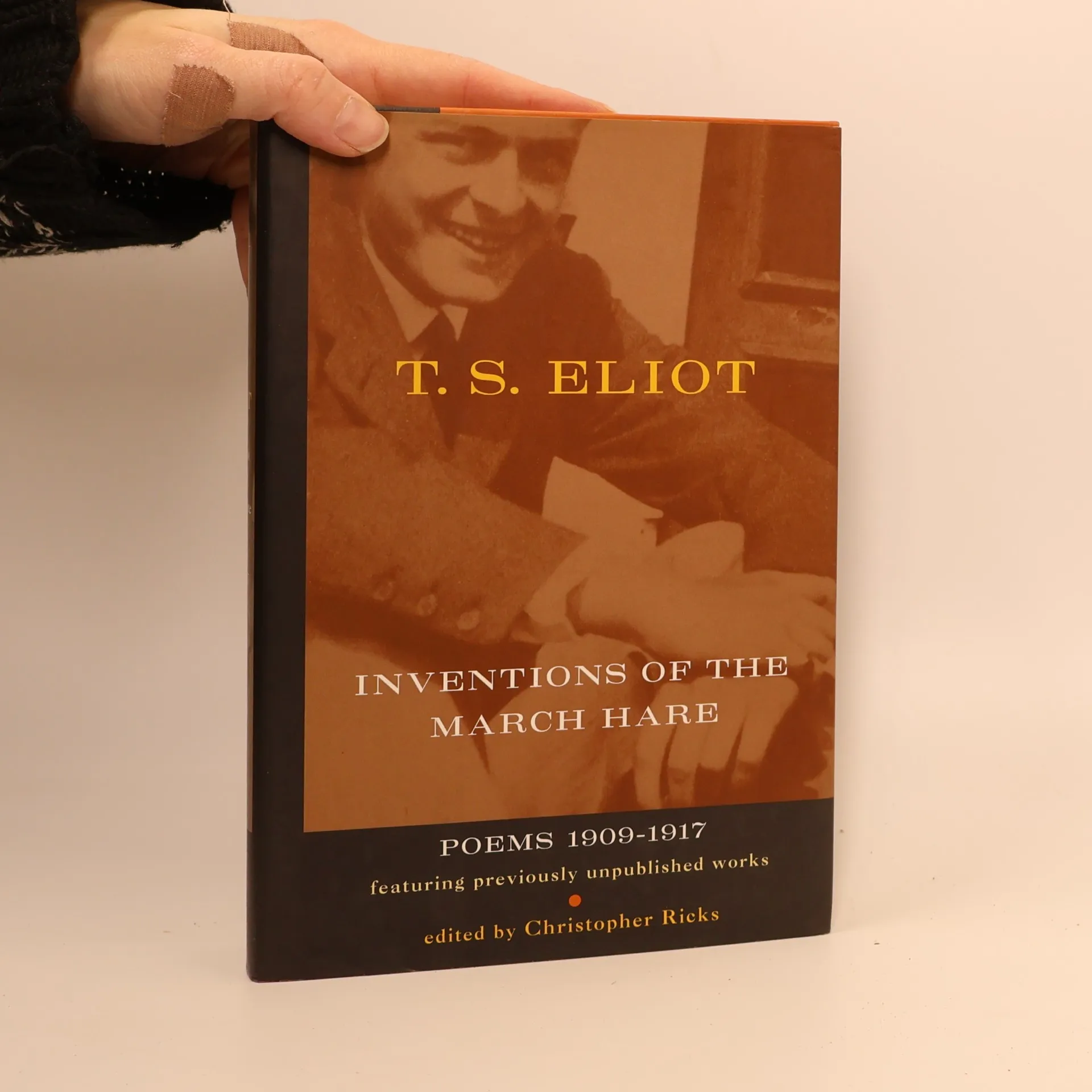

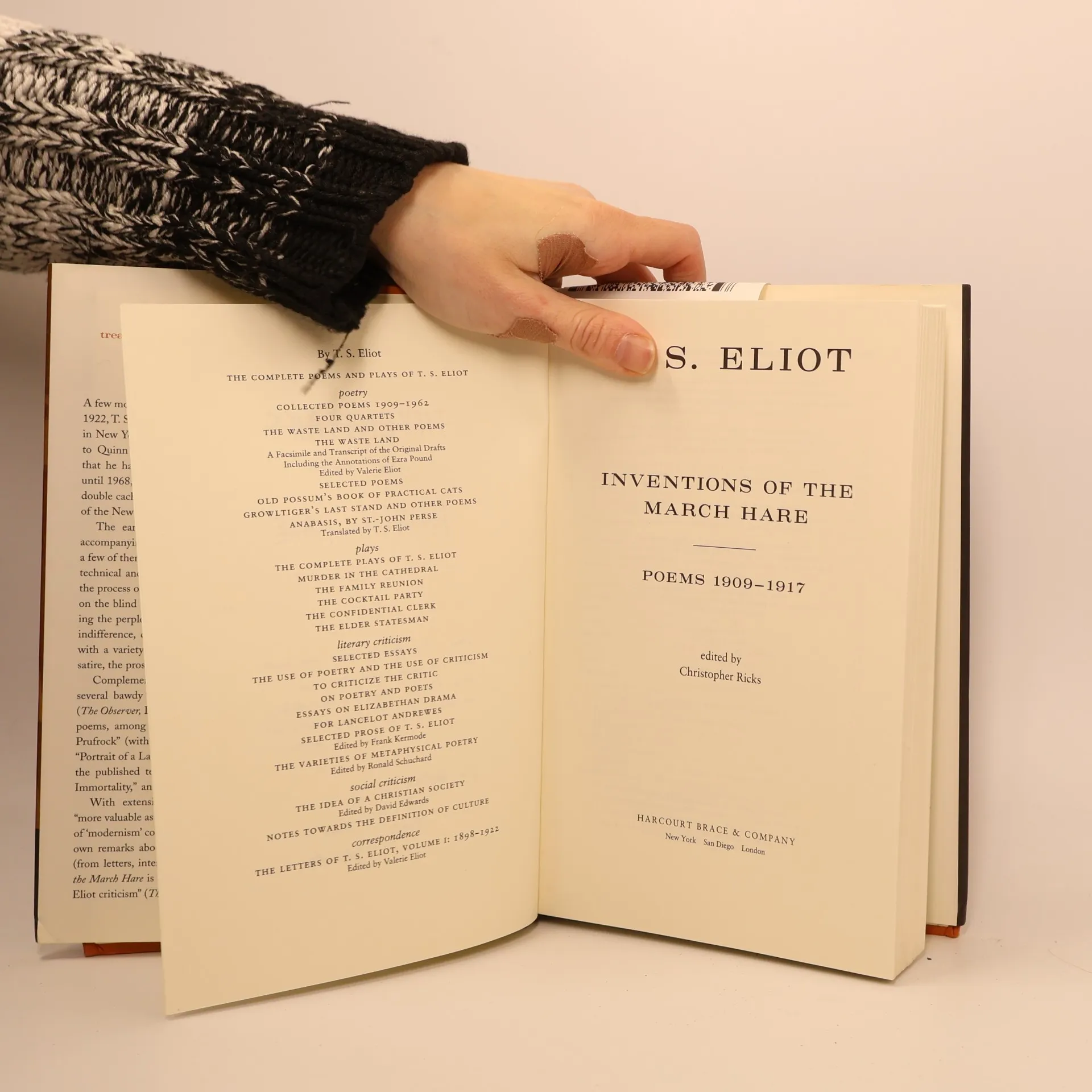
Inventions of the March Hare
Poems 1909-1917 Featuring Previously Unpublished Works
En savoir plus sur le livre
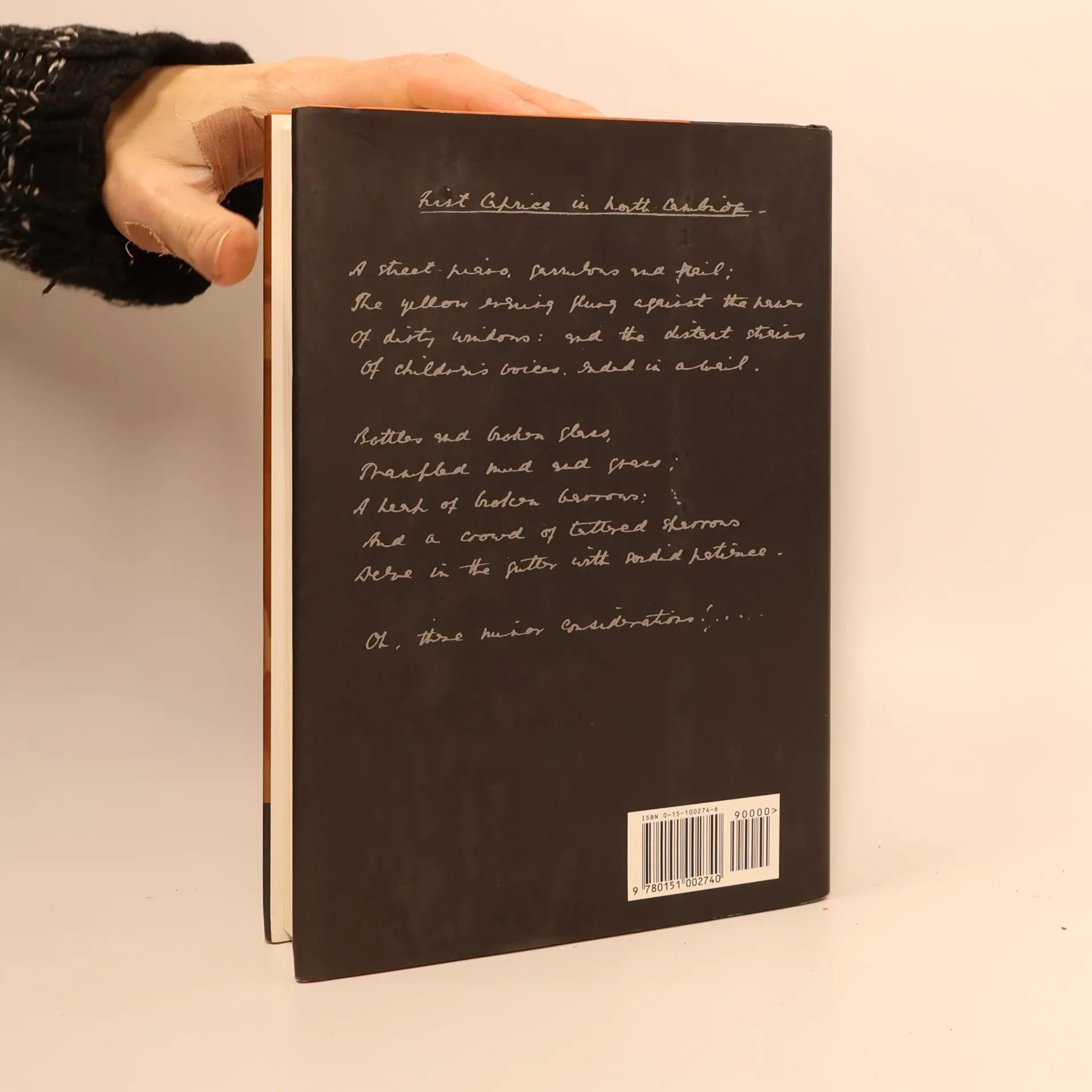
A few months before The Waste Land was published in 1922, T. S. Eliot gave the manuscript to his benefactor in New York, John Quinn. At the same time, he sold to Quinn a notebook containing about fifty poems that he had written during his twenties. It was not until 1968, three years after the poet's death, that the double cache was unveiled within the Berg Collection of the New York Public Library. The early poems, from the notebook and the accompanying leaves, are now at last published, all but a few of them for the first time. Of great interest, both technical and human, they reveal the young Eliot in the process of creating himself and his art: ruminating on the blind alleys and vacant lots of the city, exploring the perplexities of the modern age (doubt, ennui, indifference, dismay, affectation), and experimenting with a variety of poetic forms (urban pastoral, lyric, satire, the prose poem). Complementing the new poems, which include several bawdy verses, are "richly informative drafts" (The Observer, London) of many of Eliot's best-known poems, among them "The Love Song of J. Alfred Prufrock" (with a previously unpublished fragment), "Portrait of a Lady" (signally and subtly different from the published text), many versions of "Whispers of Immortality," and "Ode" (not reprinted since 1920).
Achat du livre
Inventions of the March Hare, Christopher Ricks, Thomas Stearns Eliot
- Langue

- Année de publication
- 1996,
- État du livre
- Très bon
- Prix
- 11,39 €
Modes de paiement
Personne n'a encore évalué .
- Titre
- Inventions of the March Hare
- Sous-titre
- Poems 1909-1917 Featuring Previously Unpublished Works
- Langue
- Anglais
- Éditeur
- Harcourt
- Publié
- 1996
- Pages
- 472
- ISBN10
- 0151002746
- ISBN13
- 9780151002740
- Séries
- Mots clés
- Description
- A few months before The Waste Land was published in 1922, T. S. Eliot gave the manuscript to his benefactor in New York, John Quinn. At the same time, he sold to Quinn a notebook containing about fifty poems that he had written during his twenties. It was not until 1968, three years after the poet's death, that the double cache was unveiled within the Berg Collection of the New York Public Library. The early poems, from the notebook and the accompanying leaves, are now at last published, all but a few of them for the first time. Of great interest, both technical and human, they reveal the young Eliot in the process of creating himself and his art: ruminating on the blind alleys and vacant lots of the city, exploring the perplexities of the modern age (doubt, ennui, indifference, dismay, affectation), and experimenting with a variety of poetic forms (urban pastoral, lyric, satire, the prose poem). Complementing the new poems, which include several bawdy verses, are "richly informative drafts" (The Observer, London) of many of Eliot's best-known poems, among them "The Love Song of J. Alfred Prufrock" (with a previously unpublished fragment), "Portrait of a Lady" (signally and subtly different from the published text), many versions of "Whispers of Immortality," and "Ode" (not reprinted since 1920).