



Paramètres
- 170pages
- 6 heures de lecture
En savoir plus sur le livre
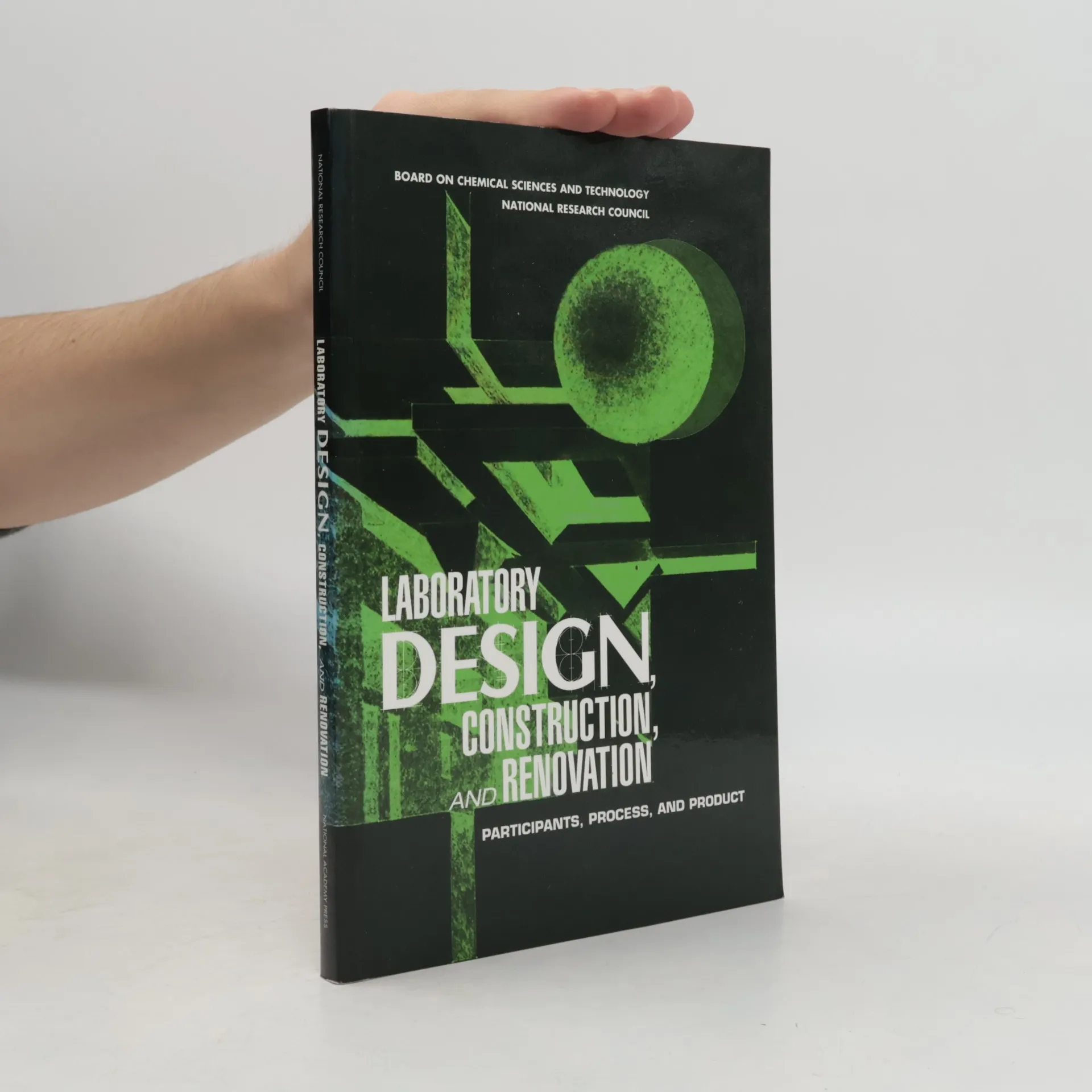
Laboratory facilities are complex, technically sophisticated, and mechanically intensive structures that are expensive to build and to maintain. Hundreds of decisions must be made before and during new construction or renovation that will determine how successfully the facility will function when completed and how successfully it can be maintained once put into service.This book provides guidance on effective approaches for building laboratory facilities in the chemical and biochemical sciences. It contains both basic and laboratory-specific information addressed to the user community-the scientists and administrators who contract with design and construction experts. The book will also be important to the design and construction communities-the architects, laboratory designers, and engineers who will design the facility and the construction personnel who will build it-to help them communicate with the scientific community for whom they build laboratory facilities.
Achat du livre
Laboratory Design, Construction, and Renovation, National Research Council, Board on Chemical Sciences and Technology, Committee on Design, Construction, and Renovation of Laboratory Facilities, Commission on Physical Sciences, Mathematics, and Applications
- Langue

- Année de publication
- 2000
- Reliure
- (souple),
- État du livre
- Bon
- Prix
- 15,49 €
Modes de paiement
Personne n'a encore évalué .
- Titre
- Laboratory Design, Construction, and Renovation
- Sous-titre
- Participants, Process, and Product
- Langue
- Anglais
- Auteurs
- National Research Council, Board on Chemical Sciences and Technology, Committee on Design, Construction, and Renovation of Laboratory Facilities, Commission on Physical Sciences, Mathematics, and Applications
- Éditeur
- National Academies Press
- Publié
- 2000
- Format
- souple
- Pages
- 170
- ISBN10
- 0309066336
- ISBN13
- 9780309066334
- Séries
- Mots clés
- Architecture, Science, États-Unis, Littérature spécialisée, Bricolage et DIY, Biochimie, Technique de laboratoire
- Description
- Laboratory facilities are complex, technically sophisticated, and mechanically intensive structures that are expensive to build and to maintain. Hundreds of decisions must be made before and during new construction or renovation that will determine how successfully the facility will function when completed and how successfully it can be maintained once put into service.This book provides guidance on effective approaches for building laboratory facilities in the chemical and biochemical sciences. It contains both basic and laboratory-specific information addressed to the user community-the scientists and administrators who contract with design and construction experts. The book will also be important to the design and construction communities-the architects, laboratory designers, and engineers who will design the facility and the construction personnel who will build it-to help them communicate with the scientific community for whom they build laboratory facilities.