

En savoir plus sur le livre
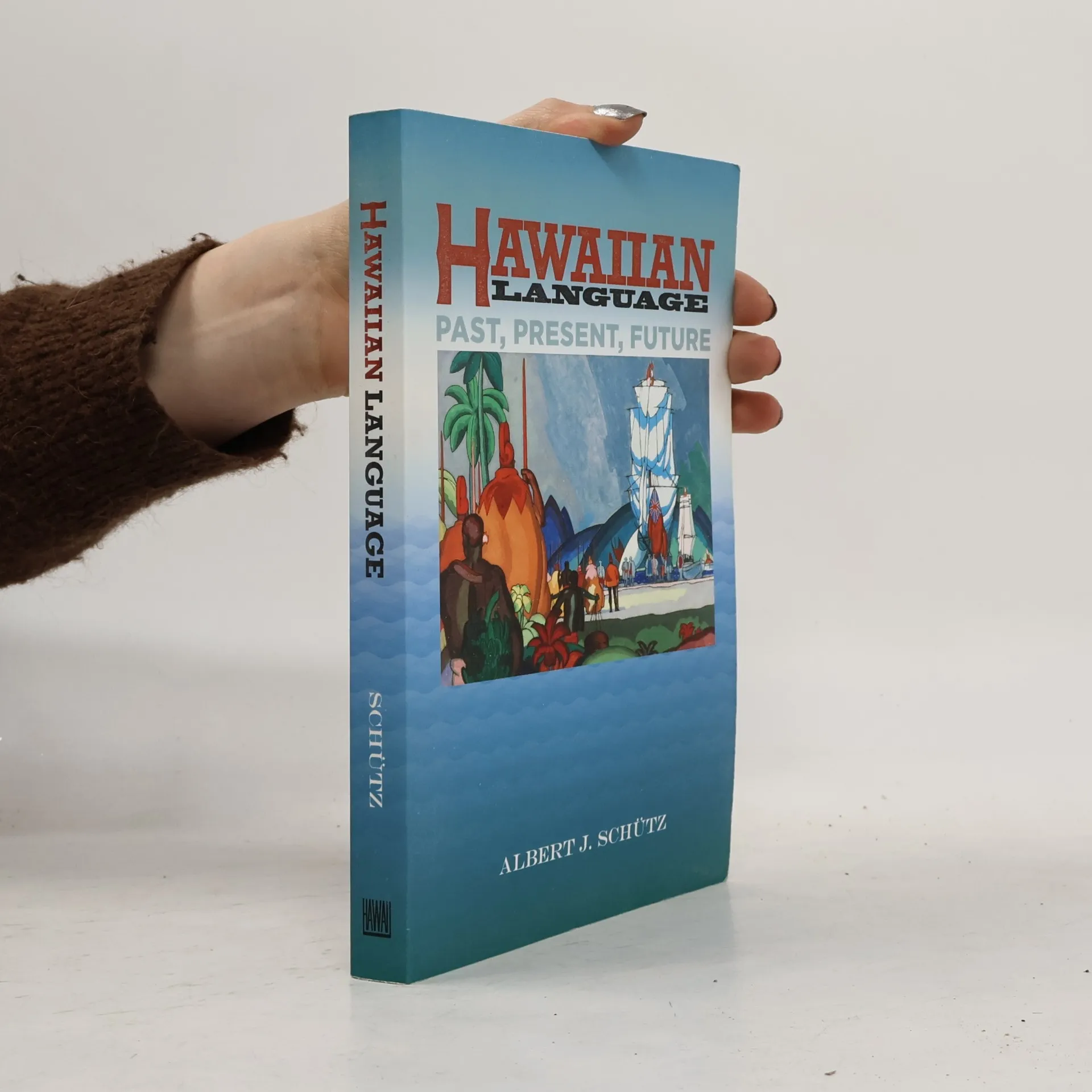
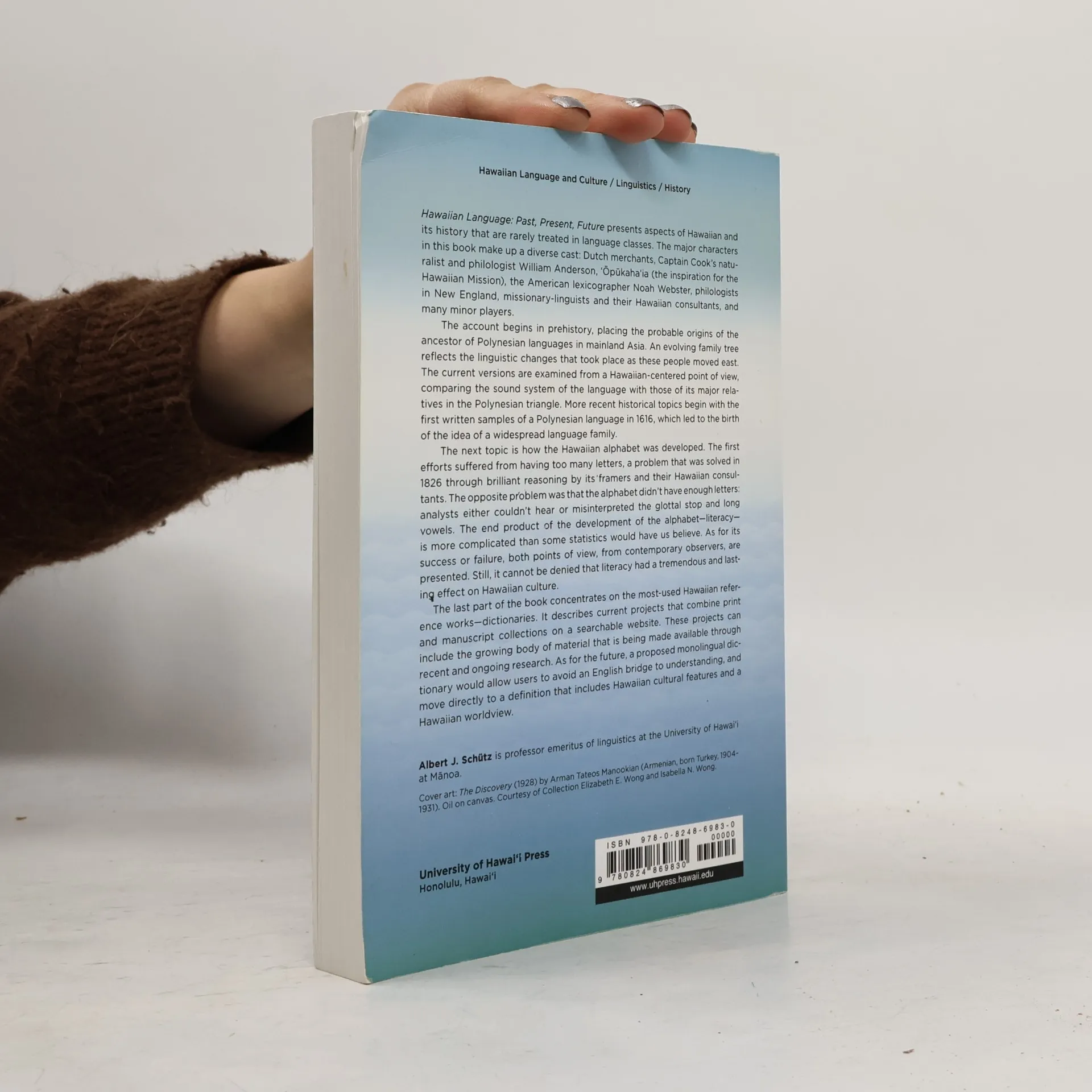
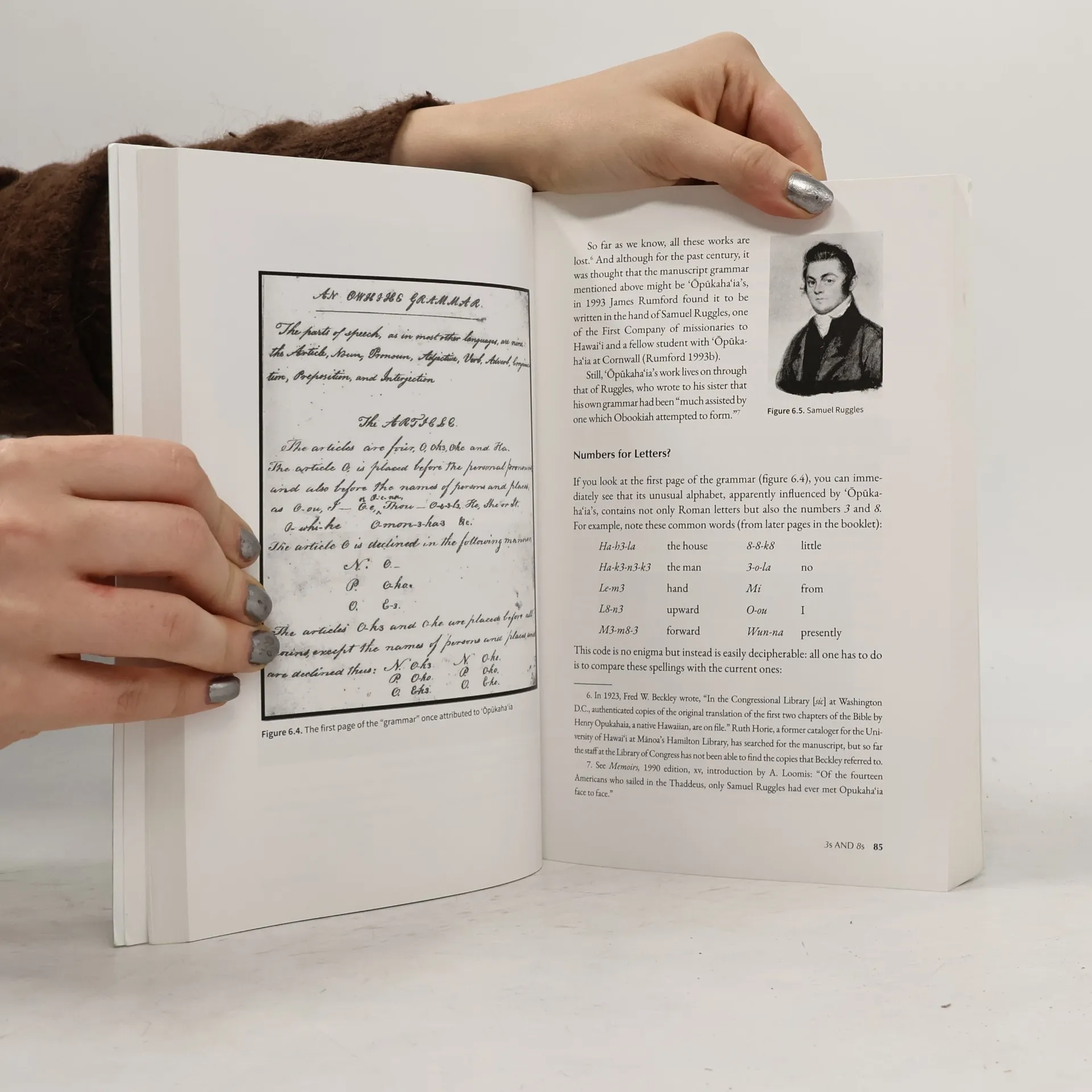
With color and black-and-white illustrations throughout, Hawaiian Language: Past, Present, Future presents aspects of Hawaiian and its history that are rarely treated in language classes. The major characters in this book make up a diverse cast: Dutch merchants, Captain Cook's naturalist and philologist William Anderson, 'Ōpūkaha'ia (the inspiration for the Hawaiian Mission), the American lexicographer Noah Webster, philologists in New England, missionary-linguists and their Hawaiian consultants, and many minor players.The account begins in prehistory, placing the probable origins of the ancestor of Polynesian languages in mainland Asia. An evolving family tree reflects the linguistic changes that took place as these people moved east. The current versions are examined from a Hawaiian-centered point of view, comparing the sound system of the language with those of its major relatives in the Polynesian triangle. More recent historical topics begin with the first written samples of a Polynesian language in 1616, which led to the birth of the idea of a widespread language family.The next topic is how the Hawaiian alphabet was developed. The first efforts suffered from having too many letters, a problem that was solved in 1826 through brilliant reasoning by its framers and their Hawaiian consultants. The opposite problem was that the alphabet didn't have enough letters: analysts either couldn't hear or misinterpreted the glottal stop and long vowels. The end product of the development of the alphabet--literacy--is more complicated than some statistics would have us believe. As for its success or failure, both points of view, from contemporary observers, are presented. Still, it cannot be denied that literacy had a tremendous and lasting effect on Hawaiian culture.The last part of the book concentrates on the most-used Hawaiian reference works--dictionaries. It describes current projects that combine print and manuscript collections on a searchable website. These projects can include the growing body of manuscript and print material that is being made available through recent and ongoing research. As for the future, a proposed monolingual dictionary would allow users to avoid an English bridge to understanding, and move directly to a definition that includes Hawaiian cultural features and a Hawaiian worldview.
Achat du livre
Hawaiian Language, Albert J. Schütz
- Langue

- Année de publication
- 2020
- Reliure
- (souple)
Modes de paiement
Personne n'a encore évalué .
- Titre
- Hawaiian Language
- Sous-titre
- Past, Present, Future
- Langue
- Anglais
- Auteurs
- Albert J. Schütz
- Éditeur
- University of Hawaii Press
- Publié
- 2020
- Format
- souple
- Pages
- 384
- ISBN10
- 0824869834
- ISBN13
- 9780824869830
- Séries
- Catégories
- Mots clés
- Thème historique, Manuels de langue, Linguistique, Vocabulaire, Alphabet, Océanie
- Description
- With color and black-and-white illustrations throughout, Hawaiian Language: Past, Present, Future presents aspects of Hawaiian and its history that are rarely treated in language classes. The major characters in this book make up a diverse cast: Dutch merchants, Captain Cook's naturalist and philologist William Anderson, 'Ōpūkaha'ia (the inspiration for the Hawaiian Mission), the American lexicographer Noah Webster, philologists in New England, missionary-linguists and their Hawaiian consultants, and many minor players.The account begins in prehistory, placing the probable origins of the ancestor of Polynesian languages in mainland Asia. An evolving family tree reflects the linguistic changes that took place as these people moved east. The current versions are examined from a Hawaiian-centered point of view, comparing the sound system of the language with those of its major relatives in the Polynesian triangle. More recent historical topics begin with the first written samples of a Polynesian language in 1616, which led to the birth of the idea of a widespread language family.The next topic is how the Hawaiian alphabet was developed. The first efforts suffered from having too many letters, a problem that was solved in 1826 through brilliant reasoning by its framers and their Hawaiian consultants. The opposite problem was that the alphabet didn't have enough letters: analysts either couldn't hear or misinterpreted the glottal stop and long vowels. The end product of the development of the alphabet--literacy--is more complicated than some statistics would have us believe. As for its success or failure, both points of view, from contemporary observers, are presented. Still, it cannot be denied that literacy had a tremendous and lasting effect on Hawaiian culture.The last part of the book concentrates on the most-used Hawaiian reference works--dictionaries. It describes current projects that combine print and manuscript collections on a searchable website. These projects can include the growing body of manuscript and print material that is being made available through recent and ongoing research. As for the future, a proposed monolingual dictionary would allow users to avoid an English bridge to understanding, and move directly to a definition that includes Hawaiian cultural features and a Hawaiian worldview.