




Paramètres
- 291pages
- 11 heures de lecture
En savoir plus sur le livre
This concise, applied, and very clearly written introduction to qualitative research methods can be used effectively in a semester, or year-long course. The purpose of this book is to provide the reader with a background for understanding the uses of qualitative research in education (and other professions) to examine its theoretical and historical underpinnings, and to provide the "how-to's" of doing qualitative research. This new edition places qualitative research within current debates about research methods and alternative ways of knowing. While the authors approach the subject from a sociological perspective, they also take care to reflect the many changes in conceptualization of qualitative research brought by post-structural and feminist thought.
Achat du livre
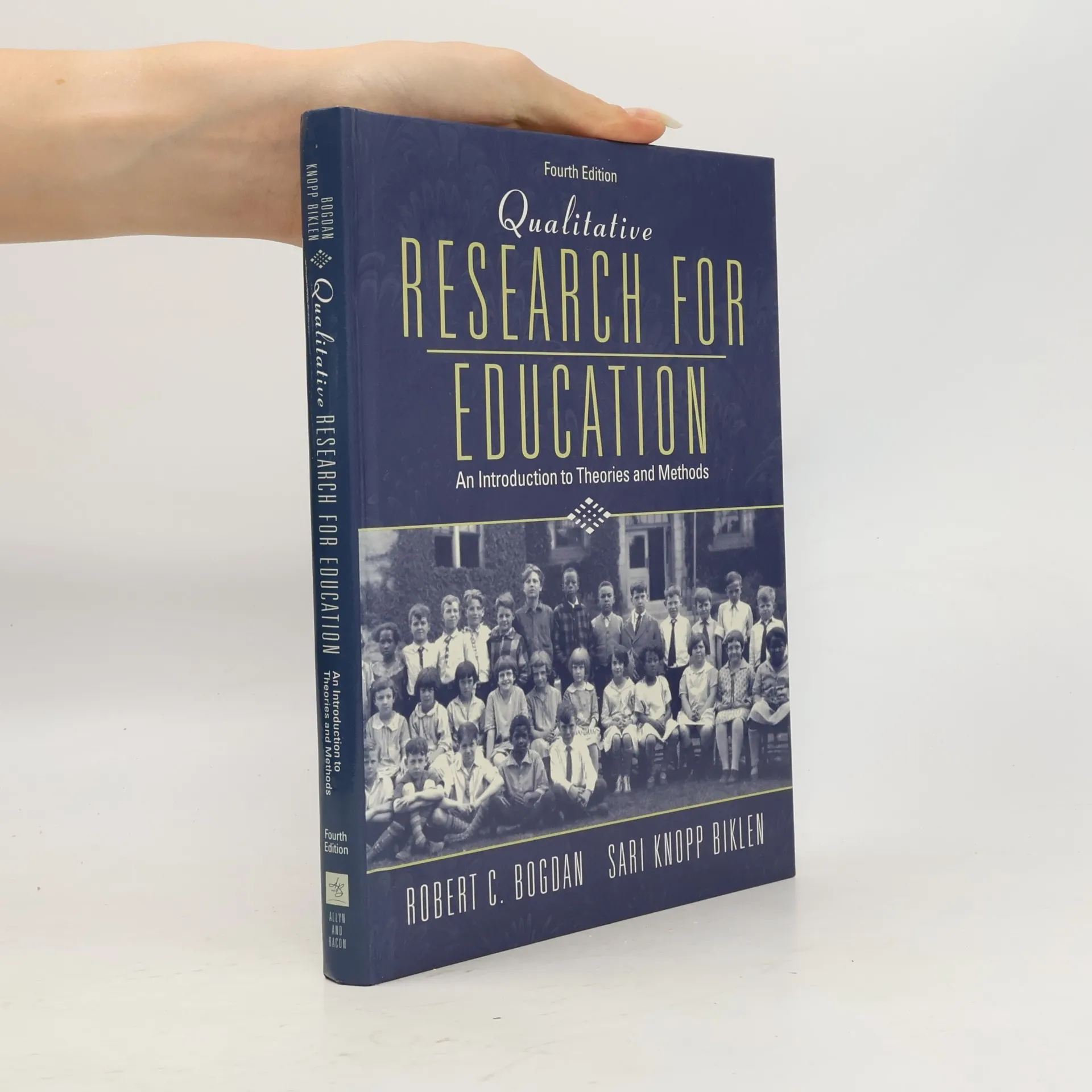
Qualitative Research for Education, Robert C. Bogdan, Sari Knopp Biklen
- Langue

- Année de publication
- 2002
- Reliure
- (rigide),
- État du livre
- Très bon
- Prix
- 8,59 €
Modes de paiement
Personne n'a encore évalué .
- Titre
- Qualitative Research for Education
- Sous-titre
- An Introduction to Theories and Methods - Fourth Edition
- Langue
- Anglais
- Auteurs
- Robert C. Bogdan, Sari Knopp Biklen
- Éditeur
- Allyn & Bacon
- Publié
- 2002
- Format
- rigide
- Pages
- 291
- ISBN10
- 0205375561
- ISBN13
- 9780205375561
- Séries
- Catégories
- Mots clés
- Manuels et guides, États-Unis, Éducation, système scolaire, Recherche, Méthodologie, Études postuniversitaires, Recherche pédagogique
- Description
- This concise, applied, and very clearly written introduction to qualitative research methods can be used effectively in a semester, or year-long course. The purpose of this book is to provide the reader with a background for understanding the uses of qualitative research in education (and other professions) to examine its theoretical and historical underpinnings, and to provide the "how-to's" of doing qualitative research. This new edition places qualitative research within current debates about research methods and alternative ways of knowing. While the authors approach the subject from a sociological perspective, they also take care to reflect the many changes in conceptualization of qualitative research brought by post-structural and feminist thought.