


En savoir plus sur le livre
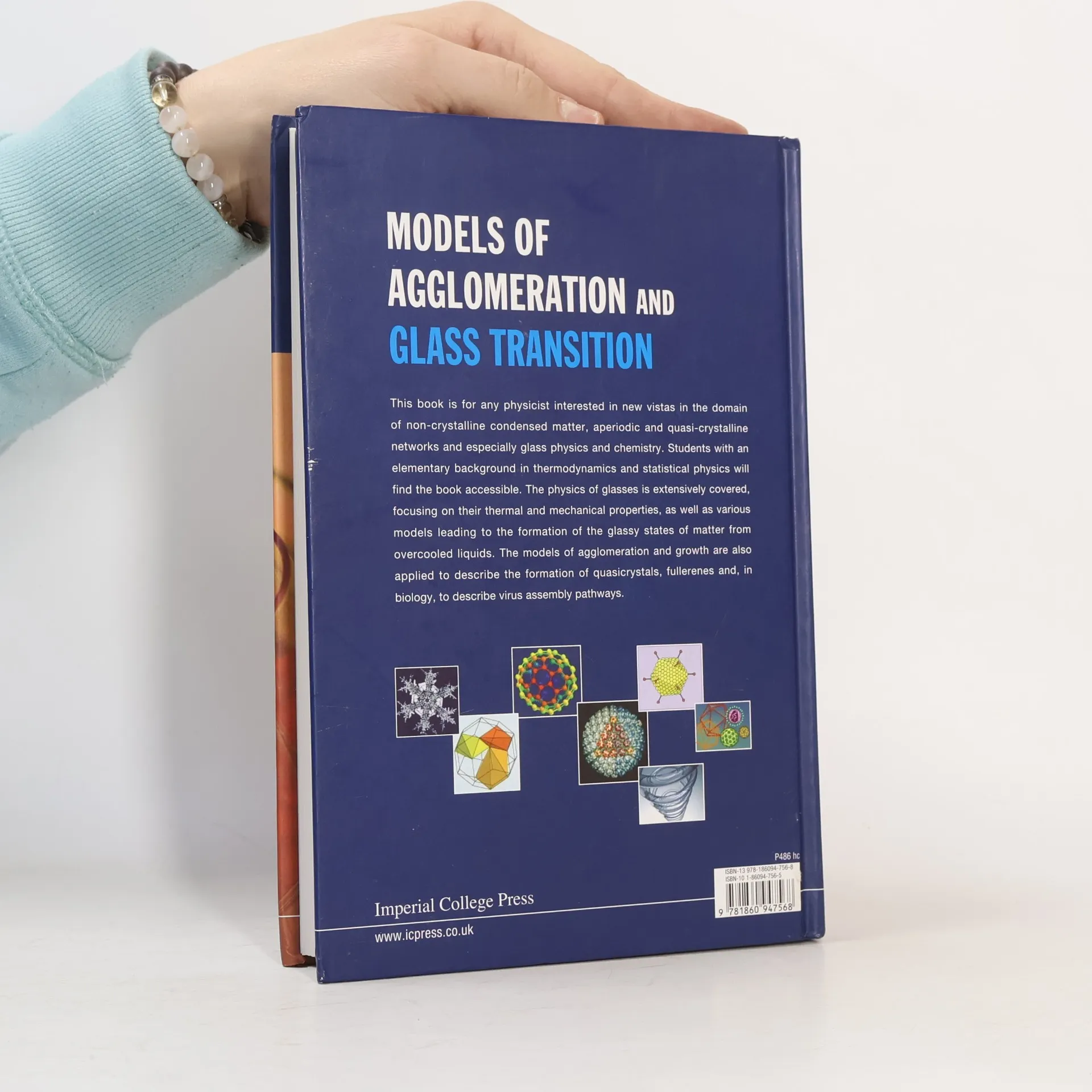
This book is for any physicist interested in new vistas in the domain of non-crystalline condensed matter, aperiodic and quasi-crystalline networks and especially glass physics and chemistry. Students with an elementary background in thermodynamics and statistical physics will find the book accessible. The physics of glasses is extensively covered, focusing on their thermal and mechanical properties, as well as various models leading to the formation of the glassy states of matter from overcooled liquids. The models of agglomeration and growth are also applied to describe the formation of quasicrystals, fullerenes and, in biology, to describe virus assembly pathways.
Achat du livre
Models of Agglomeration and Glass Transition, Richard Kerner
- Langue

- Année de publication
- 2006
- Reliure
- (rigide),
- État du livre
- Très bon
- Prix
- 59,99 €
Modes de paiement
Personne n'a encore évalué .
- Titre
- Models of Agglomeration and Glass Transition
- Langue
- Anglais
- Auteurs
- Richard Kerner
- Éditeur
- Imperial College Press
- Publié
- 2006
- Format
- rigide
- Pages
- 380
- ISBN10
- 1860947565
- ISBN13
- 9781860947568
- Séries
- Mots clés
- Science, Technologie, Chimie physique
- Description
- This book is for any physicist interested in new vistas in the domain of non-crystalline condensed matter, aperiodic and quasi-crystalline networks and especially glass physics and chemistry. Students with an elementary background in thermodynamics and statistical physics will find the book accessible. The physics of glasses is extensively covered, focusing on their thermal and mechanical properties, as well as various models leading to the formation of the glassy states of matter from overcooled liquids. The models of agglomeration and growth are also applied to describe the formation of quasicrystals, fullerenes and, in biology, to describe virus assembly pathways.