


En savoir plus sur le livre
Over the past half century, western democracies have lead efforts to entrench the economic and political values of liberal democracy into the foundations of European and international public order. As this book details, the relationship between the media and the state has been at the heart of those efforts. In that relationship, often framed in constitutional principles, the liberal democratic state has celebrated the liberty to publish information and entertainment content, while also forcefully setting the limits for harmful or offensive expression. It is thus a relationship rooted in the state's need for security, authority, and legitimacy as much as liberalism's powerful arguments for economic and political freedom. In Europe, this long running endeavour has yielded a market based, liberal democratic regional order that has profound consequences for media law and policy in the member states. This book examines the economic and human rights aspects of European media law, which is not only comparatively coherent but also increasingly restrictive, rejecting alternatives that are well within the traditions of liberalism. Parallel efforts in the international sphere have been markedly less successful. In international media law, the division between trade and human rights remains largely unabridged and, in the latter field, liberal democratic concepts of free speech are influential but rarely decisive. In the international sphere states are moreover quick to assert their rights to autonomy. Nonetheless, the current communications revolution has overturned fundamental assumptions about the media and the state around the world, eroding the boundaries between domestic and foreign media as well as mass and personal communication. European and International Media Law sets legal and policy developments in the context of this fast changing, globalized media and communications sector.
Achat du livre
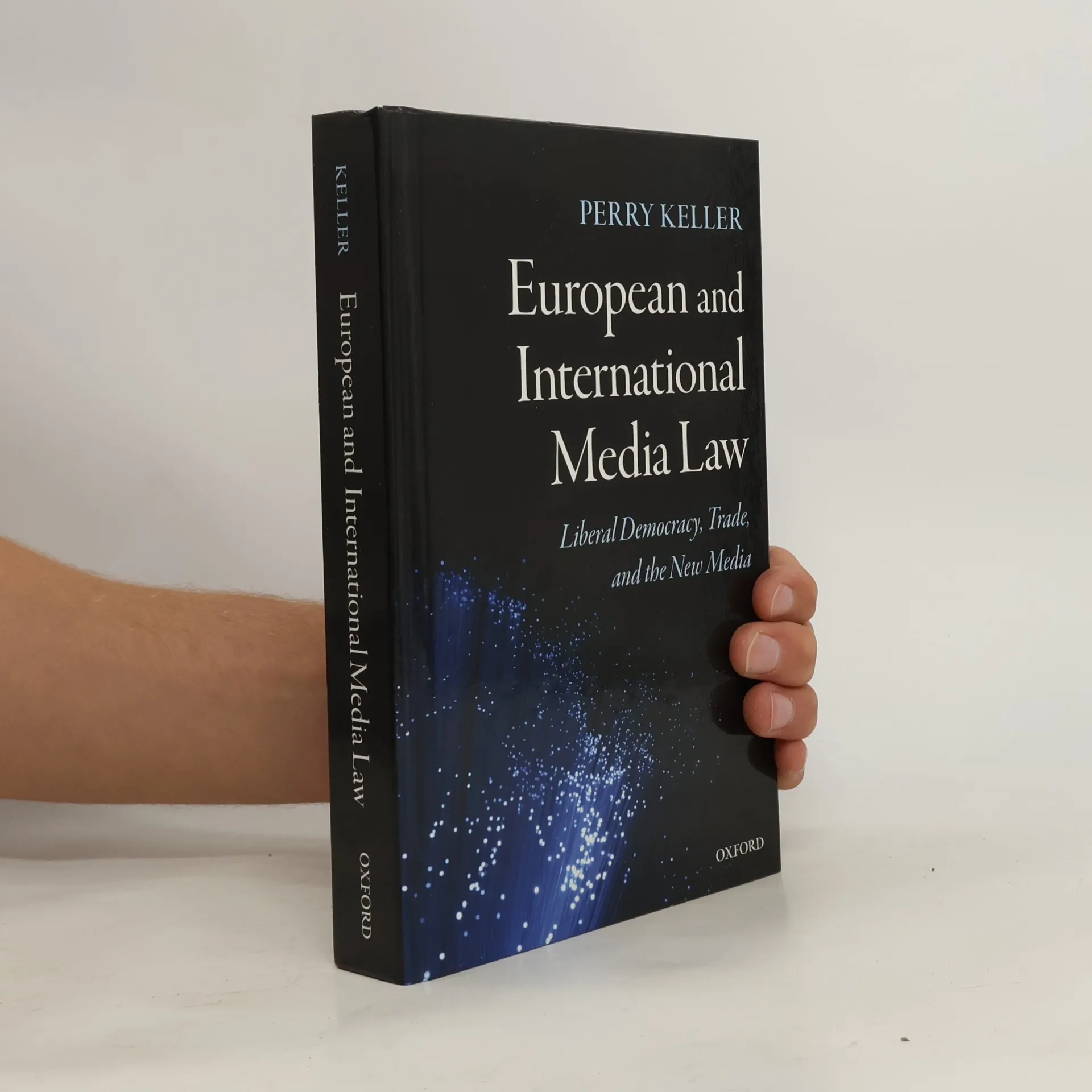
European and International Media Law, Perry Keller
- Langue

- Année de publication
- 2011
- Reliure
- (rigide),
- État du livre
- Très bon
- Prix
- 10,99 €
Modes de paiement
Personne n'a encore évalué .
- Titre
- European and International Media Law
- Sous-titre
- Liberal Democracy, Trade and the New Media
- Langue
- Anglais
- Auteurs
- Perry Keller
- Éditeur
- Oxford University Press
- Publié
- 2011
- Format
- rigide
- Pages
- 532
- ISBN10
- 0198268556
- ISBN13
- 9780198268550
- Séries
- Catégories
- Mots clés
- Thématique juridique, Théories politiques, Droits de l'homme, Captivant, Droit international, Médias de masse
- Description
- Over the past half century, western democracies have lead efforts to entrench the economic and political values of liberal democracy into the foundations of European and international public order. As this book details, the relationship between the media and the state has been at the heart of those efforts. In that relationship, often framed in constitutional principles, the liberal democratic state has celebrated the liberty to publish information and entertainment content, while also forcefully setting the limits for harmful or offensive expression. It is thus a relationship rooted in the state's need for security, authority, and legitimacy as much as liberalism's powerful arguments for economic and political freedom. In Europe, this long running endeavour has yielded a market based, liberal democratic regional order that has profound consequences for media law and policy in the member states. This book examines the economic and human rights aspects of European media law, which is not only comparatively coherent but also increasingly restrictive, rejecting alternatives that are well within the traditions of liberalism. Parallel efforts in the international sphere have been markedly less successful. In international media law, the division between trade and human rights remains largely unabridged and, in the latter field, liberal democratic concepts of free speech are influential but rarely decisive. In the international sphere states are moreover quick to assert their rights to autonomy. Nonetheless, the current communications revolution has overturned fundamental assumptions about the media and the state around the world, eroding the boundaries between domestic and foreign media as well as mass and personal communication. European and International Media Law sets legal and policy developments in the context of this fast changing, globalized media and communications sector.