



En savoir plus sur le livre
There will be 8.3 billion human beings on Earth by 2030, and the more the better. We have the opportunity to create a world of expansive megacities - including one around old London. Doing so will advance the art, science and processes of manufacturing. But to deploy those abilities we must shrug off the dogma of sustainability that insists only small can be beautiful. Humanity has come a long way since the first modular mega-structure was built at Ur, on land that is now Iraq. There, four millennia ago, and by hand, the Sumerians built a mud-brick ziggurat to their Gods. Today, the green deities of Nature we have invented for ourselves are worshipped with humility. Eco-zealots argue against the mechanised megaforming of landscape and the modularised production of megastructures. The guest editors, Jonathan Schwinge and Ian Abley of the London based research organisation audacity, call for development on a bold scale. They argue that by rapidly super-sizing the built environment society is not made vulnerable to natural or man-made hazards, and that design innovation surpasses bio-mimicry. Designers can learn from materials scientists working at the smallest of scales, and from systems manufacturers with ambitions at the largest. This issue calls for creative thinking about typologies and topologies, and considers what that also means for Africa, China, and Russia. Megacities everywhere demand integration of global systems of transport, utilities and IT in gigantic structures, constantly upgraded, scraping both the sky and the ground, outward into the sea.
Achat du livre
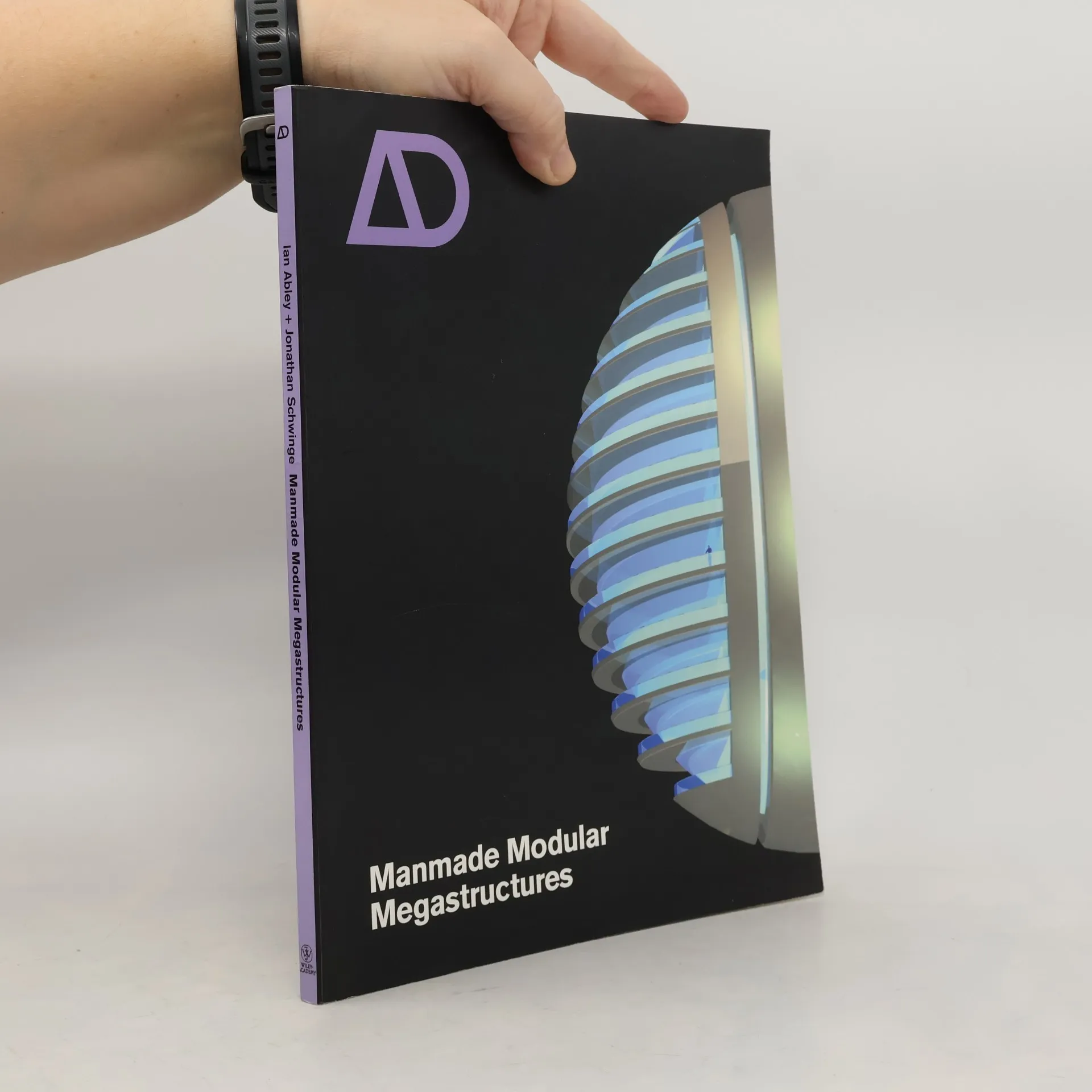
Architectural Design - 76: Manmade Modular Megastructures, Ian Abley, Jonathan Schwinge
- Langue

- Année de publication
- 2006
- Reliure
- (souple),
- État du livre
- Très bon
- Prix
- 21,99 €
Modes de paiement
Personne n'a encore évalué .
- Titre
- Architectural Design - 76: Manmade Modular Megastructures
- Langue
- Anglais
- Auteurs
- Ian Abley, Jonathan Schwinge
- Éditeur
- Academy Press
- Publié
- 2006
- Format
- souple
- Pages
- 128
- ISBN10
- 047001623X
- ISBN13
- 9780470016237
- Séries
- Catégories
- Mots clés
- Manuels et guides, Art, Architecture, Conception de bâtiments
- Description
- There will be 8.3 billion human beings on Earth by 2030, and the more the better. We have the opportunity to create a world of expansive megacities - including one around old London. Doing so will advance the art, science and processes of manufacturing. But to deploy those abilities we must shrug off the dogma of sustainability that insists only small can be beautiful. Humanity has come a long way since the first modular mega-structure was built at Ur, on land that is now Iraq. There, four millennia ago, and by hand, the Sumerians built a mud-brick ziggurat to their Gods. Today, the green deities of Nature we have invented for ourselves are worshipped with humility. Eco-zealots argue against the mechanised megaforming of landscape and the modularised production of megastructures. The guest editors, Jonathan Schwinge and Ian Abley of the London based research organisation audacity, call for development on a bold scale. They argue that by rapidly super-sizing the built environment society is not made vulnerable to natural or man-made hazards, and that design innovation surpasses bio-mimicry. Designers can learn from materials scientists working at the smallest of scales, and from systems manufacturers with ambitions at the largest. This issue calls for creative thinking about typologies and topologies, and considers what that also means for Africa, China, and Russia. Megacities everywhere demand integration of global systems of transport, utilities and IT in gigantic structures, constantly upgraded, scraping both the sky and the ground, outward into the sea.