

Paramètres
- 144pages
- 6 heures de lecture
En savoir plus sur le livre
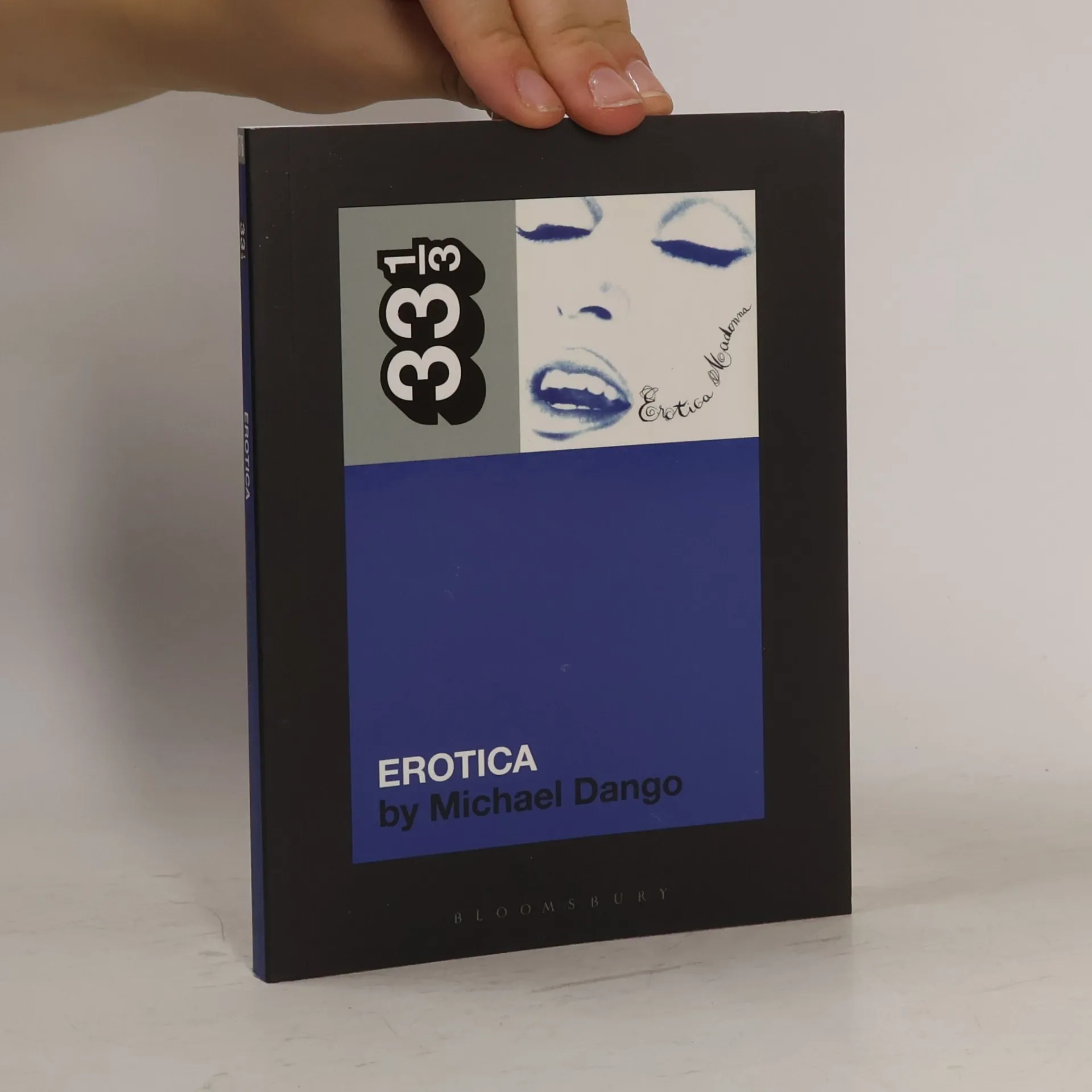
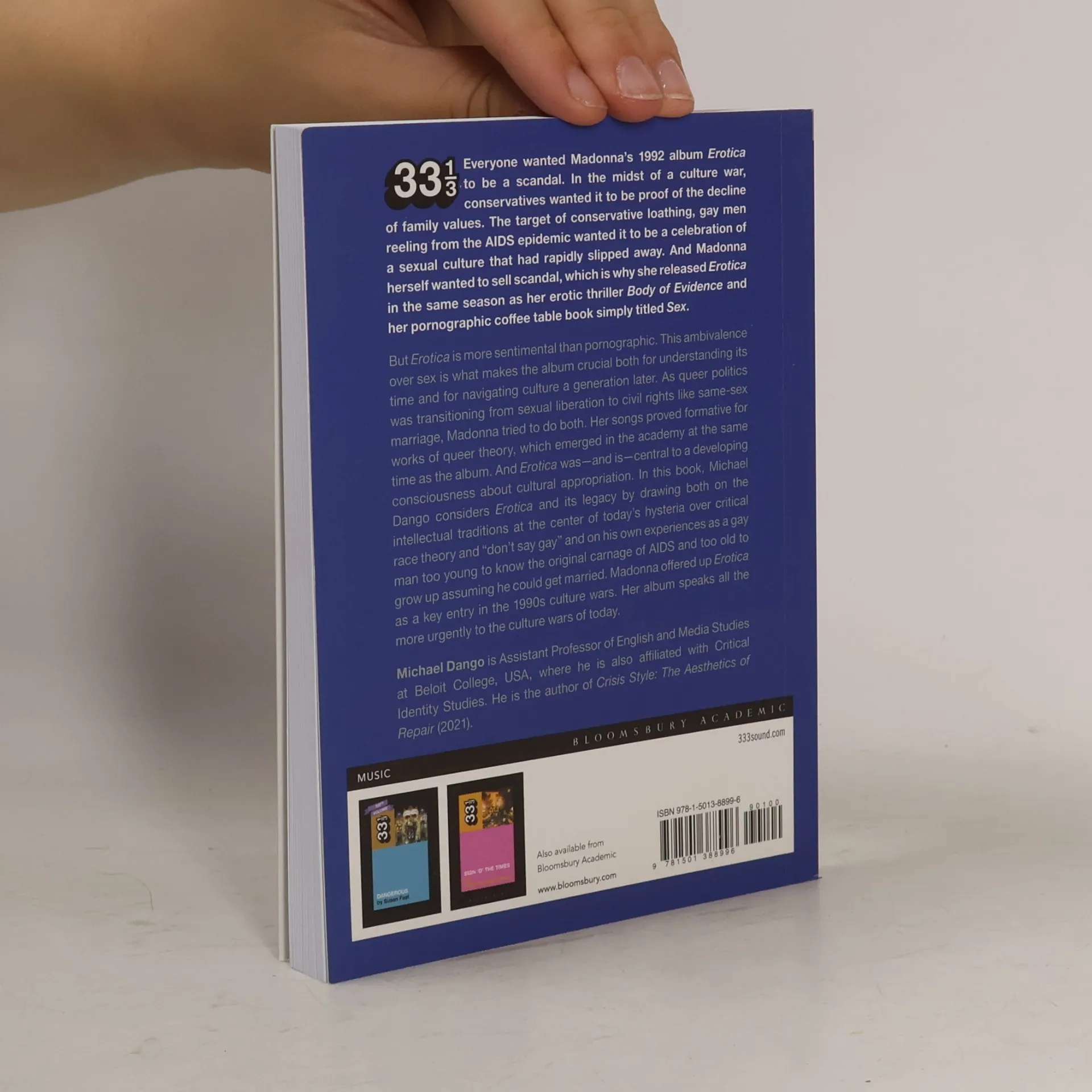
Everyone wanted Madonna's Erotica to be scandalous, even pornographic. In the midst of the early 1990s culture wars, conservatives wanted it to be proof of the decline of family values. The target of conservative loathing, gay men reeling from the AIDS epidemic wanted it to be a celebration of a sexual culture that had rapidly slipped away. And of course Madonna herself, who released the album at the same time as her actually pornographic coffee-book table simply titled Sex, knew sex sells. But Erotica is more sentimental than sexual. At a time when sex was deadly, this sentimentality was not kitsch, but a way of sustaining a sexual culture. In this book, Michael Dango shows how Erotica marks an inflection point in multiple narratives. It is the album in which Madonna began more directly addressing her gay audience, at the same time that gay politics was transitioning from a sexual liberation framework to a rights-based framework that would ultimately culminate in same-sex marriage. To tell this story, Dango draws on his own experiences positioned between two generations of gay people-between a generation decimated by AIDS and a generation that grew up assuming they would be able to get married-as well as works of queer theory, which emerged in the academy at the same time as Madonna emerged on the music scene.
Achat du livre
33 1/3: Madonna's Erotica, Michael Dango
- Langue

- Année de publication
- 2023
- Reliure
- (souple)
Modes de paiement
Personne n'a encore évalué .
- Titre
- 33 1/3: Madonna's Erotica
- Langue
- Anglais
- Auteurs
- Michael Dango
- Éditeur
- Bloomsbury Publishing PLC
- Publié
- 2023
- Format
- souple
- Pages
- 144
- ISBN10
- 1501388991
- ISBN13
- 9781501388996
- Séries
- Mots clés
- Thématique musicale, États-Unis, Rock, Musique populaire, Histoire de la musique, Aspects sociaux
- Description
- Everyone wanted Madonna's Erotica to be scandalous, even pornographic. In the midst of the early 1990s culture wars, conservatives wanted it to be proof of the decline of family values. The target of conservative loathing, gay men reeling from the AIDS epidemic wanted it to be a celebration of a sexual culture that had rapidly slipped away. And of course Madonna herself, who released the album at the same time as her actually pornographic coffee-book table simply titled Sex, knew sex sells. But Erotica is more sentimental than sexual. At a time when sex was deadly, this sentimentality was not kitsch, but a way of sustaining a sexual culture. In this book, Michael Dango shows how Erotica marks an inflection point in multiple narratives. It is the album in which Madonna began more directly addressing her gay audience, at the same time that gay politics was transitioning from a sexual liberation framework to a rights-based framework that would ultimately culminate in same-sex marriage. To tell this story, Dango draws on his own experiences positioned between two generations of gay people-between a generation decimated by AIDS and a generation that grew up assuming they would be able to get married-as well as works of queer theory, which emerged in the academy at the same time as Madonna emerged on the music scene.