


Paramètres
- 422pages
- 15 heures de lecture
En savoir plus sur le livre
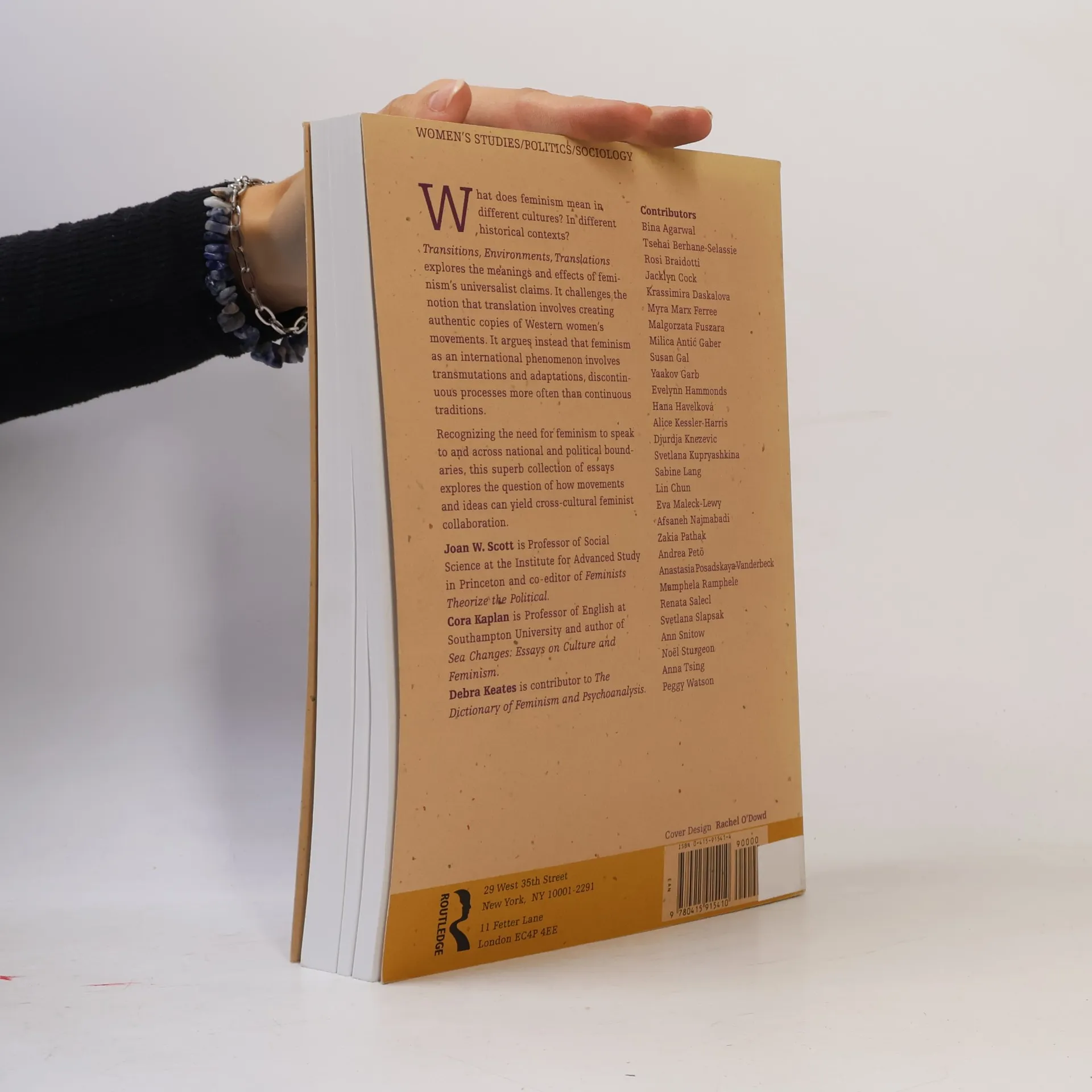
The essays in Transitions, Environments, Translations explore the varied meanings of feminism in different political, cultural, and historical contexts. They respond to the claim that feminism is Western in origin and universalist in theory, and to the assumption that feminist goals are self-evident and the same in all contexts.Rather than assume that there is a blueprint by which to measure the strength or success of feminism in different parts of the world, these essays consider feminism to be a site of local, national and international conflict. They What is at stake in various political efforts by women in different parts of the world? What meanings have women given to their efforts? What has been their relationship to feminism--as a concept and as an international movement? What happens when feminist ideas are translated from one language, one political context, to another?
Achat du livre
Transitions Environments Translations, Joan Wallach Scott, Cora Kaplan, Debra Keates
- Langue

- Année de publication
- 1997
- Reliure
- (souple),
- État du livre
- Bon
- Prix
- 6,89 €
Modes de paiement
Personne n'a encore évalué .
- Titre
- Transitions Environments Translations
- Sous-titre
- Feminisms in International Politics
- Langue
- Anglais
- Auteurs
- Joan Wallach Scott, Cora Kaplan, Debra Keates
- Éditeur
- Routledge
- Publié
- 1997
- Format
- souple
- Pages
- 422
- ISBN10
- 0415915414
- ISBN13
- 9780415915410
- Séries
- Catégories
- Mots clés
- Thème historique, Politique, Culture et Société, Féminisme, Far West, Théories politiques, Études académiques, Société civile, Aspects politiques
- Description
- The essays in Transitions, Environments, Translations explore the varied meanings of feminism in different political, cultural, and historical contexts. They respond to the claim that feminism is Western in origin and universalist in theory, and to the assumption that feminist goals are self-evident and the same in all contexts.Rather than assume that there is a blueprint by which to measure the strength or success of feminism in different parts of the world, these essays consider feminism to be a site of local, national and international conflict. They What is at stake in various political efforts by women in different parts of the world? What meanings have women given to their efforts? What has been their relationship to feminism--as a concept and as an international movement? What happens when feminist ideas are translated from one language, one political context, to another?