



Paramètres
- 216pages
- 8 heures de lecture
En savoir plus sur le livre
Irina Khmelko, Frederick Stapenhurst, and Michael L. Mezey have assembled an authoritative guide to the declining institutional capacities of legislatures around the world. Case studies represent a diverse sample of countries, ranging from newer democracies emerging from the post-communist world to more established but at times fragile democracies in Asia. Although largely focused on newer democratic systems, readers will be able to identify key factors that explain the general global trend toward the empowerment of executives at the expense of national legislatures. The cases, although different from one another, identify several factors that have explained the erosion of legislative power, including historical legacies, institutional design, economic factors, external factors, political polarization, personalization of politics, and the rise of populism. Original data and the presentation of testable theoretical propositions about the growing imbalance between executives and national legislatures moves the field in a promising new direction. Legislative Decline in the 21st Century will be of interest to students and scholars of Legislative Studies and Comparative Politics. Lessons drawn from these case studies will allow policy makers to explore new solutions that can lead to the improved quality of democracy in countries around the world.
Achat du livre
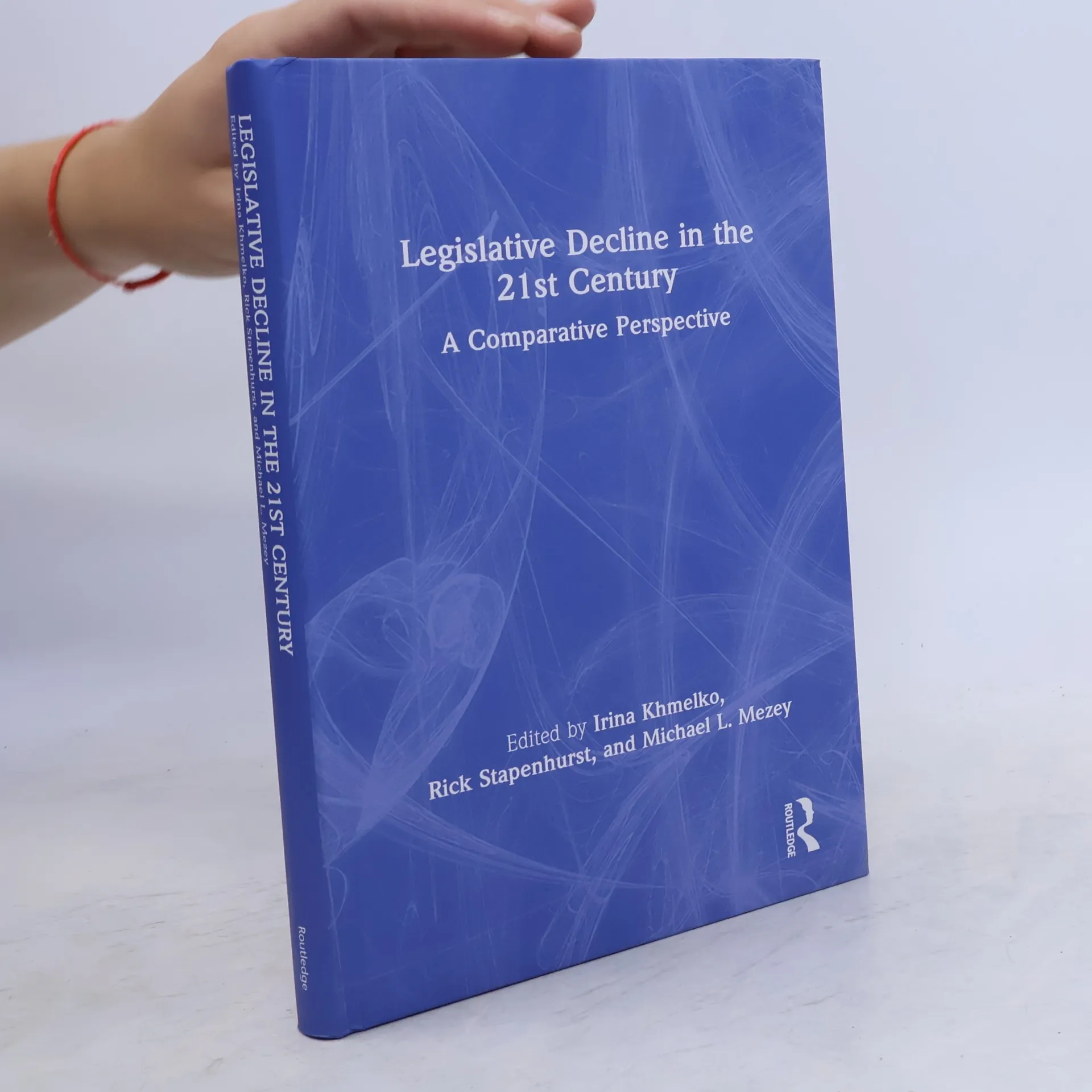
Legislative Decline in the 21st Century, Irina Khmelko, Frederick Stapenhurst, Michael L. Mezey
- Langue

- Année de publication
- 2020
- Reliure
- (rigide),
- État du livre
- Bon
- Prix
- 62,99 €
Modes de paiement
Personne n'a encore évalué .
- Titre
- Legislative Decline in the 21st Century
- Sous-titre
- A Comparative Perspective
- Langue
- Anglais
- Éditeur
- Routledge
- Publié
- 2020
- Format
- rigide
- Pages
- 216
- ISBN10
- 0367342960
- ISBN13
- 9780367342968
- Séries
- Mots clés
- Thématique juridique, Politique, Littérature spécialisée, Théories politiques, Relations internationales, Populisme
- Description
- Irina Khmelko, Frederick Stapenhurst, and Michael L. Mezey have assembled an authoritative guide to the declining institutional capacities of legislatures around the world. Case studies represent a diverse sample of countries, ranging from newer democracies emerging from the post-communist world to more established but at times fragile democracies in Asia. Although largely focused on newer democratic systems, readers will be able to identify key factors that explain the general global trend toward the empowerment of executives at the expense of national legislatures. The cases, although different from one another, identify several factors that have explained the erosion of legislative power, including historical legacies, institutional design, economic factors, external factors, political polarization, personalization of politics, and the rise of populism. Original data and the presentation of testable theoretical propositions about the growing imbalance between executives and national legislatures moves the field in a promising new direction. Legislative Decline in the 21st Century will be of interest to students and scholars of Legislative Studies and Comparative Politics. Lessons drawn from these case studies will allow policy makers to explore new solutions that can lead to the improved quality of democracy in countries around the world.