



Paramètres
- 224pages
- 8 heures de lecture
En savoir plus sur le livre
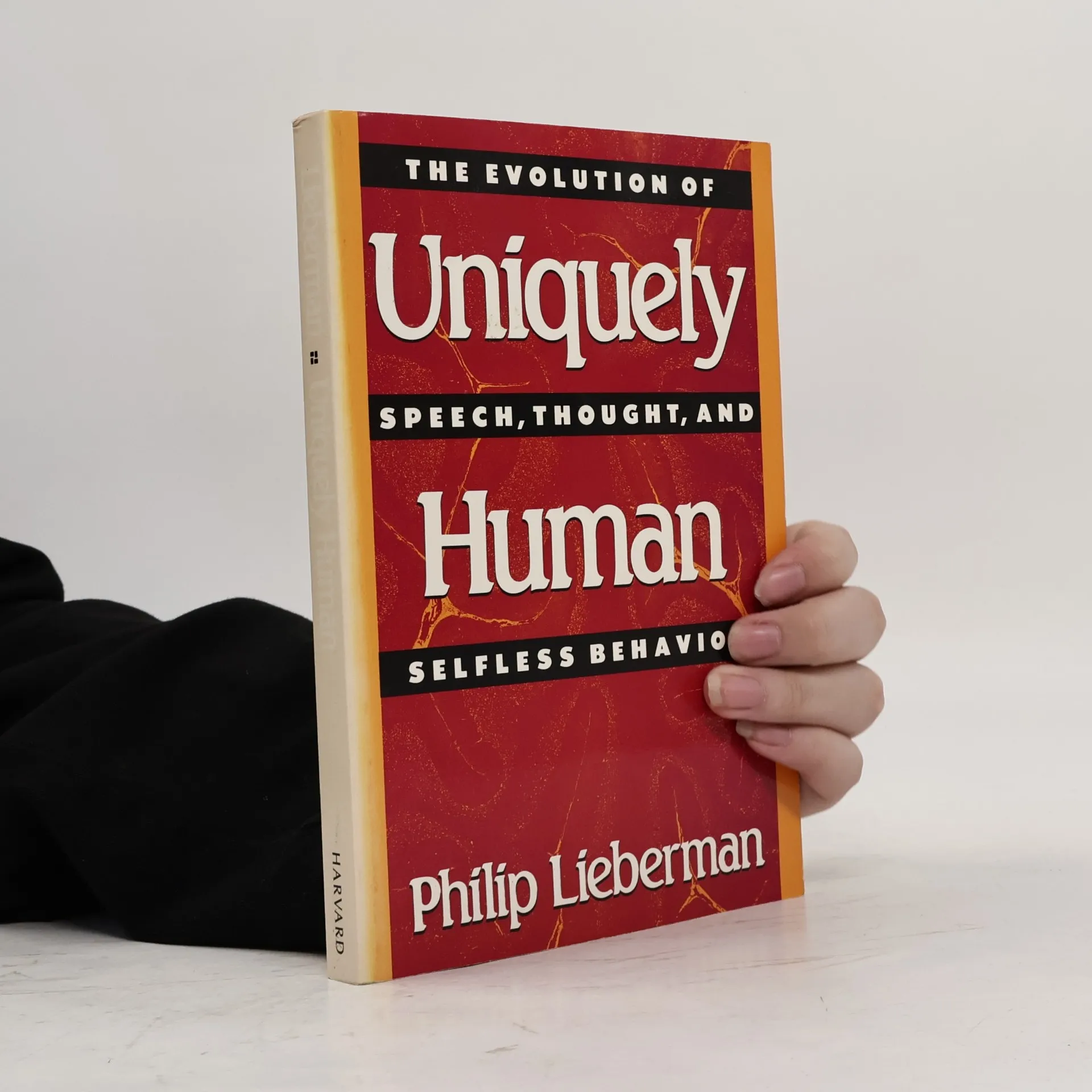
In a stimulating synthesis of cognitive science, anthropology, and linguistics, Philip Lieberman explores fundamental questions of human nature: How and why are humans distinct from other species? Can Darwinian evolution explain our linguistic and cognitive abilities? He examines how our language and thought processes differ from those of earlier hominids like *Homo erectus* and Neanderthals. Lieberman argues that evolution for rapid vocal communication shaped modern humans by developing the modern brain. Earlier hominids lacked the speech and syntax necessary for conveying complex thoughts swiftly. He discusses how natural selection influenced older brain mechanisms to create structures that regulate speech and enable complex syntax, enhancing language creativity. These unique brain mechanisms also boost cognitive abilities, allowing for abstract thinking and complex planning, which are essential for true altruism and moral behavior. Lieberman supports his claims by integrating Darwin's comparative method, insights from archaeology and child development, and advanced research techniques, including computerized brain scanning and models that recreate ancient speech sounds. This exploration will provoke fresh thought and debate on how humanity evolved.
Achat du livre
Uniquely Human, Philip Lieberman
- Langue

- Année de publication
- 1991
- Reliure
- (souple),
- État du livre
- Bon
- Prix
- 6,49 €
Modes de paiement
Personne n'a encore évalué .
- Titre
- Uniquely Human
- Sous-titre
- The Evolution of Speech, Thought, and Selfless Behavior
- Langue
- Anglais
- Auteurs
- Philip Lieberman
- Éditeur
- Harvard University Press
- Publié
- 1991
- Format
- souple
- Pages
- 224
- ISBN10
- 0674921836
- ISBN13
- 9780674921832
- Séries
- Catégories
- Mots clés
- Sciences naturelles, Thèmes psychologiques, Science, Linguistique, Psychothérapie, Biologie humaine, Behaviorisme
- Description
- In a stimulating synthesis of cognitive science, anthropology, and linguistics, Philip Lieberman explores fundamental questions of human nature: How and why are humans distinct from other species? Can Darwinian evolution explain our linguistic and cognitive abilities? He examines how our language and thought processes differ from those of earlier hominids like *Homo erectus* and Neanderthals. Lieberman argues that evolution for rapid vocal communication shaped modern humans by developing the modern brain. Earlier hominids lacked the speech and syntax necessary for conveying complex thoughts swiftly. He discusses how natural selection influenced older brain mechanisms to create structures that regulate speech and enable complex syntax, enhancing language creativity. These unique brain mechanisms also boost cognitive abilities, allowing for abstract thinking and complex planning, which are essential for true altruism and moral behavior. Lieberman supports his claims by integrating Darwin's comparative method, insights from archaeology and child development, and advanced research techniques, including computerized brain scanning and models that recreate ancient speech sounds. This exploration will provoke fresh thought and debate on how humanity evolved.