

En savoir plus sur le livre
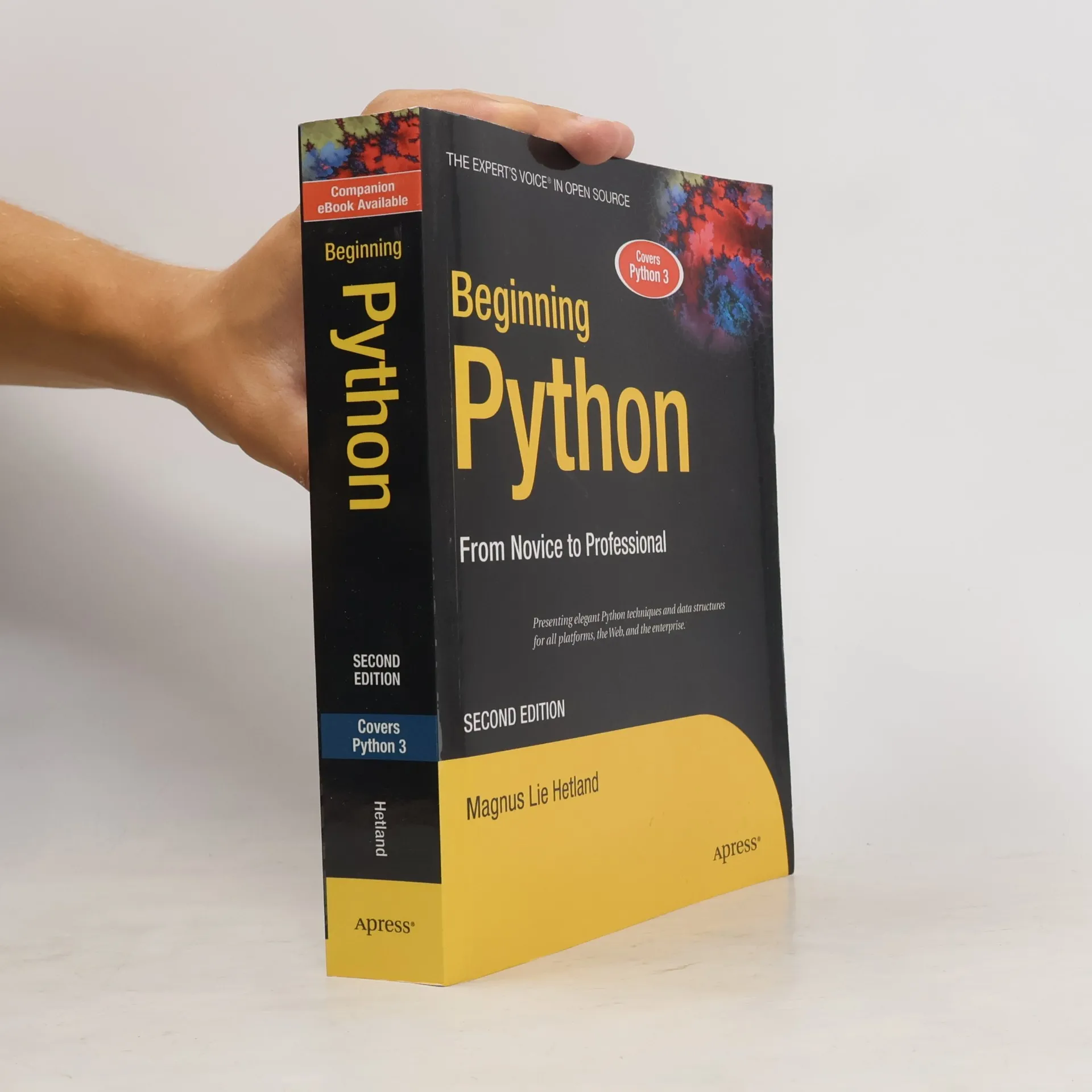
Gain a fundamental understanding of Python's syntax and features with the second edition of Beginning Python , an up-to-date introduction and practical reference. Covering a wide array of Python-related programming topics, including addressing language internals, database integration, network programming, and web services, you'll be guided by sound development principles. Ten accompanying projects will ensure you can get your hands dirty in no time. Updated to reflect the latest in Python programming paradigms and several of the most crucial features found in Python 3.0 (otherwise known as Python 3000), advanced topics, such as extending Python and packaging/distributing Python applications, are also covered.
Achat du livre
Beginning Python, Magnus Lie Hetland
- Langue

- Année de publication
- 2008
- Reliure
- (souple)
Modes de paiement
Personne n'a encore évalué .
- Titre
- Beginning Python
- Sous-titre
- From Novice to Professional
- Langue
- Anglais
- Auteurs
- Magnus Lie Hetland
- Éditeur
- Apress
- Publié
- 2008
- Format
- souple
- Pages
- 656
- ISBN10
- 1590599829
- ISBN13
- 9781590599822
- Séries
- Catégories
- Mots clés
- Manuels et guides, Technologie, Linguistique, Internet, Développement, Introduction, propédeutique
- Description
- Gain a fundamental understanding of Python's syntax and features with the second edition of Beginning Python , an up-to-date introduction and practical reference. Covering a wide array of Python-related programming topics, including addressing language internals, database integration, network programming, and web services, you'll be guided by sound development principles. Ten accompanying projects will ensure you can get your hands dirty in no time. Updated to reflect the latest in Python programming paradigms and several of the most crucial features found in Python 3.0 (otherwise known as Python 3000), advanced topics, such as extending Python and packaging/distributing Python applications, are also covered.